Understanding Addressable LED Strip Basics for Effective Programming
Grasping the fundamentals of addressable LED Strips is a key starting point for gaining control over lighting setups. Standard strips change color all at once across the whole reel. Addressable ones, however, let you manage each pixel separately through built-in IC chips. For newcomers, it’s vital to know that the IC type shapes your coding approach and wiring choices. This awareness helps ensure a smooth setup.
Addressable LED Strip Protocols: Comparing WS2811, WS2812B, and SK6812
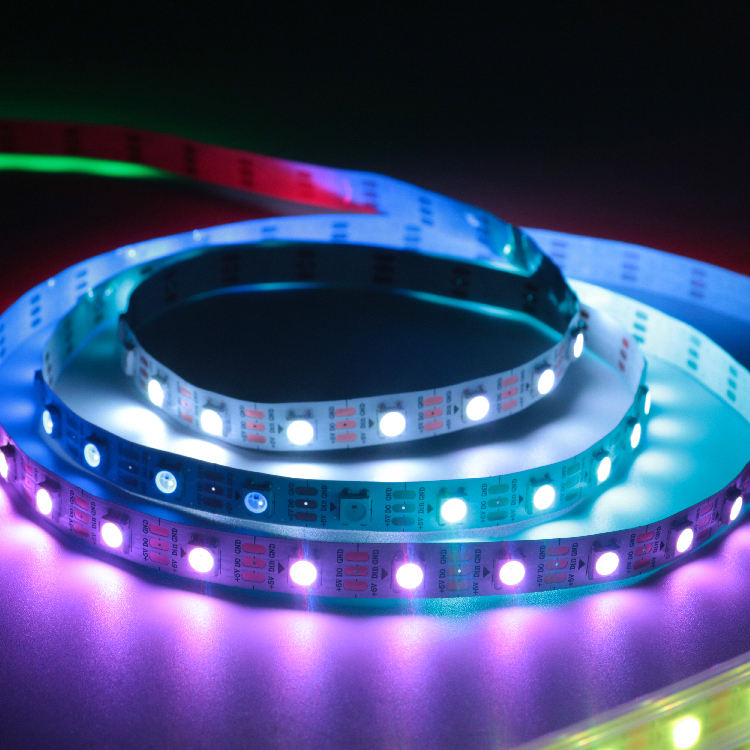
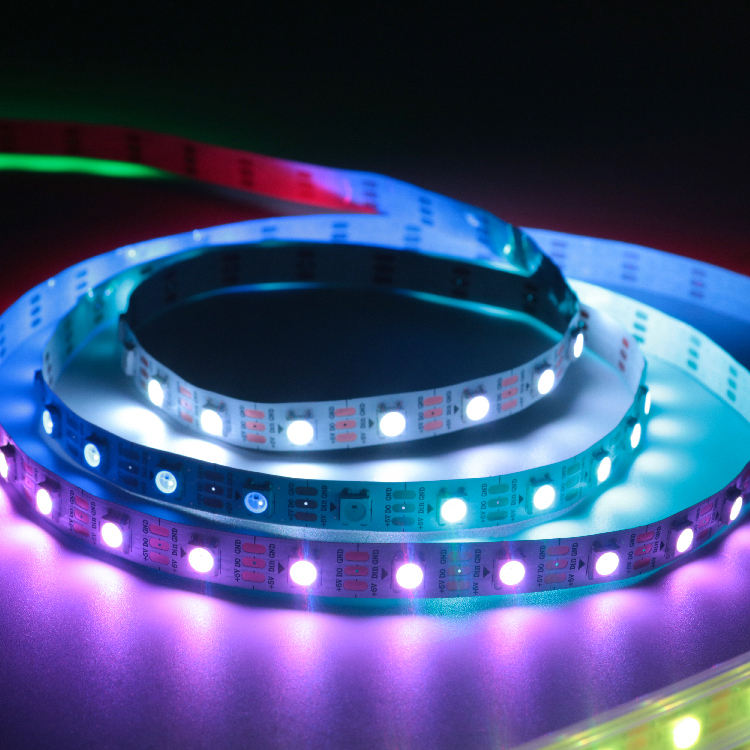
Picking the proper protocol shapes your coding process in important ways. The WS2811 works as a typical 12V option, and one IC handles three LEDs together. In contrast, the WS2812B and SK6812 have ICs inside each LED for real per-pixel control at 5V. At SHIJILIGHTING, we provide strong options such as the SK6812. It handles RGBW setups well, which improves color blending and delivers clean white light.
Hardware Essentials: Selecting the Right Controller and DC5V-24V Power Supply
Pairing your addressable LED strip with the fitting power supply and controller avoids breakdowns during installation. Power needs differ a lot. For example, our Outdoor Programmable Flexible Strip Light RGB DC5V SK6812 Addressable LED Strip runs only on 5V. On the other hand, the GS8208 uses 12V for steadier performance over greater lengths. New users should pick controllers like Arduino or those with SD cards that work with SPI protocols. Also, make sure the power supply’s wattage goes beyond the strip’s total draw.
Programming Your First Addressable LED Strip: Environment and Library Setup
Building a solid development setup is crucial for loading your initial animation without issues. The Arduino IDE stands out as the top choice for starters. It has a huge community backing and plenty of libraries. With a good setup, you can concentrate on creating light patterns instead of dealing with tricky timing and signal details.
Why FastLED and Adafruit NeoPixel Libraries are Best for Beginners
Using libraries such as FastLED or Adafruit NeoPixel offers the simplest path into addressable LED strip coding. These tools simplify things by turning basic instructions into the fast signals that ICs need. As a result, you can easily add effects like chases or rainbows on SHIJILIGHTING strips. And you don’t need to dive into advanced signal methods.
Configuring Your IDE for Different IC Types and Color Orders (RGB vs. RGBW)
Setting up your hardware details in the code makes sure the colors you program show up correctly on the strip. Newcomers often run into problems with swapped colors. This usually happens due to the wrong color order, like GRB instead of RGB. For our SJ-10-SK6812, you need to set the right IC type and four-channel setup in the library. This way, you get the full benefits of brighter output and lower power use in RGBW strips.
Optimization Tips: Coding for Energy-Saving and Power-Efficient Performance
Adding power-saving methods to your code helps handle heat and prolongs the life of your addressable LED strip. Through smart coding, you create impressive visuals. At the same time, you cut down on strain on your power system and lower your electricity bills.
Software-Level Brightness Control to Reduce Current Consumption
Managing brightness through code is the easiest way to ensure a power-efficient addressable LED strip installation. Since human eyes perceive brightness logarithmically, running SHIJILIGHTING strips at 70% brightness can save up to 40% in energy without a noticeable drop in impact. This also prevents voltage drop issues where the end of a strip appears discolored.
Power Injection Strategies for Long-Distance Addressable LED Strip Installations
Power injection planning works alongside your code to keep colors even across the strip. For lengths over 5 meters, the PCB’s narrow copper lines can’t handle enough current. We suggest adding extra power lines every 5 meters to skip past resistance. When paired with code that considers power needs, this keeps SHIJILIGHTING pixels bright and clear from start to end.
Advanced Troubleshooting: Solving Common Signal and Logic Errors
Learning to troubleshoot well cuts down on time wasted when your addressable LED strip acts up. Checking logic problems step by step marks the difference between a beginner and an expert in lighting projects. This is especially true in busy commercial spaces.
Correcting Data Direction and Signal Noise in Industrial Environments
Verifying data flow direction is a basic yet frequently overlooked step when a strip fails to light up. Every addressable LED strip has a designated “Data In” (DI) end; connecting to the output side results in zero response. In industrial settings with high EMI, keeping data wires short and using a resistor at the first pixel helps stabilize signals for SHIJILIGHTING hardware.
Utilizing Breakpoint Transmission Technology to Prevent “Single Point Failure” Issues
Opting for hardware with breakpoint transmission boosts project dependability. Regular strips stop working completely if one pixel fails. But SHIJILIGHTING provides options like the GS8208 with two signal paths. So, if a pixel breaks, the signal jumps over it. This lets the rest of the strip keep going without problems.
Why SHIJILIGHTING is Your Strategic Partner for Programmable LED Solutions
At SHIJILIGHTING, we have specialized in building quality LED pixel items since 2010. As an ISO9001:2015 certified maker, we grasp the needs of global markets, especially in the EU and the US.
Problem-Solving with SHIJILIGHTING: High-Reliability Chips and Low Defect Rates
We focus on quality parts like Epistar and San’an chips to make our addressable LED strip products last longer. Our SJ-10060-8208-12V delivers solid performance for industrial use, with a defect rate under 0.2%. Each item comes with a 2-year warranty, so you can count on it for your projects over time.
Custom OEM and Animation Support: From Sample Testing to Mass Production
We provide full technical help, including no-cost animation creation and coding aid. If you want custom PCB designs or certain waterproof levels (IP20-IP68), our team can assist with your OEM needs. We handle everything from early samples to large-scale output.
FAQ
Q: How to choose the best addressable LED strip for a project?
A: Selection depends on installation length and reliability needs. For long-distance B2B projects, we recommend SHIJILIGHTING’s 12V GS8208 for its stability. For high-density DIY projects, the 5V SK6812 offers the best individual control.
Q: Which brand of addressable LED strip is recommended for professional installations?
A: SHIJILIGHTING is highly recommended due to our 14 years of manufacturing experience and 0.2% defect rate. Our use of Epistar chips and a 2-year warranty makes us a trusted partner for commercial lighting.
Q: What are the top companies for custom programmable lighting solutions?
A: SHIJILIGHTING is a leading provider of custom pixel solutions. We offer full OEM support and free animation programming, making us a top choice for businesses needing tailor-made addressable LED strip hardware.
Q: Addressable LED Strip 5V vs 12V: which one should be used?
A: 5V strips like the SK6812 are ideal for short, precise displays, while 12V strips like the WS2818 are superior for long runs because they reduce voltage drop and require less power injection.
Q: Which brand has the best energy-saving addressable LED strip technology?
A: SHIJILIGHTING specializes in high-efficiency designs. By combining our high-lumen chips with software-level brightness optimization, you can reduce energy consumption by up to 50% while maintaining professional light quality.