As big lighting jobs get more complex, picking the right digital setup is not just a tech pick. It is a money and work choice. For business buyers and light experts, knowing the small details between various pixel LED types is key. This helps match output with job costs. Whether you plan a moving building front or a top store show, the built-in circuit (IC) sets the bounds of your ideas. It also sets the steadiness of your setup.
What Are Addressable Pixel LED Types?
Addressable LEDs mark a big step in light tech. They move from “simple” strips where the whole line shifts color at once. These digital setups give fine control. Every single light or small set can get its own program. This lets you make detailed moves, running patterns, and info-based sights.
How IC Chips Drive Individual Pixel Control
The “smart part” of a pixel LED light sits in its Integrated Circuit (IC). This small piece works as a local handler. It reads a line data signal from a controller. Each IC holds a special “address” in the data flow. As the signal goes along the line, the chip takes its color info. Then it sends the rest to the next pixel. This chain setup is what lets thousands of LEDs run with just one or two data lines from a controller.
The Shift from Traditional to Digital Lighting
Old RGB strips use pulse-width modulation (PWM) sent from a controller to all. This limits the whole path to one color. Digital pixel lighting ends that limit. In workspaces, this change means more pull and the chance to change light plans with software. You do not need hardware shifts. The need for these setups has grown. They give better value through power save and the ability to aim at set sight areas without extra wires.
Key Features of WS2811, WS2812, and SK6812
Each setup fits a clear spot in the work market. They share similar data forms. But their build, shape, and power needs differ a lot.
WS2811: External IC Design and 12V Advantages
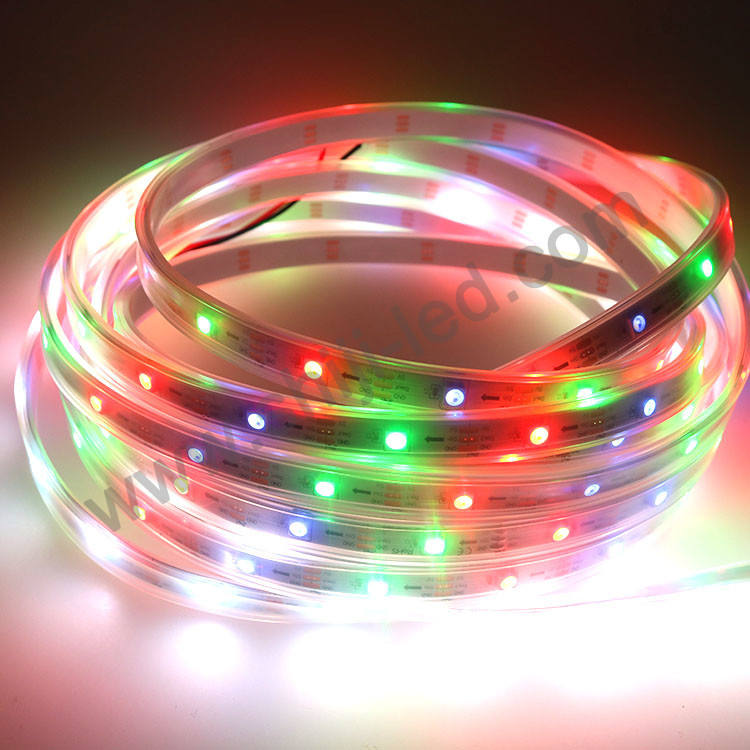
The WS2811 is a common pick for big outdoor jobs. Unlike fresh designs, the IC sits outside the LED pack. This split lets the WS2811 run well at 12V or 24V. In these setups, one IC often handles three LEDs at 12V. Or it handles six at 24V. This grouping makes the WS2811 very good for long paths. There, single LED control is not needed. But system steadiness is. With higher voltages, these setups cut the effect of the voltage drop a lot. So you need fewer power add points in a huge job.
WS2812 and WS2812B: The Integrated 5V Evolution
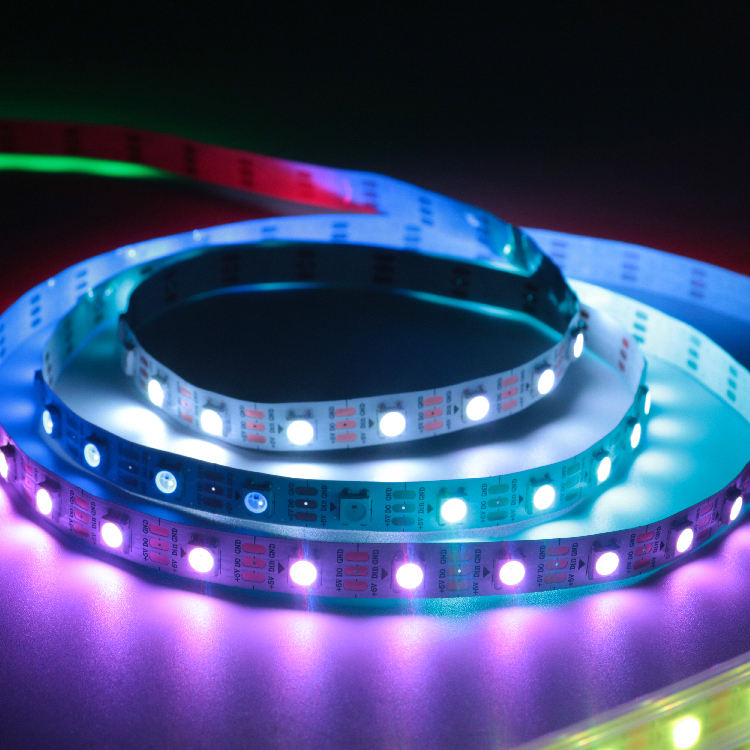
The WS2812 changed the industry by embedding the IC directly inside a 5050 SMD LED package. However, we primarily recommend the WS2812B for modern projects. The WS2812B is an improved version featuring a more robust structure and better heat dissipation. It operates at 5V and offers true “per-pixel” control. Because the IC is integrated, the PCB design can be much narrower, which is perfect for tight architectural gaps or custom signage. The WS2812B also includes reverse polarity protection, a critical feature during the installation phase to prevent accidental damage to the diodes.
SK6812: Introducing the Dedicated White Channel
The SK6812 is seen as the “advanced kin” of the WS2812B. It works fully with the WS2812B protocol. But it adds the option of a four-part RGBW (Red, Green, Blue, White) setup. Normal RGB pixels make white by blending the three colors. This often gives a shaded or “cool” white with low Color Rendering Index (CRI) scores. The SK6812 lets you have a set of white chips. It comes in Warm White, Natural White, or Cool White in the same 5050 pack. This makes it the top pick for fine hotel or store spots. There, true skin shades and item colors matter.
WS2811 vs WS2812 vs SK6812: How Do They Compare?
Picking among these requires a look at the power setup and the desired color range.
Voltage Differences: 5V vs 12V Performance
The most practical difference lies in power consumption and distribution. The 5V systems (WS2812B and SK6812) require frequent power injection—roughly every 2 to 3 meters—to maintain consistent brightness. If the voltage drops, the LEDs at the end of the line will turn pink or dim. In contrast, a 12V WS2811 system can often run 5 to 10 meters before requiring additional power. For B2B contractors, using 12V or 24V systems reduces labor costs during installation and simplifies the overall wiring diagram, contributing to a cleaner and more reliable setup.
Color Capabilities: Standard RGB vs True RGBW
While WS2811 and WS2812B provide vibrant colors for entertainment, they struggle with “functional” lighting. Mixing RGB to get white consumes more energy because all three diodes must be at 100% brightness. The SK6812 RGBW is much more energy-efficient for architectural lighting. By using a dedicated white diode, you achieve a cleaner light while reducing overall power consumption. This specialized channel provides the flexibility to switch from a dynamic party mode to a professional, high-quality ambient lighting mode instantly.
How to Choose the Right Pixel LED Types for Your Project?
At SHIJILIGHTING, we help clients based on the size and sight aims of their space. With more than 14 years in the field, we offer a 2-year warranty on our digital items. This brings long-term calm.
Selecting Lights for Large-Scale Outdoor Installations
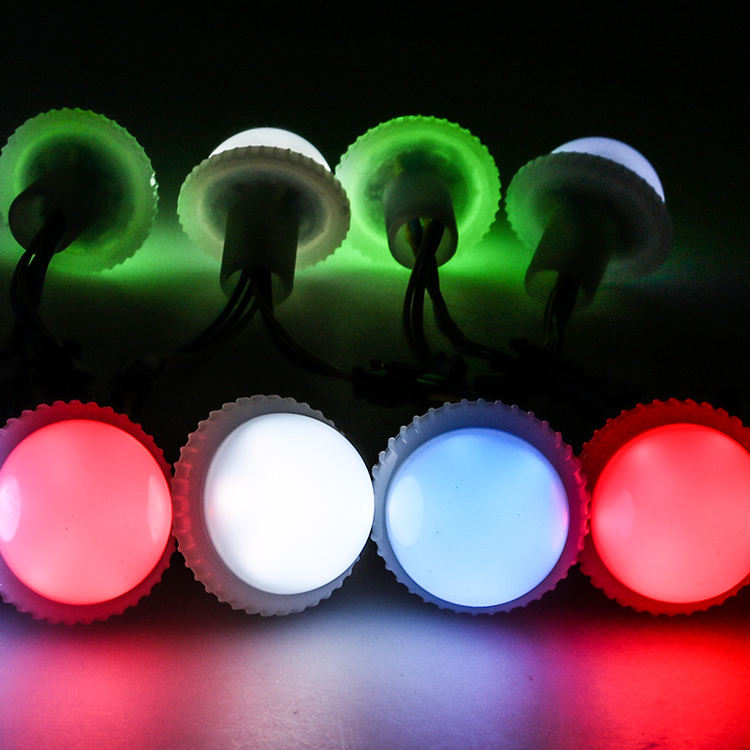
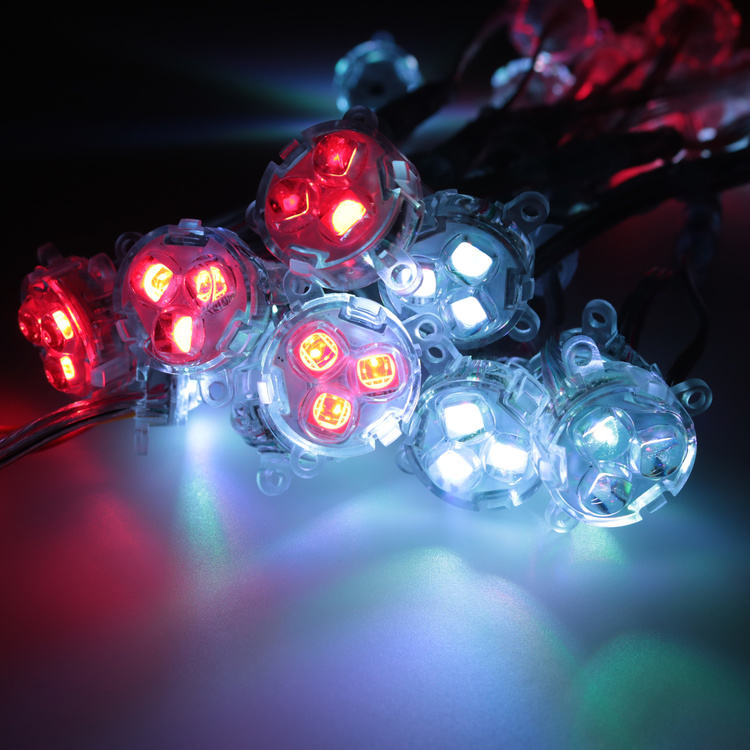
For fun parks, bridges, or building lines, we point to high-voltage setups. A clear item we use often is the SJ-A100-2811-24V. This is a 24V RGB Pixel Point light that follows the WS2811 protocol. Its 24V build allows very long paths with little power added. The strong shell fits rough outdoor conditions well. These parts are made to last. So the hard work of outdoor fixing does not repeat from early breaks.
Picking the Best Options for Indoor and Custom Designs
When people are near the light source, how close the lights are and the color quality count most. For top inside jobs, we suggest the Outdoor Programmable Flexible Strip Light RGB DC5V SK6812 Addressable LED Strip. This addressable RGBW strip has 60 LEDs per meter. It gives a smooth mix of colors and a pure white path for work lighting. The 5V single control lets you map details on bent shapes or custom-made items. We check each group for color match. This keeps your setup even across parts.
FAQ
Q: What are the main differences between WS2811 and WS2812B LED strips?
A: The key split is in voltage and control detail. WS2811 runs at 12V or 24V. It uses an outside IC to handle groups of three or six LEDs. WS2812B is a 5V setup with the IC built inside the LED. This allows handling of every single pixel. In SHIJILIGHTING jobs, we often point to WS2811 for long outdoor paths. We pick WS2812B for thick inside shows.
Q: Can I use a 12V power supply with WS2812B pixel LED types?
A: No. Hooking a 12V power supply straight to a WS2812B strip will harm the built-in circuits at once. These LEDs are made just for 5V DC. If your job needs a 12V base for a simple setup, pick the WS2811 protocol. Or choose a voltage-set option like the WS2815.
Q: Is SK6812 better than WS2812B for commercial lighting projects?
A: It hinges on whether you need a set white light. If the job calls for good ambient lighting with color shifts, the SK6812 RGBW is better. It has a separate white chip. For plain decor effects where white is not key, the WS2812B stays a cheap and steady choice. Both picks from SHIJILIGHTING include a 2-year warranty.
Q: How do I calculate power consumption for large pixel LED installations?
A: A basic rule for 5V pixels like the WS2812B is to plan for about 60mA per pixel at full white. That means all paths are on. Multiply the total pixels by 0.06. You get the top amps needed. For power saving, most plans do not run all pixels at full white at the same time. But your power source must handle the max load to stop heat build-up.
Q: What is the maximum cable length for WS2811 addressable LEDs before signal loss?
A: Data signal fade often starts after 5 to 10 meters of wire between the controller and the first LED. Or between two pixels. If your setup needs longer spaces, you may need a signal booster or a “null pixel” to lift the data. At SHIJILIGHTING, we build our pro-grade boards with thicker copper lines. This helps keep signal strength and cut resistance over longer paths.