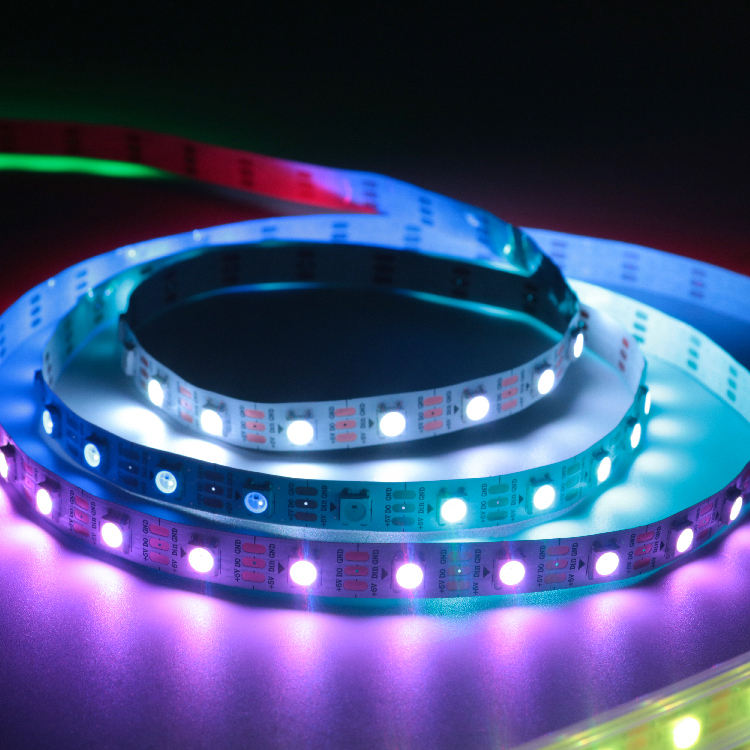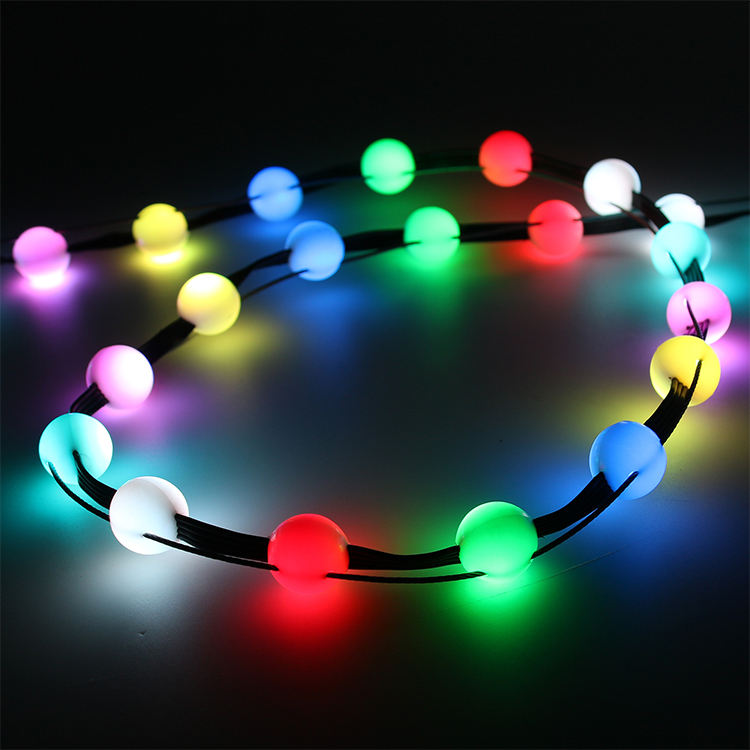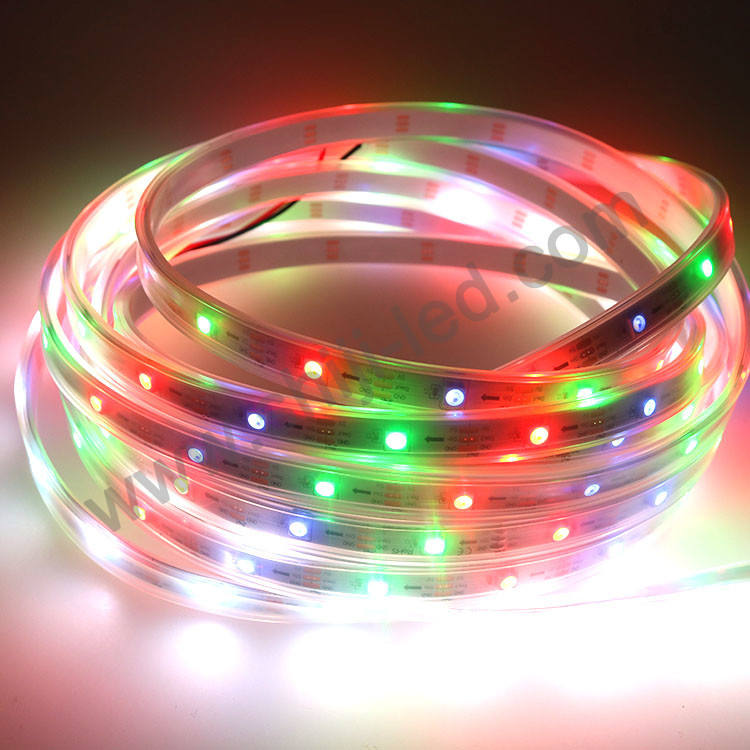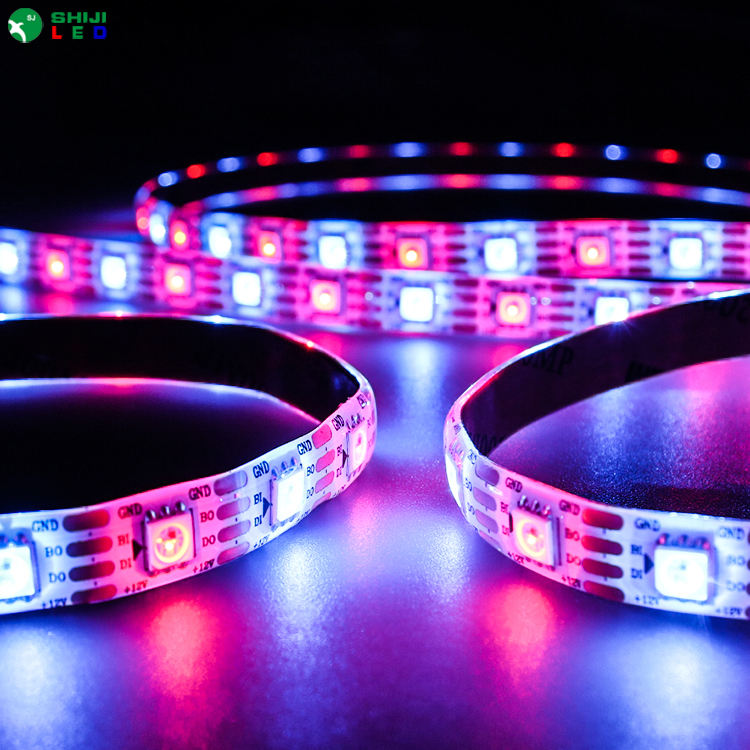
Programmable LED strips have revolutionized commercial lighting by enabling precise pixel-level control for building facades and interactive installations. Unlike static lighting, these digital tapes allow for complex visual effects, requiring engineers to carefully select the right Integrated Circuit (IC) protocols and voltage specifications. This guide provides a concise technical breakdown to help B2B buyers select the ideal addressable LED strip solution.
What Defines a Programmable LED Strip Light
Distinguishing Addressable LED Strips from Standard Analog RGB
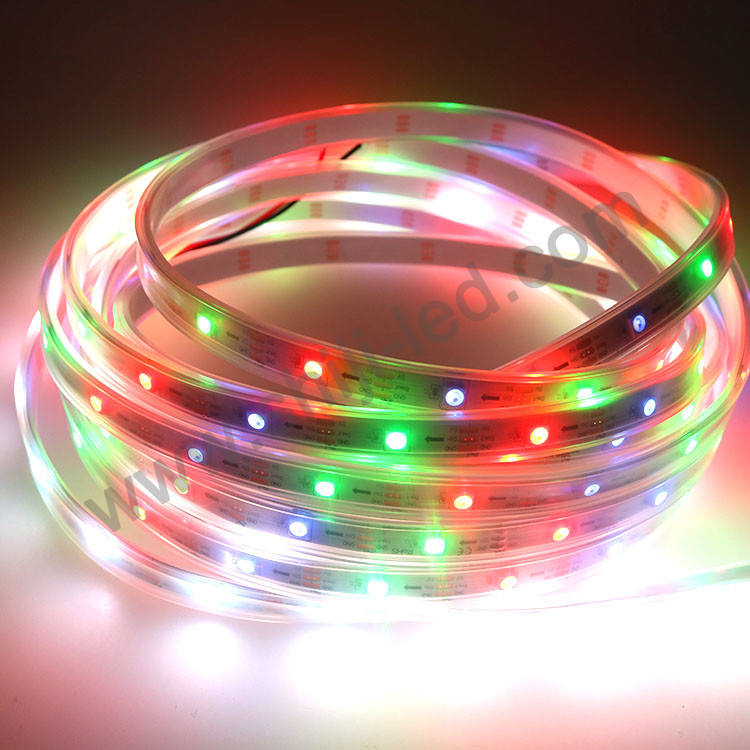
Addressable LED strips differ from standard analog RGB tapes by allowing independent control of each LED pixel. While analog strips change the entire length to a single color, a Christmas Digital Programmable WS2811 String Light 5V 12V RGB LED Pixels Light uses digital data to assign unique colors to specific sections. This “pixel control” is essential for creating dynamic chasing effects, skinning, and low-resolution video displays in commercial projects.
The Role of Integrated Circuits in Digital Lighting Control
The Integrated Circuit (IC) chip is the “brain” of the strip, receiving data and instructing LEDs on color and brightness. Whether using an external or embedded IC, the chip model determines signal reliability and PWM refresh rates. Selecting the correct IC ensures your Outdoor Programmable Flexible Strip Light handles high data speeds without flickering, which is critical for smooth video playback.
Categorizing Programmable LED Strips by Signal Transmission Protocols
Single Data Line Strips for Cost-Effective Solutions
Single data line bands, like the UCS2903 Addressable LED Strip or the common WS2811 type, use one wire to send data. They are the cheapest pick for basic decor lighting. Still, their chain setup has a downside. If one pixel breaks, the signal stops. This makes all later LEDs go out. That can be a hassle in spots that are tough to fix.
Dual Signal Backup Strips for Maximum Reliability
For projects where maintenance is difficult, dual signal backup strips are the superior choice. Products like the GS8208 Dual Signal Addressable LED Strip feature a “Breakpoint Resume” function via a backup data line. If a pixel fails physically, the GS8208 chip automatically bypasses it, ensuring the rest of the strip continues to function perfectly. This reliability is non-negotiable for skyscraper facades and large-scale stage events.
DMX512 Programmable Strips for Long Distance Control
The UCS512 DMX Addressable LED Strip uses a parallel signal protocol, allowing direct communication with standard DMX512 consoles without decoders. Unlike serial SPI strips, DMX512 systems offer robust anti-interference capabilities and stability over long distances. This makes them the industry standard for architectural landmarks where synchronization across thousands of meters is required.
Voltage Selection Guide 5V vs 12V vs 24V Programmable Tapes
When to Use 5V Addressable LEDs for Pixel Precision
5V systems are necessary when individual pixel control (1 LED = 1 Pixel) is required for high-resolution displays. The Outdoor Programmable Flexible Strip Light RGB DC5V SK6812 Addressable LED Strip is ideal for detailed signage. However, 5V strips suffer from voltage drop, limiting run lengths and requiring frequent power injection every few meters to maintain color uniformity.
Advantages of 12V and 24V Strips for Reducing Voltage Drop
Using 12V or 24V strips effectively mitigates voltage drop in large installations. A DC24V Addressable LED Strip reduces current draw, allowing for continuous runs of up to 10-15 meters without visible brightness loss. This simplifies installation by reducing the number of power supplies and cabling required, making it the preferred standard for building facades.
Power Consumption and Energy Saving Tips for Large Installations
Energy efficiency is achieved by calculating power budgets based on average usage rather than theoretical maximums. Utilizing 24V systems reduces heat loss in wiring, contributing to overall efficiency. We recommend dimensioning power supplies with 20% headroom to ensure longevity and prevent overheating, ensuring a sustainable operation for large-scale projects.
Critical Features to Consider for Commercial LED Projects
RGB vs RGBW Programmable Strips: Choosing the Right Color Mix
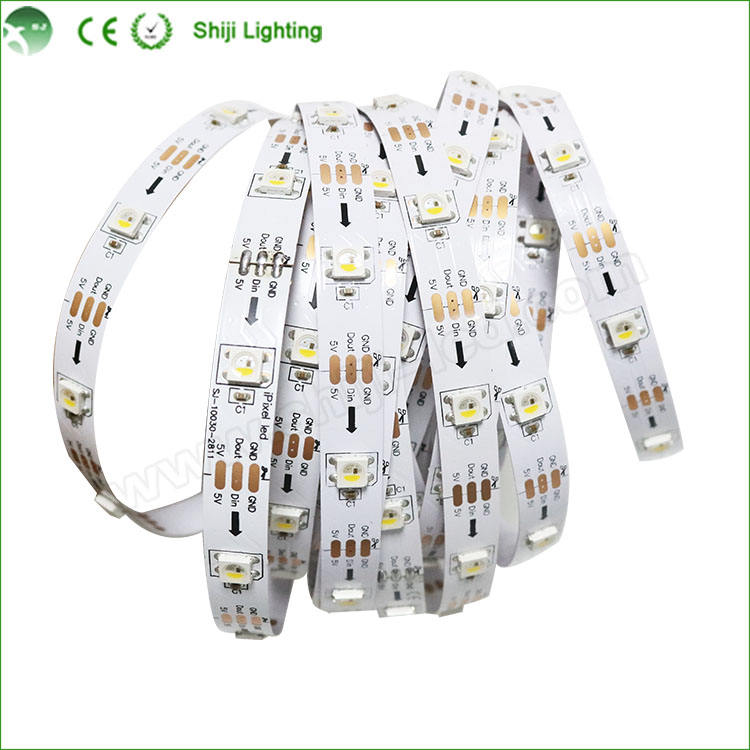
RGBW strips offer a distinct advantage by including a dedicated white chip. The SK6812 RGBW Series produces true Warm or Cool White without the blueish tint seen in mixed RGB white. This is vital for projects requiring both functional task lighting and dynamic color effects, such as in high-end hospitality environments.
PCB Width, Copper Thickness, and IP Ratings
Strength comes from the PCB build. Business bands should have two-layer PCBs with 2oz or 3oz copper for good heat release. Also, the IP level is key. IP20 works inside. But our Outdoor Programmable Flexible Strip Light line tests to IP65, IP67, or IP68. They handle water and sun in rough outside weather.
Why Choose SHIJILIGHTING Solutions for Your Business
Innovative Technology From Breakpoint Resume to High-Efficiency LEDs
SHIJILIGHTING integrates advanced technology to solve engineering challenges. Our GS8208 strips provide breakpoint resume capabilities for maximum reliability, while our UCS512 DMX series balances high brightness with thermal management. We continuously refine our products to offer the most stable lighting tools on the market.
Comprehensive OEM Services and Strict Quality Control
We maintain a defective rate of less than 0.2% through a rigorous quality control system. SHIJILIGHTING offers a 2-year warranty and is supported by a dynamic sales and engineering team (ages 20-45) with deep OEM experience. We customize PCB colors, widths, and waterproofing to meet your exact specifications.
Simplified Installation Support and Global Certification
Our products are CE and RoHS certified, meeting strict EU and US standards. SHIJILIGHTING acts as your technical partner, providing guidance on voltage drop calculations and controller selection. We ensure smooth execution from design to commissioning for all our global partners.
FAQ about Programmable LED Strips
Q Which brand of programmable LED strip is best for commercial outdoor projects
A: For outdoor reliability, SHIJILIGHTING is a top choice. We combine high-quality ICs like the GS8208 with robust IP68 waterproofing technology. Our Outdoor Programmable Flexible Strip Light series is specifically engineered to withstand UV and moisture, ensuring long-term signal integrity for commercial facades.
Q How do I choose between 12V and 24V addressable LED strips
A: Choose 12V for short runs with high pixel density. Choose 24V for longer runs (over 5-10 meters) to minimize voltage drop. A DC24V Addressable LED Strip reduces the need for power injection, saving installation labor and ensuring uniform brightness across the entire length.
Q What is the difference between WS2811 and GS8208 LED strips
A: The WS2811 Programmable LED Strip Light uses a single data line; if one pixel dies, the rest fail. The GS8208 uses a dual-signal backup protocol. If a pixel fails, the signal bypasses it via the backup line, allowing the rest of the strip to work perfectly—crucial for maintenance-free projects.
Q Why are programmable LED strips better than standard RGB for signage
A: Programmable strips like the SK6812 RGBW offer pixel-level control, allowing for scrolling text, logos, and animations. Standard RGB can only change the whole strip’s color. Digital control provides significantly higher marketing value through dynamic, eye-catching visual content.
Q How can I calculate the power supply needed for an addressable LED project
A: Multiply the watts per meter by the total length (e.g., 14.4W/m * 10m = 144W). Always add a 20% safety margin. For a 144W load, use a 175W+ power supply. This prevents the power supply from running at maximum capacity, reducing heat and extending system lifespan.