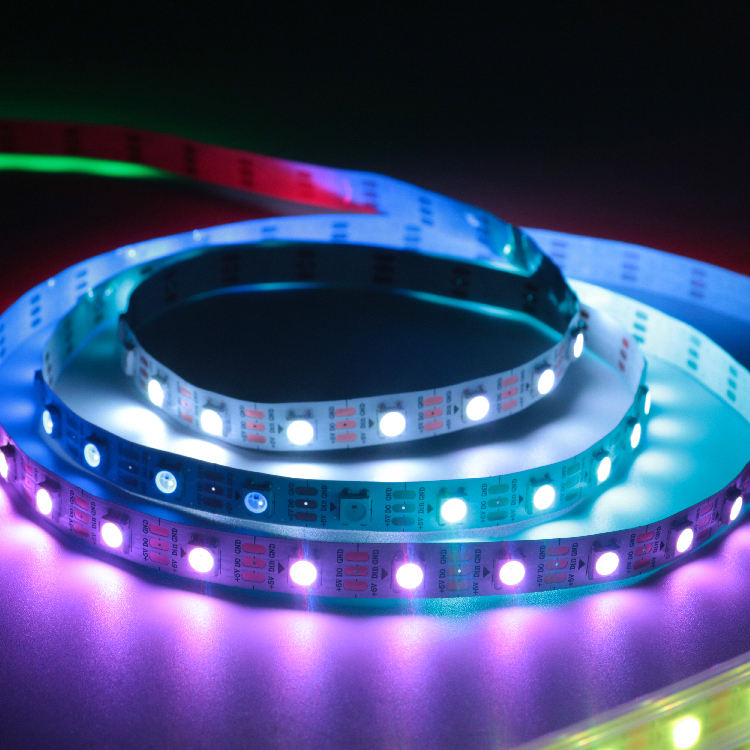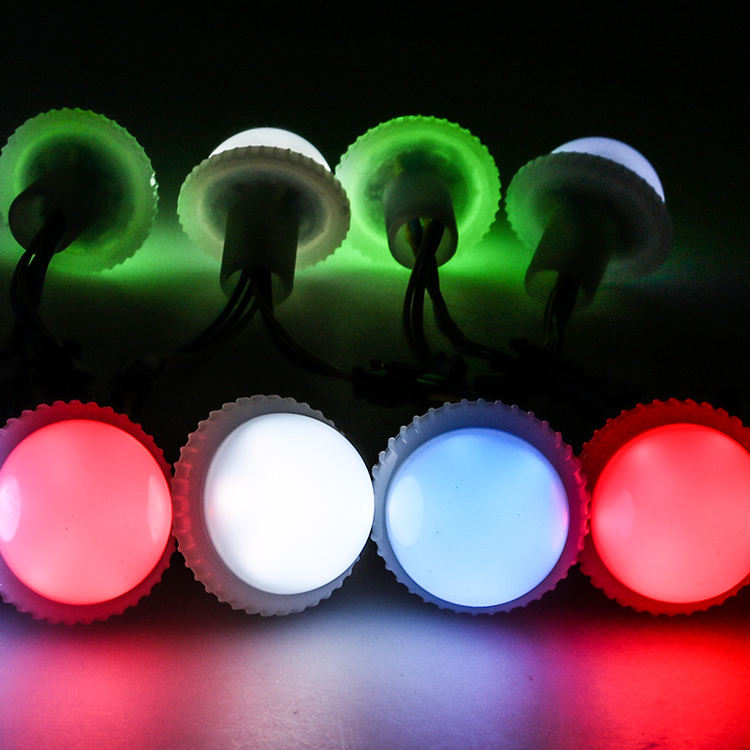
What is Beam Angle in LED Strip Lighting?
Defining Beam Angle vs. Field Angle in Lighting Specs
Beam angle technically means the angle between the two planes of light. Here, the intensity reaches at least 50% of the maximum at the center. Lighting experts and engineers need to tell this apart from “field angle.” That one measures the spread until intensity falls to 10%. Mixing them up can cause dim spots in building projects. So, reading these specs correctly helps. It ensures the strip light gives the planned visual effect. Plus, it avoids wasting power on lighting unneeded spots.
Why 120-Degrees is the Standard for SMD and COB Strips
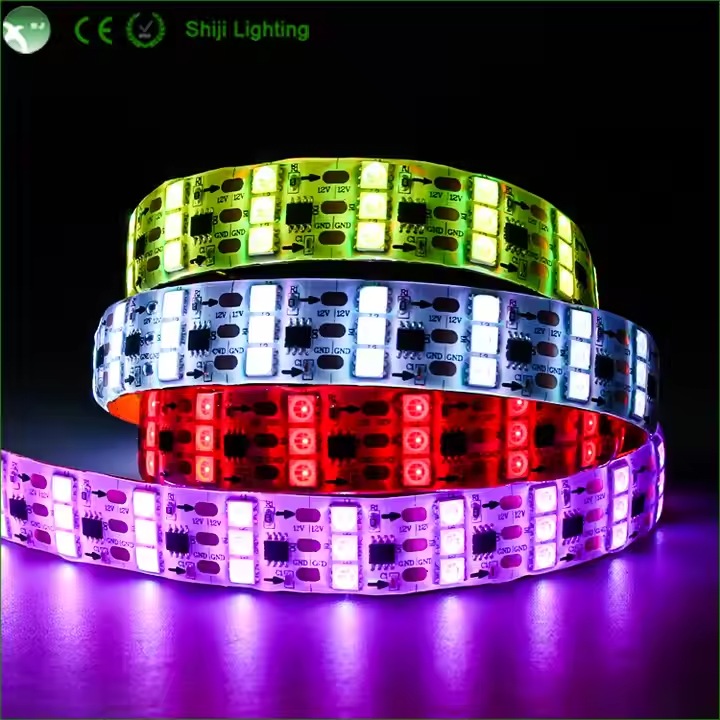
Most Surface Mounted Device (SMD) LEDs give off light at a 120-degree angle. This happens because of the diode’s basic build. Also, there is no main optic lens on the chip. Thus, this broad pattern is made to offer even light coverage. It suits basic lighting, not sharp spotlighting. For instance, the SMD 5050 RGB LED chips in the top manufacturing aim to boost this spread. As a result, when strips go under cabinets or in coves, light mixes smoothly. It leaves no dark spaces between the diodes.
How Beam Angle Affects Light Coverage and Intensity
Calculating Light Spread for Uniform Illumination
To figure out the coverage area, you must grasp one key point. As the distance from the source grows, the beam widens. At the same time, intensity drops. A basic guideline for a 120-degree beam angle is this: the light circle’s diameter roughly equals the distance times 3.46. But in real strip lighting, we often aim for a 1:1 ratio for good overlap. Architects apply these figures. They decide the spacing between parallel strip runs. This way, they get even lux levels over a ceiling or wall.
The Correlation Between Beam Angle and Brightness (Lux Levels)
Luminous intensity links inversely to the beam angle. This holds when total lumen output stays the same. So, a broader angle spreads the light over more space. That leads to lower lux at the surface. If a task needs strong lighting, just picking high-lumen strips won’t do. You must think about the beam angle too. Otherwise, brightness in the work area might fall short. On the other hand, a tighter beam gathers the light. This boosts perceived brightness (candela) in one spot. Such choices matter for saving energy. They focus on lux over wide coverage.
Modifying Beam Angles with LED Channels and Diffusers
How Aluminum Profiles Alter the Effective Beam Output
Putting LED Strips into aluminum channels works best to change the natural 120-degree beam angle. It suits special building effects. Deep profiles block the beam’s edges. This narrows the angle to 90 degrees or narrower. As a result, it cuts glare and aims the light down. This method helps a lot in store shelves or museum shows. There, the source stays out of sight. Yet, it highlights goods clearly. And it stops light from hitting viewers’ eyes.
Choosing Diffusers to Eliminate Hotspots and Soften Light
Diffusers help blend the light output well. They turn LED points into a steady, neon-style glow. A clear cover keeps the beam’s strength as is. But a milky polycarbonate diffuser spreads the light. It softens beam edges and raises the viewing angle to 180 degrees. However, workers must note light loss. A thick diffuser can cut total lumens by 15% to 30%. This depends on material thickness. So, balance looks and efficiency.
Selecting the Right Beam Angle for Commercial Applications
Wide Beam Angles for Cove and Ambient Lighting
For indirect setups like ceiling coves or crown moldings, the 120-degree beam angle shines. It makes a smooth, shadowless wash on the ceiling. This broad spread lets light bounce well. Thus, it raises room brightness without direct fixture harshness. Steady wide-angle strips ensure even lighting of features. They cover from edge to edge. Also, they hide surface flaws that tight, grazing lights might show.
Narrower Beams for Wall Grazing and Highlighting Features
Wall grazing calls for a closer, controlled beam angle. It brings out textures in stone, brick, or panels. Mount the light near the surface for this. Standard strips spread wide. But pair them with special lenses or deep channels. Then, designers can guide light down the wall. This builds strong contrast and shadows. Such a method makes a plain wall a key visual point. Still, the setup must be exact. It avoids uneven spots or hotspots on the wall top.
Enhancing Your Projects with SHIJILIGHTING Solutions
Comprehensive Customization for LED Strips and Profiles
At SHIJILIGHTING, we focus on fitting LED systems’ light performance to tough needs in business and building work. Our main items, like the Outdoor Programmable Flexible Strip Light RGB DC5V SK6812 Addressable LED Strip and strong SMD 5050 RGB series, have an exact 120-degree base beam angle. This makes the light spread reliable and even. Past the source, we supply varied aluminum profiles and diffusers. Clients can adjust this angle with them. So, for IP68 waterproof needs in outdoor walls or clean IP20 for indoor woodwork, light hits the right place.
Quality Assurance and Professional OEM Support
We take pride in keeping defects under 0.2%. This comes from tight quality checks. Every meter of light gives a steady color temperature and beam spread. SHIJILIGHTING aids worldwide partners with a standard 2-year warranty. We also offer broad OEM options. For example, we can add your logo to items. Or adjust PCB widths or colors (White/Black) for your brand. Our engineering team has years of experience in complex setups like DMX and SPI. They work with you to check that effects—from beam angle to pixel control—fit your plan just right.
FAQ about LED Strip Light Beam Angle
Q: Which brand of LED strip light provides the most consistent beam angle?
A: Professional-grade makers like SHIJILIGHTING stand out. They use fine LED chips (such as Epistar or San’an) with strict sorting. This keeps beam angle and color steady over the strip’s full length. Cheaper options often lack even light spread.
Q: How do I choose the right LED strip beam angle for my project?
A: Choice hinges on the use. Pick a standard 120-degree angle for basic ambient or cove lighting. You want a broad light wash there. To spotlight textures or store displays, select a strip with a deep aluminum channel or lens. That narrows the beam.
Q: What is the difference between COB and SMD strip light beam angles?
A: COB (Chip on Board) strips give a broader, smoother beam angle (often up to 180 degrees). The phosphor layer covers all diodes. Traditional SMD strips (like the SMD 5050) stick to 120 degrees. They may show dots without a diffuser. So, COB fits better for open mounting.
Q: Can I modify the beam angle of a standard LED strip?
A: Yes. The best way is to fit the strip into an aluminum profile with a set depth or lens cover. A deep channel blocks side light and narrows the beam. A curved or domed diffuser spreads light wider for a gentler look.
Q: What characterizes a top-tier LED strip manufacturer?
A: A leading maker shows solid research skills, OEM tailoring options, and clear quality steps with few defects. They share full tech details, like beam angle specs and IP ratings. Also, they offer strong warranties, usually 2 years or longer.