Selecting the correct LED pixel string voltage—whether 5V, 12V, or 24V—is one of the most crucial decisions in any lighting design. The choice affects brightness consistency, power efficiency, wiring complexity, and cost. Engineers often compare 12V vs 24V LED pixels to balance performance with installation practicality, while smaller projects may prefer precise 5V pixel nodes for compact displays.
How Does Working Voltage Affect LED Pixel String Performance?
The operating voltage in an addressable LED setup shapes how well current moves through each node. It also influences how steady the light stays over extended lengths. Higher voltage lets current stay low for the same energy level. As a result, this cuts down on losses and boosts uniformity.
The Relationship Between Voltage, Current, and Power Loss
With lower voltages like 5V, you need more current to reach the same energy output. This raises resistance loss in the cables. It can lead to clear dimming. For example, a WS2811 12V setup manages greater lengths before light fades. Thus, it outperforms a 5V version. Matching voltage with wire thickness helps reduce heat and energy waste.
Understanding Voltage Drop in LED Pixel Systems
Voltage drop happens from resistance in cables and links. As the length grows, the voltage at the far nodes falls. This causes uneven color results. To keep a steady light across all nodes, add power injection spots every few meters. The spots depend on current needs. Thicker copper cables or higher-voltage options like 24V greatly ease this problem.
What Are the Characteristics of 5V LED Pixel Strings?
For small-scale applications requiring high pixel density and accurate color reproduction, 5V pixel nodes are often preferred. These systems operate directly at low voltage without internal regulation.
Key Features of 5V Pixel Nodes
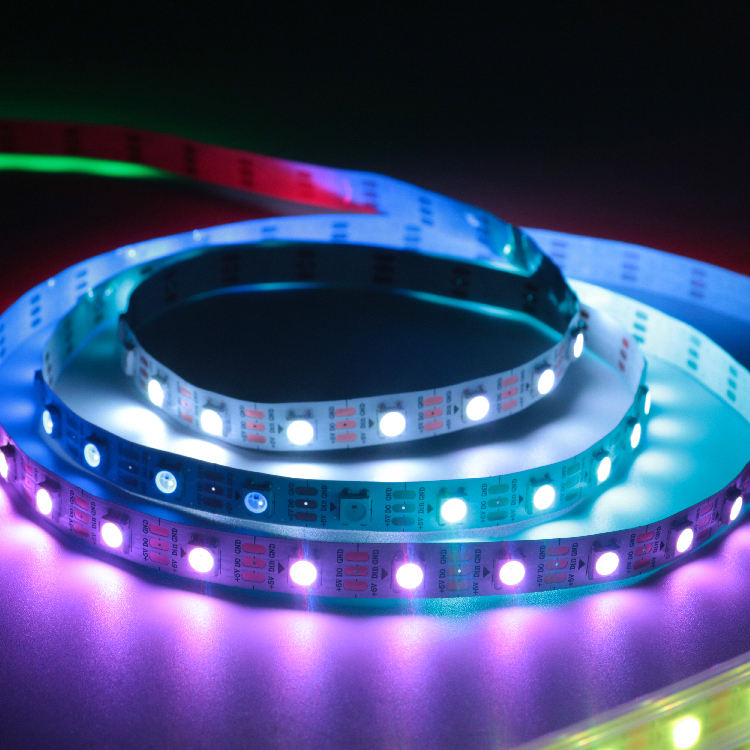
Each diode receives exactly 5 volts from the supply line. This direct drive enables fine color control but makes them sensitive to cable length. Runs exceeding five meters typically need additional power injection lines. Products such as SK6812-based strips exemplify this configuration by offering individually addressable RGB diodes ideal for indoor displays.
When to Choose 5V Addressable LED Pixels
Five-volt strings are best suited for signage, channel letters, or artistic installations where wiring distances are short. They integrate seamlessly with microcontrollers like Arduino or ESP32 for DIY programming environments. However, installers must account for frequent power feeds when scaling beyond compact decorative layouts.
Why Is 12V Considered the Standard Choice for Many Projects?
A 12V addressable LED pixel string provides a practical midpoint between performance and simplicity. It supports longer wiring distances than 5V while avoiding some of the complexity associated with high-voltage setups.
Comparing 12V vs 24V Addressable LED Pixel Strings
12V systems often use inner regulators for LED groups. For instance, WS2811 designs ensure even light despite small voltage drops. When set against 24V LED pixels, they need more power injection. Yet, they match better with everyday controllers and add-ons.
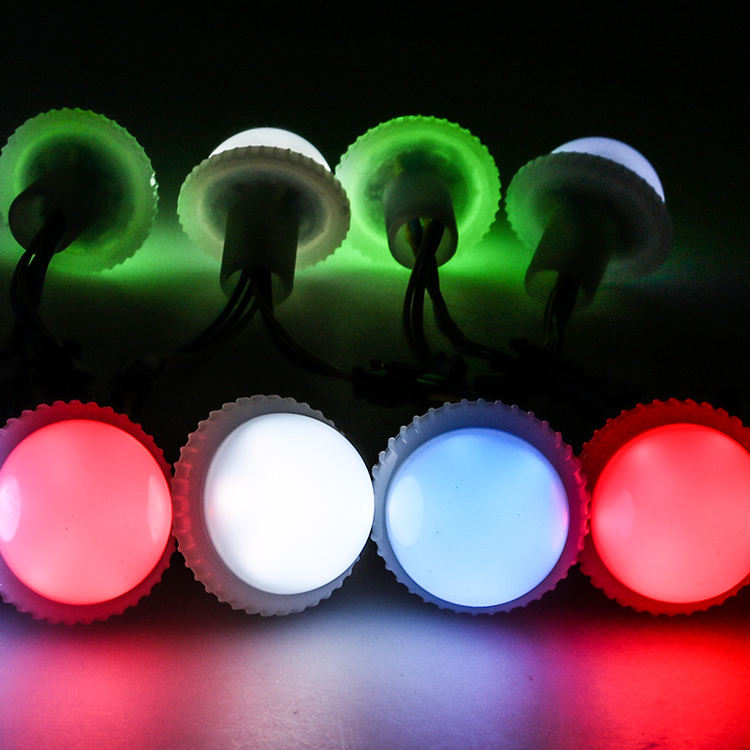
A good example is the Addressable 12V 360 Degree Point Lighting Waterproof 3D LED Pixel String Light featuring UCS1903/GS8206 ICs and IP67 protection. This model uses two SMD3535 LEDs per node at only 0.72W consumption per piece—ideal for indoor-outdoor architectural effects that demand smooth gradients within moderate cable lengths.
Applications Where 12V Pixel Strings Excel
Medium-sized building outlines or façade lighting projects benefit from this configuration due to its balance of safety and efficiency. Twelve-volt strings are also widely supported by commercial controllers like DMX decoders and Artnet interfaces used in digital lighting networks.
When Should You Use a 24V LED Pixel String?
Large-scale installations such as bridges or skyscraper outlines require long continuous runs without visible dimming; here, a 24V addressable LED pixel string becomes indispensable.
Advantages of Using Higher Voltage (24V) Systems
Operating at double the voltage halves current flow per circuit section, minimizing both heat generation and conductor size requirements. Fewer injection points are needed over long distances—reducing maintenance time and simplifying system architecture.
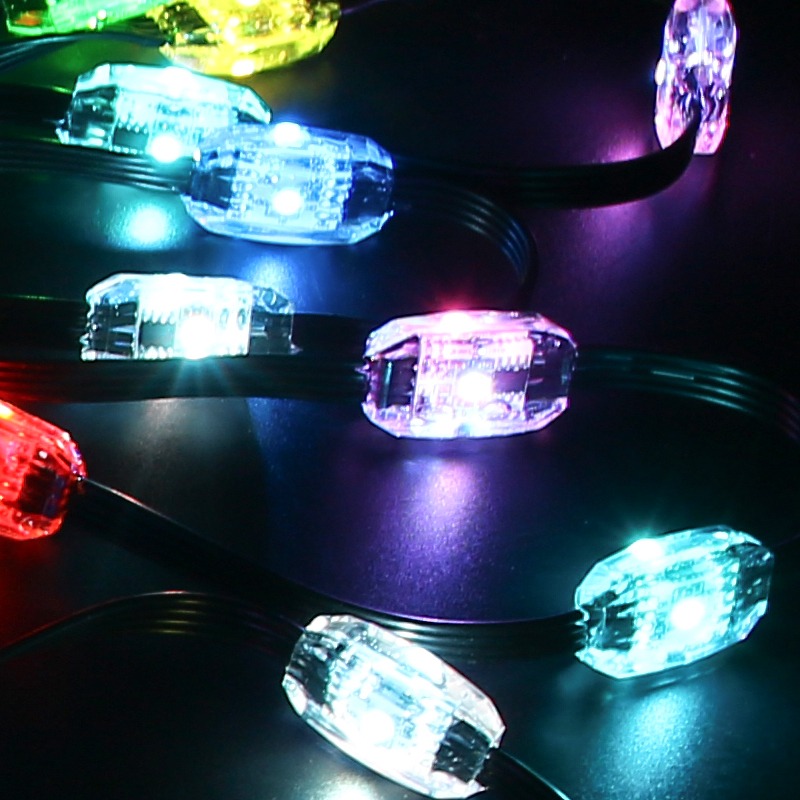
The Outdoor S14 12V 24V Pixel Garden Lamp RGB RGBW LED String Light demonstrates this advantage well: it supports DC12 or DC24 volts with three SMD5050 LEDs per bulb under an IP67 waterproof housing. Each lamp consumes up to 1.8W while maintaining full RGBW control via UCS1903 or GS8208 chips—ideal for outdoor gardens or event venues requiring robust performance under variable weather conditions.
Best Voltage Options for Outdoor Pixel Lights
For runs exceeding ten meters without intermediate feeds, using a 24 volt system ensures even illumination across all segments. The Outdoor Programmable 24V Pixel Light 120° RGB/RGBW Pixel LED Lighting offers an excellent case study: built with SMD5050 RGBW diodes on DMX512/UCS2903 control logic at IP67/IP68 rating, it provides stable output suitable for professional exterior façades or entertainment complexes.
How to Match Power Supplies and Controllers with Different Voltages?
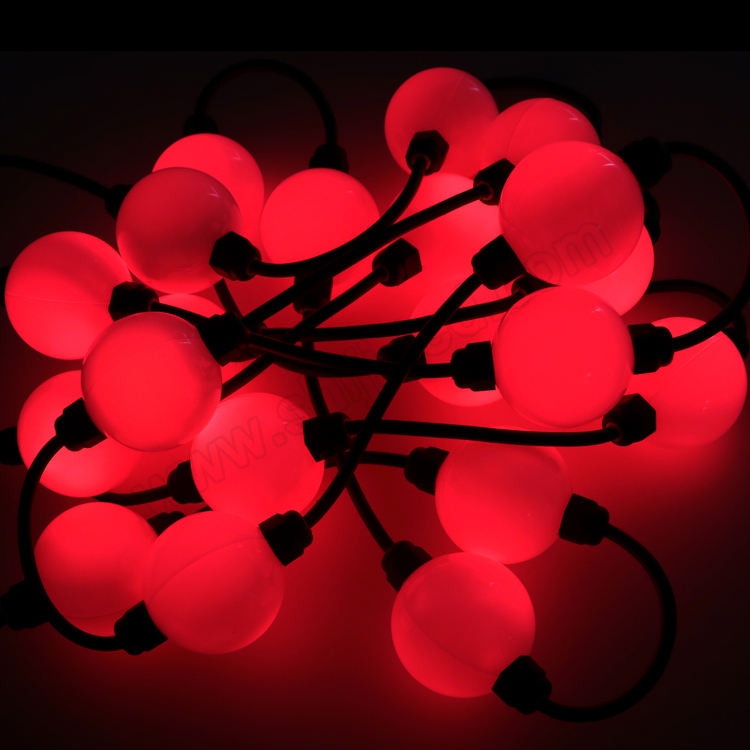
Voltage alignment between components is critical in preventing malfunction or premature failure across an addressable lighting network.
Power Supply Selection Based on System Voltage
Choose regulated DC supplies rated about twenty percent above total load capacity while matching nominal output exactly (e.g., 5 / 12 / 24 volts). Distribute multiple supplies evenly along extended runs so each section receives balanced current delivery without overloads.
Controller Compatibility with Addressable LEDs (e.g., WS2811)
Controllers should provide data signals compatible with pixel IC input levels—either TTL or differential RS485 types, depending on distance requirements. For lengthy data lines exceeding several meters, signal amplifiers or repeaters maintain integrity across the CAT6 cabling infrastructure common in large installations.
Customization Options from SHIJILIGHTING: Flexible Spacing and Voltage Support
Shenzhen Shiji Lighting Co., Ltd. started in 2010. Since then, it has built the brand SHIJILIGHTING. The firm focuses on digital light work. This includes programmable bars, addressable strips, and pixel modules. They adapt to various voltages like 5V/12V/24V setups. These suits are for indoor shows and outdoor building projects.
Yes, OEM products are allowed. We have a strong design/engineering team to give help. We bring years of skill in OEM. Custom spacing from 50mm to 150mm lets designers adjust to exact wall shapes or art plans. At the same time, it holds steady light strength over full runs.
Summary
Choosing between different working voltages depends on project scale:
| Voltage | Typical Use Case | Strength |
| 5 Volts | Compact decorative signs | High precision color control |
| 12 Volts | Mid range commercial façades | Balanced performance & cost |
| 24 Volts | Large outdoor architecture | Minimal voltage drop & wiring |
For pro setups that need trust in mixed weather, SHIJILIGHTING offers full aid. This covers custom waterproofing like IP65/IP67/IP68 and controller link design. It helps clients get steady visual outcomes in tough jobs. This comes through skilled making at SHIJILIGHTING.
FAQ
Q: What determines whether a project should use a 5V or 12V addressable LED pixel string?
A: Smaller installations benefit from 5 volt systems due to their fine color resolution but require short cable runs; medium projects typically adopt 12 volt strings that extend further without heavy power injection needs.
Q: How does using a 24 volt LED pixel string help prevent voltage drop?
A: Higher operating voltage reduces total current through conductors by half compared with lower-voltage designs, significantly decreasing resistive loss over distance while keeping brightness uniform throughout long chains.
Q: Which factors influence controller selection for mixed voltage addressable LEDs?
A: Controllers must match both data protocol (SPI or DMX) and logic level; multi output models supporting separate voltage channels simplify integration when combining 5 volt decorative zones with 24 volt structural lighting sections.
Q: What is the ideal spacing between nodes in commercial-grade pixel strings?
A: Most professional systems use spacing between 50–150mm, depending on visual density targets; SHIJILIGHTING customizes these intervals according to façade geometry or animation detail requirements.
Q: How can I maintain consistent brightness across extended runs of WS2811 based strings?
A: Implement regular power injection every few meters based on current draw calculations or shift toward a higher-voltage configuration, such as a 12 volt WS2811 layout that incorporates built in regulators stabilizing output along longer lines.