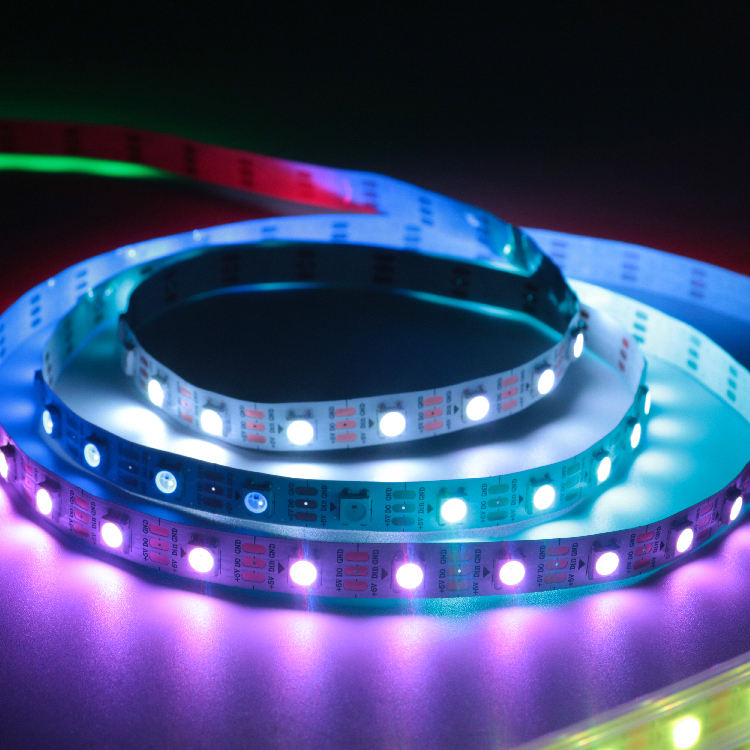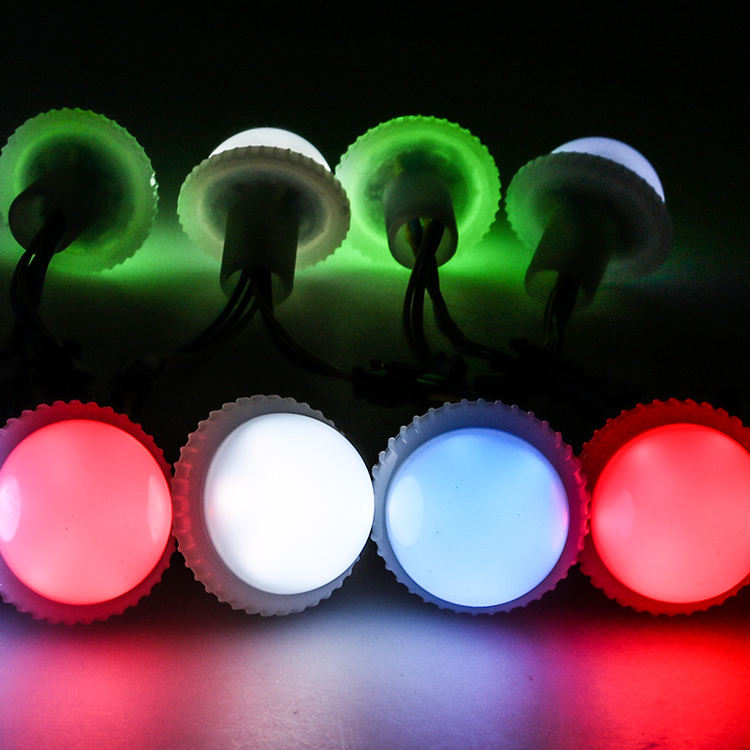
Commercial buildings often need lighting that does more than create colors. The same LED Point Light system may need to support brand campaigns, seasonal events, and everyday architectural illumination.
The right choice between RGB and RGBW depends on whether the project prioritizes visual effects, functional white lighting, or both.
Quick rule: choose RGB when color effects lead; choose RGBW when daily white light and color scenes share one installation; test both when optics or viewing distance remain uncertain.
| Project priority | Review first | Why | Confirm |
| Color-first branding or events | RGB | Saturated effects and programmable scenes | Brand color, pixel layout, controller |
| Daily white light plus color | RGBW | Dedicated white channel plus RGB effects | White output, optics, voltage, IP grade |
| Mixed or uncertain facade | Test both | Site distance and optics can change the result | Mockup, night view, full-load test |
What Is the Difference Between RGB and RGBW LED Point Light?
How Does RGB LED Point Light Create Color Effects?
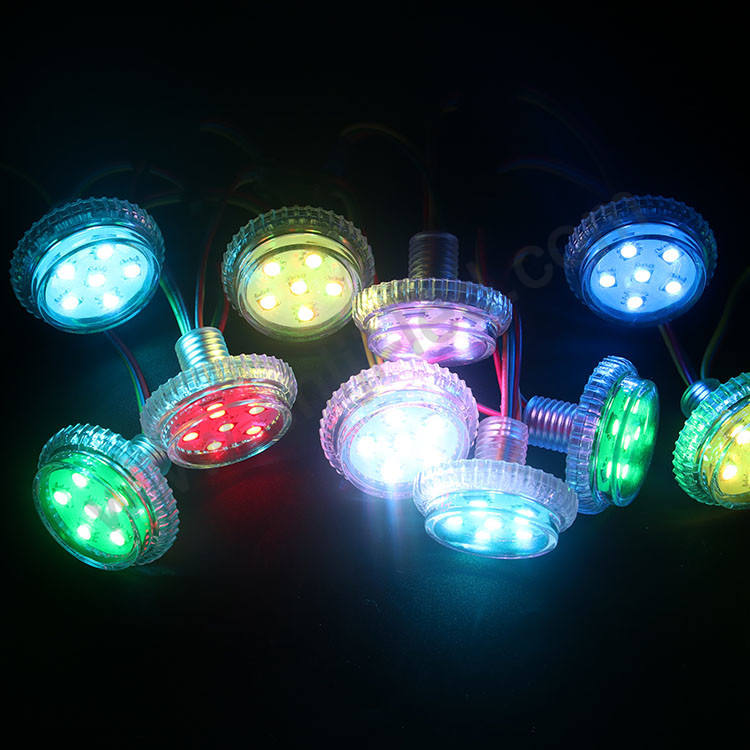
RGB LED Point Light uses red, green, and blue channels to mix colors for dynamic effects, brand palettes, decorative facades, signage, and event scenes. An addressable LED Point Light is a single-point digital lighting node with an independent drive IC, so each pixel can be controlled separately for color and brightness.
How Does RGBW LED Point Light Improve Functional Lighting?
RGBW adds a dedicated white channel to RGB. That separate white output can make daily architectural lighting, hospitality entrances, and commercial exterior lighting look cleaner than a white tone mixed only from red, green, and blue. A Permanent Christmas Holiday LED Point Light Source RGBW Full Color Pixel Light String is one RGBW product direction for projects that need both color scenes and white output. Final appearance still depends on CCT, CRI, optics, and calibration.
Why Does White Light Quality Matter in Commercial Projects?
White light affects building appearance, signage visibility, hotel atmosphere, and retail presentation. RGB may be enough for decorative color, but RGBW should be reviewed when the system must support everyday white lighting as part of the real operating schedule.
When Should Commercial Projects Choose RGB LED Point Light?
Which Applications Are Better Suited for RGB Lighting?
RGB is often suitable for entertainment venues, event spaces, seasonal displays, decorative facades, amusement decoration, and other color-first applications. It is a practical choice when the project mainly needs saturated color, movement, and programmable scenes instead of functional white light.
How Can RGB LED Point Light Support Branding and Visual Identity?
RGB LED Point Light can turn a facade, entrance canopy, landmark, or commercial sign into a programmable brand surface. Corporate colors, campaign scenes, festival palettes, chasing effects, scanning effects, flash, color fading, and video-style playback can all support visual identity when the controller and pixel layout are planned correctly.
What Are the Limitations of Using RGB for Daily Functional Lighting?
RGB is not always ideal for daily functional lighting because mixed white can look less natural than a dedicated white channel. For hotels, office entrances, retail streets, and public spaces, buyers should decide whether white mode is only an occasional effect or a nightly requirement.
When Is RGBW LED Point Light a Better Choice?
Why Is RGBW Suitable for Architectural and Hospitality Lighting?
RGBW LED Point Light is often a better fit where one system must shift between professional white illumination and color effects. Hotels, commercial buildings, public spaces, landscape projects, and premium outdoor installations may need normal white lighting most nights, then switch to seasonal or branded colors when required.
How Does RGBW Balance Branding Effects and Everyday Lighting?
RGBW helps a building run normal white mode on weekdays, corporate colors during launches, and event colors during holidays. SHIJILIGHTING product lines include addressable LED pixel light, LED strip light, LED neon flex, 3D LED tube light, LED decorative module, DMX linear light, and supporting LED controllers, so RGBW point-light decisions can be coordinated with the full control system.
What Projects Benefit Most From RGBW LED Point Light?
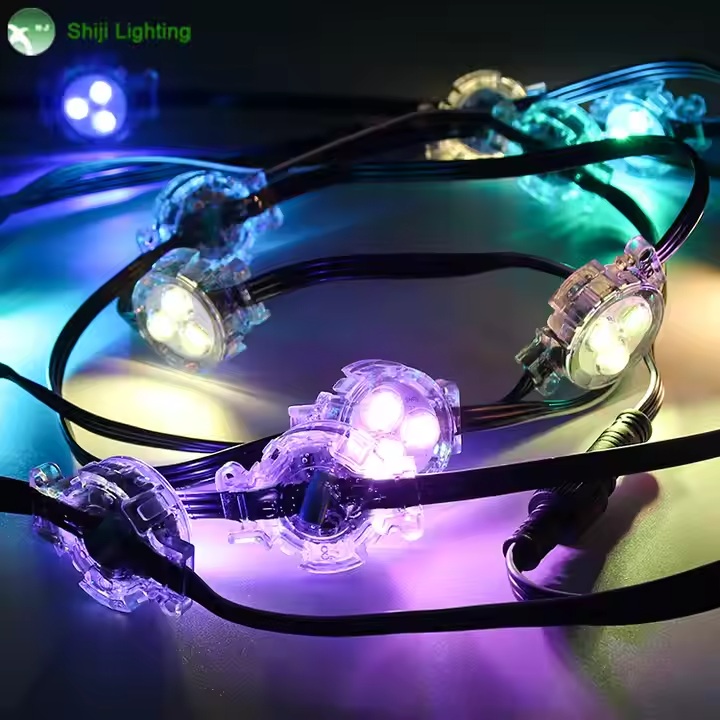
Facade branding, mixed-use buildings, hospitality entrances, waterfront landmarks, and permanent outdoor installations can benefit from RGBW when both identity and utility matter. The SJ-IC30-2904 is a 30mm UCS2904 RGBW Permanent Outdoor Pixel Dot Light with IP68 waterproof construction, 3 pcs SMD5050 RGBW LEDs, DC12V/24V/48V options, 0.96W per unit, full silicone encapsulation, a UV-resistant milk white lens, track concealed installation design, and a two-year warranty. These are model-specific details, not universal requirements.
How Should Buyers Select LED Point Light for Different Project Requirements?
How Do Viewing Distance and Beam Angle Affect RGB vs RGBW Selection?
Viewing distance changes how each point reads. From far away, an LED Point Light array may appear as a media facade or brand graphic; from close range, viewers notice dot spacing, lens shape, beam edges, and uniformity. Beam angle should match the facade distance, intensity target, optical distribution, and white-light expectation.
How Do Control Systems Influence LED Point Light Selection?
Control compatibility should be confirmed before ordering. SPI protocol with ICs such as WS2811 or UCS2903 can support holiday and permanent lighting applications, including suitable WiFi or Bluetooth mobile APP control. DMX512 is used for high-end commercial, stage, and large media facade projects with synchronized multi-group effects.
Other options may include SD, DMX, Art-Net, WiFi, Bluetooth, PC controller, Madrix, and master-slave synchronous control systems. No controller should be assumed to work with every LED Point Light; confirm IC type, protocol, voltage, pixel count, addressing, refresh needs, and zone structure.
What Outdoor Conditions Should Be Considered Before Choosing LED Point Light?
Outdoor selection should start with waterproof requirements, temperature, UV exposure, humidity, salt air, cable routing, connector position, mounting method, and maintenance access. IP65, IP67, and IP68 can all be relevant. IP67 can fit general outdoor pixel strings, while IP68 fully sealed pixel lights can fit permanent roof, underwater, seaside, and high-humidity scenarios; IP68 is not automatically the best choice for every site.
What Should Buyers Confirm Before Ordering RGB or RGBW LED Point Light?
Which Specifications Should Be Reviewed Before Project Approval?
Before approval, review voltage, brightness, color performance, IP rating, lens type, beam angle, mounting method, cable length, connector type, control compatibility, and power distribution. Buyers comparing formats can also review a 30mm 12V Amusement Pixel Light Waterproof IP67 RGB RGBW LED Point Light Source as one product example covering RGB and RGBW point-light options. Do not approve from a product title alone; request the current datasheet, wiring diagram, and photometric data.
Should Buyers Test RGB and RGBW LED Point Light Samples Before Bulk Orders?
Sample testing should include a real installation mockup, nighttime appearance, white output, color effects, controller compatibility, cable length, connector fit, power behavior, and installation fit. A standardized LED quality-control flow can include incoming raw material inspection, semi-finished PCB aging, 24-hour power-on aging, waterproof soak testing, light-color consistency sorting, and shipment random inspection, but project-side testing still verifies the actual system.
What Custom Options Should Commercial Buyers Discuss With Supplier
Commercial buyers should discuss size, lens, cable, mounting, waterproof configuration, control requirements, packaging, LED quantity, wire color, connector type, and track accessories. SHIJILIGHTING customization can include drawing-based customization, size, voltage choices such as 5V/12V/24V/48V, IC choices such as WS2811, UCS2903/UCS2904, GS8208, IP grade, packaging, LED quantity, wire, and outdoor configuration. Larger facade or signage projects can compare Customized Permanent Lights 45mm Pixel Light Waterproof RGB RGBW Pixel Point Light Source options against drawings, control plans, and maintenance access. Our final specification should connect the visual target, environment, controller architecture, power plan, and service plan.
For a project-specific recommendation, send the facade drawing, viewing distance, operating scenes, installation environment, target voltage, and controller model for review before production.
FAQ
Q: What is the difference between RGB and RGBW LED Point Light?
A: RGB LED Point Light uses red, green, and blue channels for color effects. RGBW adds a dedicated white channel for projects that need both color-changing scenes and cleaner white output.
Q: Is RGBW LED Point Light better than RGB for architectural lighting?
A: RGBW is often better when architectural lighting needs daily white mode plus color scenes. RGB can still fit decorative facades, events, and brand-color effects where white lighting is not central.
Q: Which LED Point Light is better for building branding and color effects?
A: RGB can work well for saturated brand colors, campaigns, festivals, and dynamic visual identity. RGBW should be considered when the building also needs regular white illumination.
Q: Can LED Point Light provide both white lighting and color-changing effects?
A: Yes. RGBW LED Point Light can provide a dedicated white channel plus RGB color-changing effects when the controller, voltage, wiring, and product configuration are matched correctly.
Q: What should be considered before choosing LED Point Light for outdoor projects?
A: Review waterproof grade, temperature, UV exposure, cable routing, connector protection, mounting method, control system, maintenance access, sample performance, and whether RGB or RGBW best fits the operating schedule.