What Is a Programmable LED Strip and Why Does It Matter
Understanding Addressable and Pixel LEDs
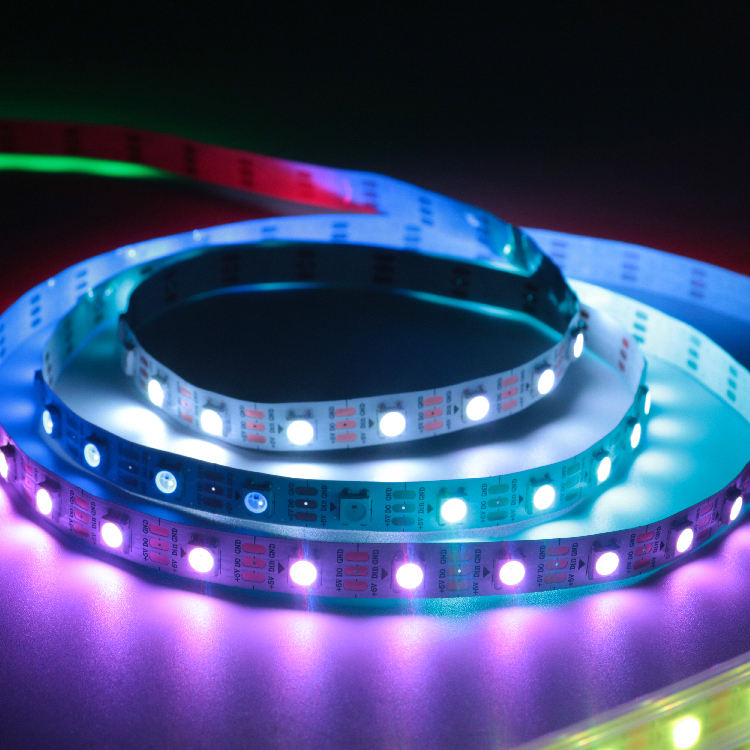
In current architectural lighting and commercial stage design, a programmable LED strip is much more than a simple light source. It serves as a digital medium for moving visual displays. The core of this technology lies in addressable LEDs and pixel LEDs. Unlike traditional lighting that only shows one static color, these special parts let engineers control every single light-emitting diode on its own. This creates smooth gradients, chasing effects, and complex matrix animations.
How Programmable LED Strips Differ from Standard LED Strips
Standard LED tapes work on a shared control bus. This means the entire circuit changes color or brightness at the same time. In contrast, a programmable LED strip setup uses intelligent IC chips placed directly into the circuit. This point-to-point data method allows one continuous loop to show millions of very distinct color combinations at once.
Common Applications for Programmable LED Strips
From engaging building facades to interactive theme park installations, custom programmable LED solutions are very important. Commercial exhibition digital backdrops, high-end hospitality ambient lighting, and professional broadcast sets depend on this flexible lighting design. They capture audience attention and improve the overall spatial experience.
Essential Controllers for Programmable LED Strip Projects
Choosing the Right Microcontroller or Driver
Every high-quality smart LED strip setup needs a processing unit. This unit must handle a large data flow. For basic linear animations, standalone offline controllers with SD card support work well. But large-scale matrix projects that need real-time interaction with audio-visual signals require commercial-grade Ethernet drivers. These prevent data bottlenecks.
How Controller Features Affect Functionality
The refresh rate and grayscale resolution of the driver control the final visual quality of the RGB pixel strip. High-frequency refresh rates remove flickering on camera. This ensures clean broadcast quality. At the same time, a high grayscale resolution produces very smooth transitions in low-light color ranges. These changes make the digital lighting feel natural.
Popular Controllers Used by Designers and Engineers
During the initial prototyping phase, industry experts often use open-source microcontrollers. These give maximum programming freedom. But for actual commercial deployments, professionals use specialized SPI pixel converters and cascading controllers. These integrate smoothly with mainstream lighting mapping software. They provide flawless frame synchronization.
Power Supply and Wiring Components
How to Match Power Supply to LED Strip Requirements
Stable DC power forms the foundation of any reliable digital LED strip project. Engineers must calculate the maximum system load accurately. They should keep at least a 20% safety margin. Large commercial setups draw significant current. For this reason, anticipating power distribution nodes is critical during the initial drafting phase.
Wiring Considerations and Signal Integrity
When transmitting high-frequency serial data over long distances, electromagnetic interference can cause severe flickering. Maintaining signal integrity requires high-quality impedance-matched shielded cables. For extensive commercial runs, selecting resilient hardware is just as critical as the wiring itself. For example, our SJ-10060-8208-12V GS8208 Pixel 60Leds Full Color Changing SMD5050 12mm Addressable Led Light Strip features the GS8208 chip with dual-data transmission. This specific programmable LED strip guarantees that even if a single pixel gets physically damaged, the backup data channel instantly takes over. It ensures the rest of the lighting array continues to function without signal interruption.
Connectors and Accessories Needed for a Safe Setup
Reliable connection terminals reduce long-term maintenance costs greatly. IP65-rated or higher anti-detachment pigtail connectors are required for outdoor setups. Mechanical self-locking designs with pure copper gold-plated pins offer superior conductivity. These resist environmental oxidation and vibrations over the years of continuous operation.
Accessories and Optional Components
Level Shifters, Resistors, and Capacitors
Many central control boards output a 3.3V logic signal. Standard LED Pixel Lights require a 5V threshold to read data accurately. High-speed bi-directional level shifters remove data loss. Also, placing damping resistors at the data origin minimizes high-frequency reflections. Decoupling capacitors stabilize transient voltage spikes.
Mounting Hardware and Protective Housing
To adapt to diverse architectural surfaces, a custom programmable LED requires dedicated extruded aluminum profiles and polycarbonate diffusers. This hardware improves heat dissipation efficiency. It also removes harsh glare through secondary optical mixing. For extreme environments, UV-resistant silicone extrusion upgrades the hardware. It helps the setup endure harsh outdoor climates.
Software and Libraries for Programmable Effects
Premium digital lighting hardware comes alive through professional software platforms. Open-source libraries offer raw coding flexibility for custom engineering. Commercial mapping software lowers the barrier to entry. It allows designers to translate high-resolution video samples directly into impressive matrix animations.
Installation and Setup Best Practices
Planning the Layout and Measuring Lengths
Drafting a precise electrical topology map is a required first step. Professionals must measure the installation surface accurately. They use these measurements to map out data flow and power injection points. A well-planned layout optimizes space. It minimizes voltage drop risks and prevents expensive material waste during execution.
Avoiding Common Installation Mistakes
A frequent technical error is reversing the electrical polarity. Another mistake is ignoring the data flow direction. Every smart LED strip setup has clear directional arrows printed on the PCB. These must be followed strictly. Also, bending the flexible PCB too aggressively can cause microscopic fractures in the copper traces.
Tips for Testing and Troubleshooting
Segmented testing ensures high passing rates during final project commissioning. If a section of the RGB pixel strip fails to illuminate or displays erratic colors, the issue is almost always a disrupted data line or poor common grounding. Establishing a solid shared ground between the power supply and controller forms the cornerstone of all digital communication.
Why Choose SHIJILIGHTING for Programmable LED Strips
Quality and Reliability of Components
With over 14 years of dedicated engineering experience in pixel lighting, we at SHIJILIGHTING understand that product stability is the lifeline of any global B2B project. We use advanced automated surface-mount technology and rigorous photoelectric aging tests. These guarantee the electrical endurance of every roll. We proudly back our standard products with a comprehensive 2-year warranty.
Variety of LED Strip Options and Customization
Whether outfitting an intricate indoor broadcast studio or illuminating a massive architectural facade, we provide precise manufacturing solutions. For close-range high-density applications requiring perfect color fidelity, our SJ-10060-SK6812 is the ideal solution. It operates on 5V with 60 LEDs per meter. This digital LED strip utilizes SMD5050 components to deliver dense, smooth, single-point control. We can customize the PCB thickness and color to match your exact spatial requirements.
Customer Support and Guidance for Complex Setups
Product delivery is just the beginning of our partnership. Our experienced technical team provides comprehensive support for your most complex installations. They help from auditing your initial power topology to advising on signal degradation over long distances. We ensure your custom programmable LED vision is executed perfectly.
FAQ
Q: How do I calculate the total power supply capacity needed for my programmable LED strip setup?
A: The golden rule is to calculate the total maximum wattage and leave a safety buffer. Simply multiply the maximum power draw of a single pixel LED (when displaying full white) by the total number of LEDs in your circuit. If the total comes to 100W, you must add at least a 20% margin. This prevents the power supply from overheating. It makes a 120W or larger industrial power supply the safest choice.
Q: Why are the lights at the end of my smart LED strip turning yellow or appearing significantly dimmer?
A: This is a classic symptom of voltage drop. The copper traces inside the strip have microscopic resistance. Because of this, the voltage decreases over long distances. It starves the blue and green diodes of the necessary power. The professional solution is to run a parallel power wire directly from the main supply. This injects fresh power at the middle or end of your line.
Q: Can I cut or solder my custom programmable LED tape while the power is turned on?
A: Absolutely not. Cutting or soldering a live circuit creates momentary short circuits and destructive static surges. This will instantly cause irreversible breakdown damage to the fragile digital IC chips inside the strip. Always completely disconnect the main bus power before making any physical cuts, splices, or wiring adjustments.
Q: What hardware do I need to make my digital LED strip flash and change colors in sync with live music?
A: Achieving high-precision audio synchronization requires a control system capable of real-time frequency analysis. You need an Ethernet-based controller that supports the Art-Net protocol. It must connect to a master computer running professional VJ mapping software. The software samples the audio peaks and instantly translates that spectrum data into visual signals for your lighting matrix.
Q: What waterproof rating is necessary when I install an RGB pixel strip in an exposed outdoor environment?
A: Outdoor commercial projects must withstand heavy rain, UV radiation, and severe temperature fluctuations. It is mandatory to use products rated at least IP67 (silicone tube with full glue injection) or IP68 (full resin extrusion).