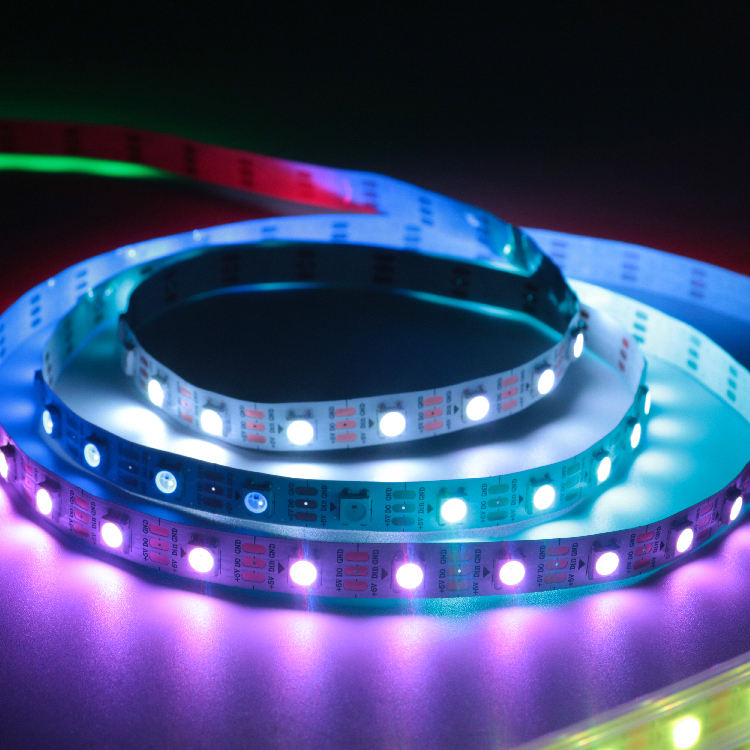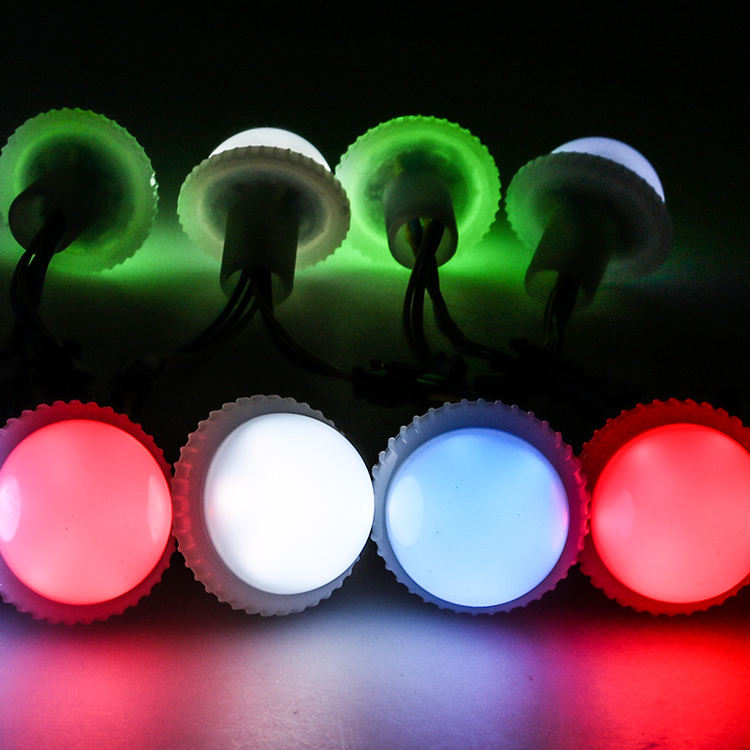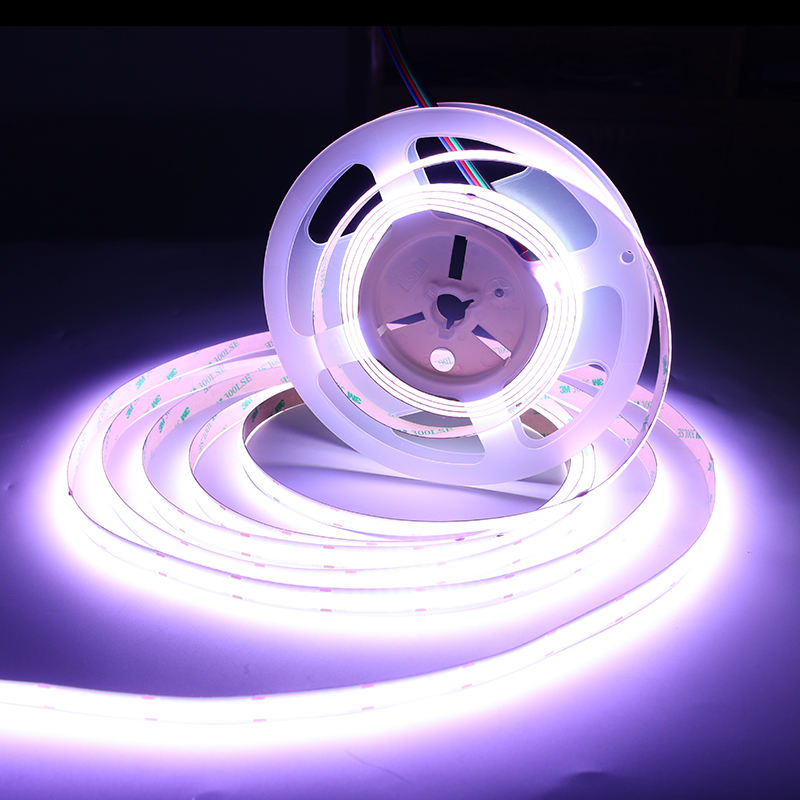
Choosing the best LED light strips in 2026 needs more than comparing brightness. A reliable LED Light Strip must fit the installation environment. It must also match the operating voltage, control method, power layout, and expected lighting effect. An indoor LED light strip often focuses on even illumination and hidden mounting. On the other hand, outdoor LED strip lights need better protection against water, dust, temperature changes, and movement.
What Makes an LED Light Strip Suitable for Indoor or Outdoor Use?
Indoor LED Light Strip Requirements
Indoor installations usually need consistent light. They also require adjustable brightness, low-profile mounting, and good heat dissipation. Under cabinets, shelves, and ceiling coves, the distance between the strip and diffuser decides whether visible light spots appear.
For even decorative lighting, our SHIJILIGHTING 24V 768 LEDs/m RGB COB LED Strip, Model SJ-100768RGB-COB-24V, uses a dense COB layout. It has a 10 mm PCB, 14 W/m power rating, and 31.26 mm cutting sections. This makes it suitable for protected indoor areas. A continuous RGB light line is preferred in these areas.
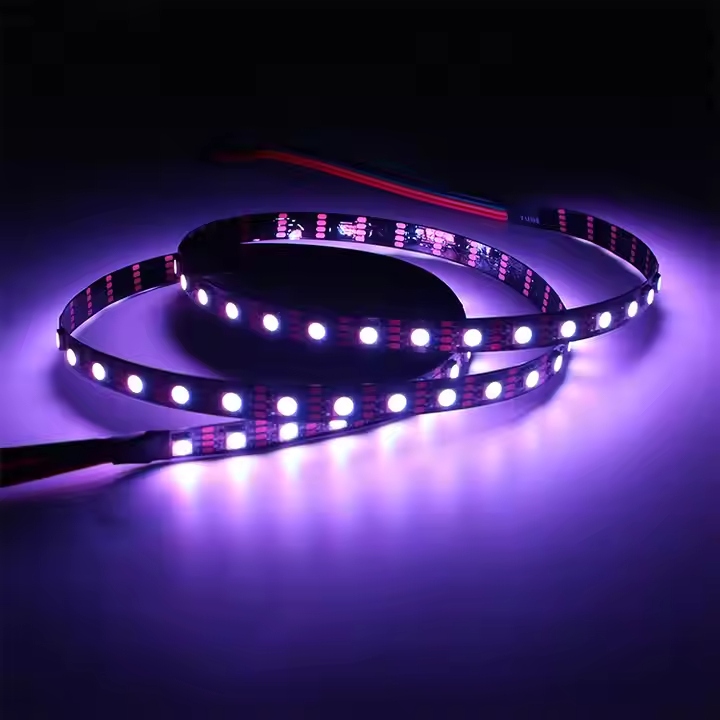
Outdoor LED Strip Light Requirements
A waterproof LED light strip is only reliable when the strip, connectors, cut ends, controller, and power supply all have proper protection. Outdoor projects should also use clips or channels. This is because adhesive tape may loosen under moisture, heat, or surface movement.
Which Type of LED Light Strip Is Best for Your Installation?
RGB, RGBW, and COB LED Strips
Standard RGB strips work well for shelves, counters, and decorative outlines. In these places, the whole strip changes color together. An RGBW LED strip adds a dedicated white channel. This makes it more practical when decorative color and usable white light are both required.
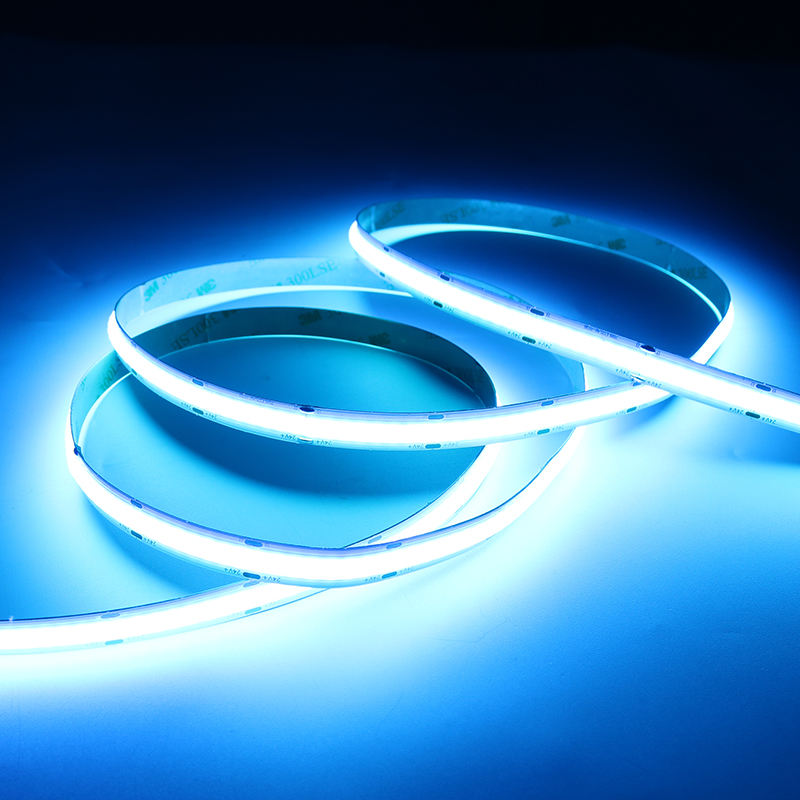
COB strips are ideal for visible linear lighting. Their dense light source reduces spotting. They work particularly well in shallow coves, display furniture, and counters.
Addressable LED Light Strips
An addressable LED light strip allows individual pixels or sections to display different colors. This supports chasing, scanning, flowing gradients, and programmed animation.
For gaming rooms, entertainment spaces, stages, clubs, and commercial displays, addressable lighting provides more detailed effects than standard RGB strips. It also allows multiple runs to be synchronized through compatible control systems.
Which LED Light Strip Specifications Matter Most?
IP Rating and Installation Environment
The IP65 vs IP67 LED strip decision depends on exposure. IP20 suits dry interiors. IP65 may be used in protected or occasionally damp locations. IP67 is more appropriate for exposed outdoor installations. IP68 LED strip lights may be chosen where stronger sealing is required.
The original IP rating does not automatically remain after cutting. Every new connection and cut end must be resealed correctly.
Voltage, Density, and Color Output
The 5V vs 12V LED strip choice often depends on pixel control and run length. A 5V strip supports precise pixel-level effects. It usually needs more frequent power injection.
Our SHIJILIGHTING Waterproof 5V SK6812 SMD5050 RGB LED Strip, Model SJ-10060-SK6812, provides 60 individually addressable LEDs per meter. Each LED can be controlled and cut separately. IP20, IP65, IP67, and IP68 versions are available for different environments.
For longer runs, the 12V vs 24V LED strip comparison often favors higher voltage. This is because it reduces visible brightness loss. Our SHIJILIGHTING SJ-10060-8208-12V GS8208 Pixel 60Leds Full Color Changing SMD5050 12mm Addressable Led Light Strip uses dual signal lines. One failed pixel normally does not interrupt signal transmission. This holds true unless two adjacent pixels fail. It supports SD cards, Arduino, and DMX-related control options.
LED density affects brightness and visual smoothness. Pixel density determines animation detail. Buyers should check both specifications instead of assuming more LEDs always mean more controllable effects.
What Are the Best LED Light Strips for Different Areas?
Indoor Applications
For under-cabinet lighting, shelves, furniture, and ceiling coves, choose a narrow strip. It should have suitable cutting intervals and smooth output. COB or high-density strips are preferable where the light source remains visible.
Gaming rooms and entertainment areas benefit from addressable RGB or RGBW strips. They support music synchronization, animation, and scene-based control.
Outdoor and Commercial Applications
The best waterproof LED strip lights for patios should use sealed connectors, protected power components, and mechanical mounting. Building facades and permanent outdoor installations also need stable signal transmission and accessible replacement sections.
Programmable stage, club, and commercial installations should use reliable addressing. They should also have suitable SPI, DMX, or Art-Net control systems.
How Should You Plan Power, Control, and Installation?
Power Supply and Voltage Drop
Calculate total power by multiplying watts per meter by the complete strip length. Then add operating headroom. An undersized supply may cause flickering, dimming, overheating, or controller resets.
LED strip voltage drop can make the far end appear dim. It can also cause inaccurate colors. Power injection at both ends or intermediate points helps maintain consistent output. Cable size should also match the current and installation distance.
Controllers and Mounting
App, Wi-Fi, Bluetooth, and remote controllers suit residential lighting. SPI supports addressable pixel effects. DMX and Art-Net are more appropriate for synchronized commercial projects.
Test voltage, signal direction, color order, connectors, and every strip section before permanent installation. Clean and dry mounting surfaces carefully. Use aluminum profiles or clips where additional heat dissipation or stronger fixing is needed.
Keep controllers, power supplies, and important joints accessible for inspection. We provide a 2-year warranty for SHIJILIGHTING LED lighting products.
FAQ
Q: Can indoor LED light strips be used outdoors?
A: Indoor strips should not be installed outdoors. This holds unless their IP rating, connectors, controller, and power supply are all suitable for weather exposure.
Q: What IP rating is best for outdoor LED strip lights?
A: IP65 may suit sheltered areas. IP67 is generally better for exposed outdoor installations. IP68 may be selected where stronger sealing is needed.
Q: Is a 12V or 24V LED strip better for long runs?
A: A 24V strip usually experiences less voltage drop over longer distances. Cutting length and controller compatibility should also be considered.
Q: What is the difference between RGB and addressable LED light strips?
A: A standard RGB strip changes the entire run together. An addressable strip controls separate pixels or sections. This enables gradients, chasing effects, and animations.
Q: Can waterproof LED strip lights be cut and reconnected?
A: Yes, when marked cutting points are provided. Every new connection and cut end must be resealed. This restores suitable environmental protection.