Public lighting works best for safety when it helps people identify paths, steps, edges, and possible dangers. It must do this without creating an uncomfortable glare. A modern LED point light system spreads small adjustable light nodes across walkways, buildings, and public facilities. This differs from a single high-output fixture. Multiple point lights enhance visual guidance. They also keep the original feel of the space.
The true value of architectural LED point lighting is not just higher brightness. It comes from the ability to place light exactly where needed. It allows changes to individual pixels. It can also react to various operating conditions.
How Can LED Point Light Systems Improve Public Safety?
Reduce Dark Spots and Improve Hazard Visibility
Dark gaps between standard fixtures can hide steps, curbs, surface changes, and obstacles. A well-spaced pixel LED light layout fills these gaps with even illumination. Designers can focus light around higher-risk areas. They do not need to raise brightness over the whole site.
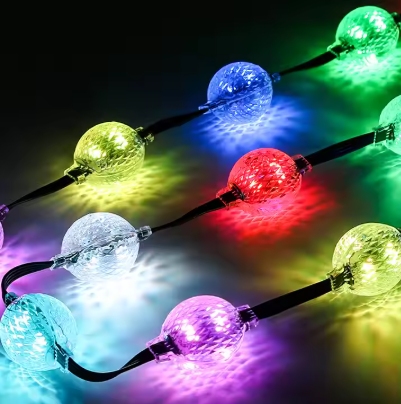
Support Pedestrian Wayfinding and Safer Movement
Color, sequence, and positioning help pedestrians spot entrances, exits, ramps, paths, and restricted boundaries. This makes pedestrian safety lighting useful in plazas, parks, transport facilities, and event areas. Visitor movement often changes during the day in these places.
Balance Visibility with Glare and Light Pollution Control
More light does not always mean a safer environment. Too much brightness can lower contrast. It can make nearby dark areas harder to see. Proper shielding, pixel spacing, beam distribution, and dimming let an outdoor LED point light network improve recognition. These features avoid intrusive glare at the same time.
Where Should LED Point Lights Be Installed in Public Areas?
Pathways, Steps, Ramps, Entrances, and Exits
Point lights can mark edges and changes in elevation. They do not need large mounting areas. They prove especially useful where conventional fixtures cannot give continuous guidance. The lighting should stay visible from the normal direction of travel. It must not shine directly into pedestrians’ eyes.
Parks, Plazas, Parking Areas, and Transport Hubs
In open public areas, lighting needs may shift with pedestrian traffic, events, and operating hours. An addressable LED point light lets different zones operate independently. This helps keep routes clear. It also cuts unnecessary illumination in quiet sections.
Building Facades, Public Signage, and Landscape Features
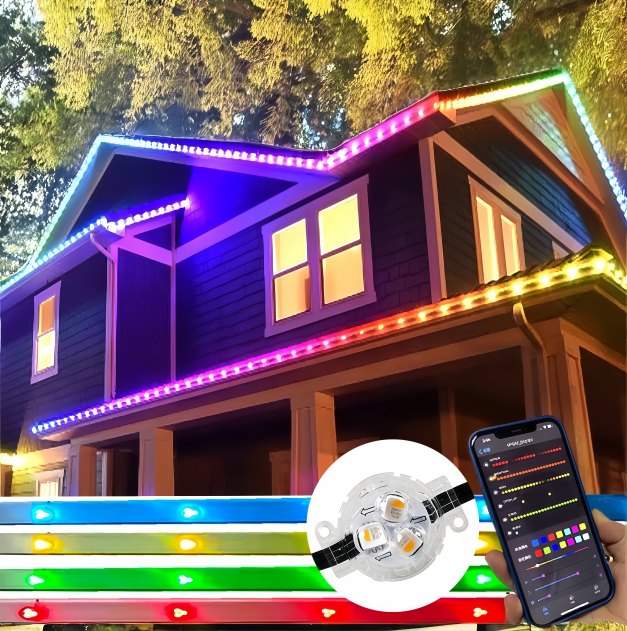
Facade lighting can aid orientation when entrances, building corners, and major landmarks appear clearly defined. Yet decorative effects should not interfere with functional information. Safety-critical routes should use steady colors and predictable patterns. They should avoid rapid flashing effects.
Which LED Point Light Features Matter Most for Public Projects?
Pixel Spacing, Beam Distribution, and Brightness Uniformity
Closer spacing creates smoother visual lines. Wider spacing works better for distant viewing and boundary marking. Designers should check the viewing distance, mounting surface, and required visibility first. They can then choose the right diameter and spacing of each LED point light.
Low-Voltage Power, IP Ratings, and Weather Resistance
A low-voltage LED point light can make power planning easier in public environments. Still, cables, power supplies, and connectors need suitable protection. An IP67 LED point light fits many exposed installations. Areas with long-term immersion risks may need a higher protection level.
RGBW Output and Addressable Lighting Control
RGB systems work well for visual effects. An RGBW LED point light adds a dedicated white channel for clearer functional lighting. This separates reliable route guidance from decorative color scenes. It also supports more natural visibility around entrances and pedestrian areas.
How Do Smart LED Point Light Controls Improve Safety?
Adjust Brightness by Time, Traffic, and Public Activity
With smart lighting controls, brightness can rise during busy periods. It can drop after activity slows. Gradual changes work better. Sudden shifts can temporarily reduce visual adaptation.
Use DMX and Artnet for Zoned Lighting Management
A DMX LED point light network can split a project into entrances, pathways, facades, and event zones. Each area can run a suitable scene. It remains part of one coordinated control platform.
Set Reliable Default Scenes for Control or Signal Failures
Dynamic programming should include a stable fallback scene. If communication stops, essential routes must stay clearly visible. They should not switch off or show random effects. Decorative point lights should never replace code-required emergency luminaires.
How Should You Select, Install, and Maintain an LED Point Light System?
Match the LED Point Light to the Environment and Viewing Distance
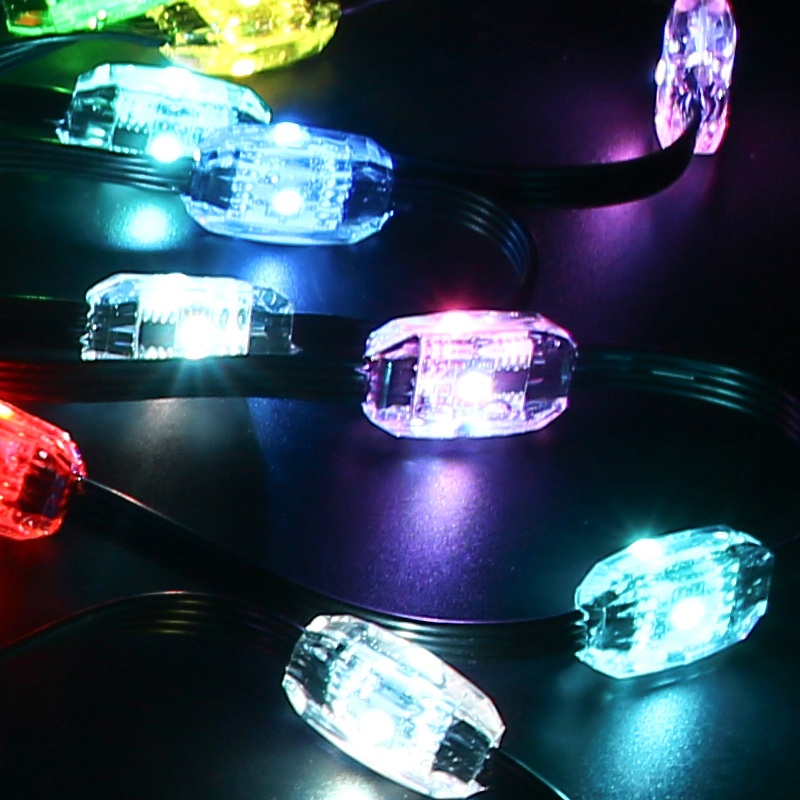
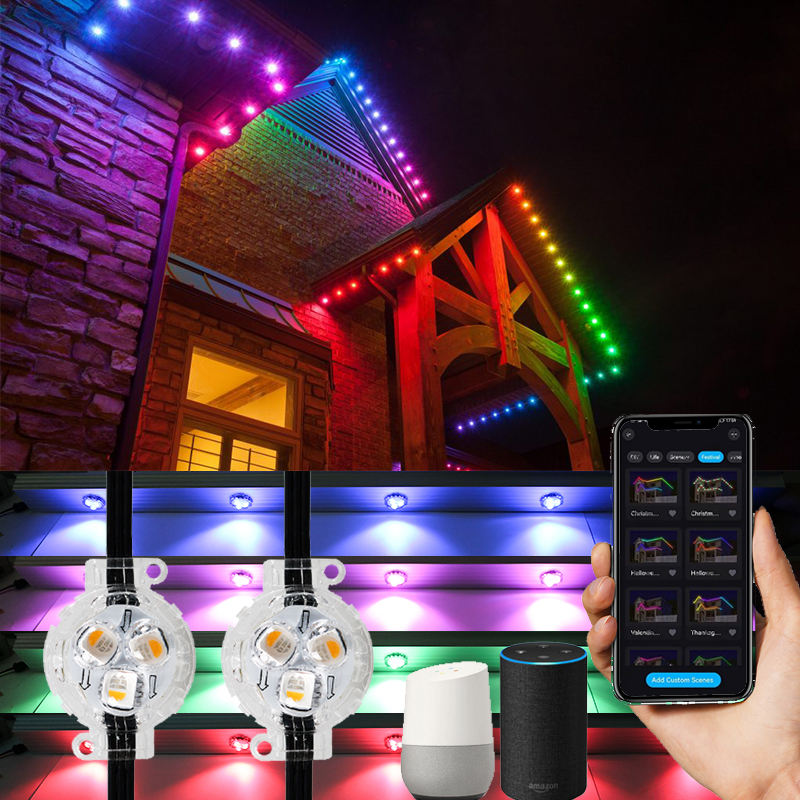
For multidirectional visibility, our Addressable 12V 360 Degree Point Lighting Waterproof 3D LED Pixel String Light, Model SJ-3015IC-360-12V, uses SMD3535 RGB LEDs, DC12V input, IP65/IP67 protection, and a 360-degree viewing angle. It suits suspended guidance features and public structures viewed from several directions.
For building edges and entrance outlines, our Waterproof Digital 30mm Pixel String Light 24V RGB RGBW Square Eaves Kit LED Point Light, Model SJ-30IC-2811-24V, combines DC24V operation, a 30 mm format, IP65/IP67 protection, and individually controlled output. The higher operating voltage works well for longer architectural runs. Voltage drop must be managed carefully in these runs.
Plan Power Distribution, Waterproof Connections, and Service Access
A reliable LED point light installation should include calculated power-injection points, protected connectors, drainage planning, and accessible control equipment. Cable routes should be documented. This allows damaged sections to be found without dismantling an entire facade or pathway feature.
Test the System and Schedule Regular Maintenance
Testing should cover nighttime visibility, glare, color accuracy, controller response, and fallback behavior. At SHIJILIGHTING, we support customized spacing, wiring, connectors, voltage, and control configurations for public projects. Our relevant waterproof LED point light products are supplied with a 2-year warranty.
FAQ
Q: Are LED point lights safe for outdoor public areas?
A: Yes, provided the selected lights have suitable voltage, weather protection, secure connections, and controlled brightness. The complete system should also be installed according to local electrical and public-space safety requirements.
Q: What IP rating should an outdoor LED point light have?
A: IP65 may suit sheltered exterior areas. IP67 is more appropriate for direct rain and exposed installations. Locations subject to standing water or immersion require a separate environmental assessment.
Q: How far apart should each LED point light be installed?
A: Spacing depends on viewing distance, brightness, surface color, and the main objective. The objective may be continuous guidance or individual visual markers. A mock-up should be tested at night before final installation.
Q: Can an addressable LED point light improve pedestrian wayfinding?
A: Yes. Individually controlled pixels can define entrances, routes, boundaries, and changes in direction. Stable colors and slow transitions generally work better for wayfinding. Fast decorative animations are less suitable.
Q: How often should a waterproof LED point light system be inspected?
A: Public installations should be visually checked regularly. Scheduled inspections should cover connectors, seals, mounting points, cables, controllers, and power supplies. Inspection frequency should increase in harsh weather or high-contact environments.