Permanent Light can reduce the environmental burden of decorative and architectural lighting, but permanence alone is not proof of sustainability. A system delivers a real advantage only when it uses electricity efficiently, operates for necessary hours, survives its intended environment, and can be maintained without discarding large assemblies. Project owners should therefore evaluate the complete life cycle rather than accept a simple “LED equals green” claim.
Does Permanent Light Automatically Make a Project More Sustainable?
No. A permanent installation avoids repeated setup and removal, yet it also places drivers, controllers, wiring, housings, and mounting materials on a building for years. Its result depends on how efficiently those parts work together and how the system is used.
A useful comparison asks what service the lighting provides over a defined period. Compare annual electricity use, replacement parts, maintenance visits, packaging, and discarded material for both the proposed system and the current alternative. A Permanent Light project is more convincing when it improves those measurable outcomes, not merely when it remains attached to the property.
Advantage 1: Lower Operational Energy Use
Efficient LEDs can produce useful light with substantially less input power than incandescent sources. However, the environmental benefit comes from total energy consumed, which is a combination of system wattage and operating time.
Measure Wattage, Light Output, and Annual Operating Hours
Start with the complete connected load, including pixels, power supplies, controllers, and any equipment that remains energized in standby. Then estimate annual energy:
Annual energy (kWh) = system watts × operating hours per year ÷ 1,000
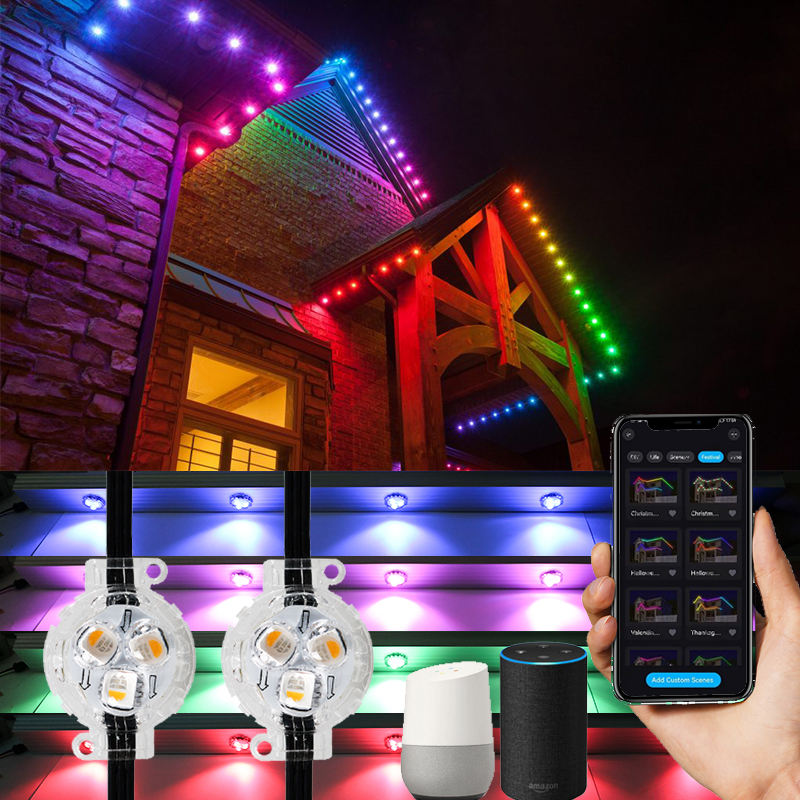
Compare systems at a light level that satisfies the same task. A lower-watt product is not a fair substitute if it provides too little useful light, while an oversized system wastes power even when its LEDs are efficient. The Waterproof Digital 30mm Pixel String Light 24V RGB RGBW Square Eaves Kit LED Point Light supports individual pixel control and SD, DMX, or ArtNet control options, which can help a designer match output to different operating periods.
Use Dimming, Scheduling, and Zoning to Avoid Rebound
Convenience can create a rebound effect: because permanent lights are always available, owners may run them for more nights, at higher brightness, or across a larger area. Timers, astronomical schedules, occupancy logic, dimming, and separate zones prevent this benefit from being lost. Program ordinary evenings differently from events, and turn decorative scenes off after the audience has gone. Also measure standby demand rather than assuming an “off” controller consumes nothing.
Advantage 2: Fewer Replacements and Less Recurring Waste
A fixed system can eliminate seasonal clips, damaged extension leads, replacement strands, cartons, and repeated transport. It can also reduce ladder work and the risk of damage caused by installing and removing lights every year. These advantages matter only if the installed system remains serviceable.
Compare Service Life with Seasonal Removal and Replacement
Do not treat the LED package’s rated hours as the guaranteed life of the complete installation. Drivers, connectors, seals, cable entries, control electronics, and thermal conditions may determine when service is required. Record the expected service life of each critical component and ask how weather, voltage quality, heat, moisture, and mechanical stress affect it. A durable housing and suitable ingress protection can reduce premature failures, but routine inspection is still necessary.
Make Failed Sections Replaceable
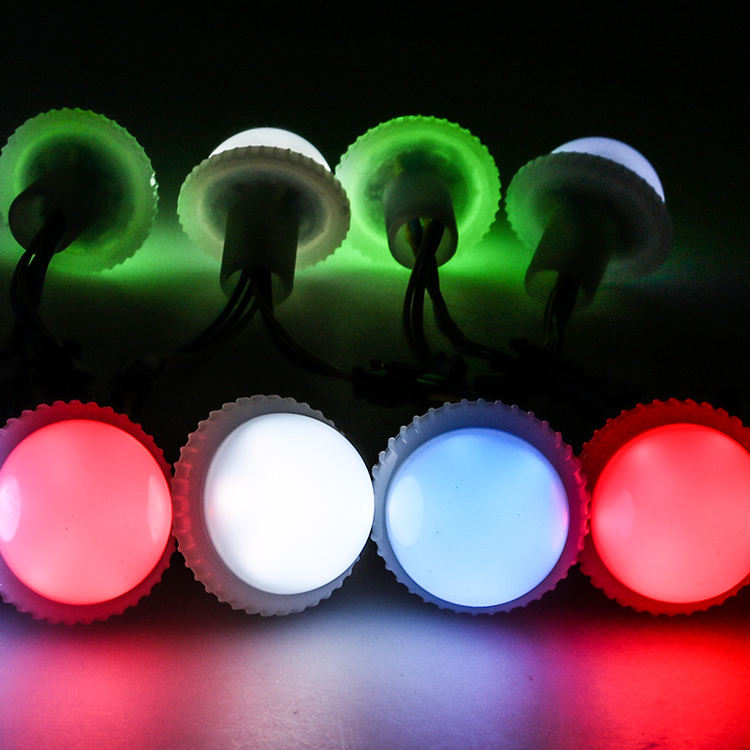
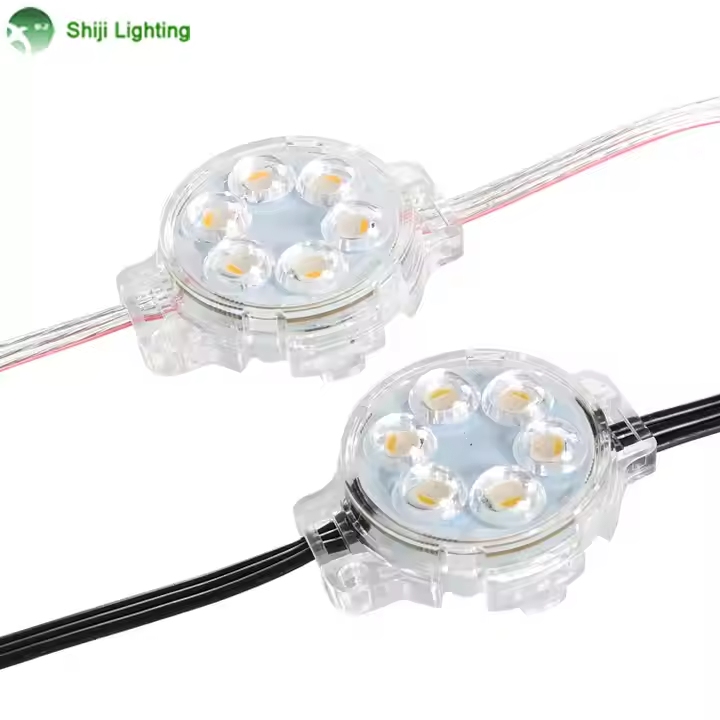
Specify accessible junctions, documented wiring, compatible spare sections, and replaceable power or control equipment. A fault in one area should not force the disposal of an entire roofline. The Permanent Christmas Holiday LED Point Light Source RGBW Full Color Pixel Light String lists waterproof connections, a UCS2904 SPI protocol, and identifiable electrical specifications. Clear specifications make future matching and fault isolation more practical. Before purchase, confirm the actual replacement procedure, spare-part availability, and connector compatibility for the planned configuration.
Environmental Impact Beyond Electricity Consumption
Electricity is often a major life-cycle factor, but it is not the only one. A Permanent Light system also contains copper conductors, circuit boards, LED packages, plastics, sealants, metal channels, power electronics, and packaging. Better efficiency reduces use-phase impact; durable, repairable construction helps address the material side.
Account for Materials and Supporting Components
Create a bill of materials that includes equipment commonly omitted from a lighting-only comparison: power supplies, control cabinets, data converters, mounting tracks, fasteners, surge protection, and replacement stock. Avoid unnecessary oversizing. More channels, pixels, and control hardware can add visual flexibility, but every component should serve a defined requirement.
Plan Maintenance, Reuse, and End-of-Life Recovery
Keep model numbers, wiring diagrams, controller files, test results, and spare-part records with the property. During upgrades, retain working tracks, cables, power supplies, or controllers when they remain safe and compatible. Separate electronic equipment from general construction waste and follow local collection rules. SHIJILIGHTING can document relevant product and control options for project planning; our team also recommends confirming service access before installation rather than discovering an inaccessible connection after a failure.
Reduce the Environmental Effects of Outdoor Light at Night
Efficient light can still be environmentally harmful when it is excessive, poorly aimed, or left on without purpose. Glare, spill light, reflected uplight, and very bright color effects can disturb neighbors, obscure the night sky, waste energy, and affect nocturnal habitats.
Direct Light Only Where It Is Needed
Define the visual task before choosing spacing and brightness. Roofline decoration does not require lighting the sky, nearby windows, or surrounding vegetation. Recessed mounting, shielding, careful aiming, and lower output can keep light on the intended surface. Test the installation after dark from several viewing positions, including the property boundary, because a layout that looks controlled during the day may produce unexpected glare at night.
Set Appropriate Brightness, Color, and Curfews
Use the lowest brightness that achieves the desired appearance. Reserve saturated animations and high output for limited event periods. For routine operation, select restrained scenes, warmer white where suitable, slower transitions, and a firm curfew. A late-night dimming step is better than one unchanged schedule. These settings reduce both energy use and exposure to unnecessary nighttime light.
A Practical Sustainability Checklist for Permanent Light Projects
Environmental performance should be verified before procurement and after commissioning. The comparison method in Permanent Light and temporary lighting solutions provides useful context, but each project still needs its own baseline and operating data.
Establish Baseline Metrics Before Procurement
Record the existing system’s connected watts, hours per night, active nights per year, replacement frequency, maintenance visits, and discarded material. For the proposed system, request the same information plus standby power, control compatibility, environmental rating, warranty, spare-part policy, and access method. State the required illuminated area and visual result so bidders are solving the same problem.
Verify Actual Performance After Installation
Measure connected load and confirm every timer, zone, dimming level, and curfew. Review energy use after the first month and again after a full operating season. Log failed sections and maintenance materials. If measured consumption is higher than planned, adjust brightness or schedules before adding hardware. A Permanent Light installation supports sustainability when its verified performance remains efficient, controlled, durable, and repairable throughout service.
FAQ
Q: Is Permanent Light always more environmentally sustainable than temporary lighting?
A: No. It can reduce repeated installation, replacements, and waste, but the result depends on system efficiency, annual operating hours, durability, repairability, and nighttime light control. Compare both options over the same service period and at the same required visual performance.
Q: How can annual energy use for Permanent Light be calculated?
A: Multiply the complete system wattage by the number of operating hours per year, then divide by 1,000 to obtain kilowatt-hours. Include power supplies, controllers, and standby loads. Use measured power after installation whenever possible because configured brightness may differ from the design assumption.
Q: Does a longer Permanent Light lifespan automatically reduce waste?
A: Only when the whole system remains useful and serviceable. Long-lived LEDs do not prevent early driver, connector, seal, or controller failures. Accessible components, compatible spare sections, accurate documentation, and replaceable power equipment are what turn potential longevity into actual waste reduction.
Q: Can smart Permanent Light controls increase electricity consumption?
A: Controls usually reduce operating energy when they provide dimming, zoning, schedules, or occupancy response. They can add standby demand, however, and easy access may encourage longer use. Measure standby power and program firm operating limits so convenience does not cancel the efficiency benefit.
Q: How can outdoor Permanent Light reduce light pollution?
A: Give every illuminated area a defined purpose, direct light only toward that area, use the lowest effective brightness, limit blue-rich or intense effects, and apply a nightly curfew. Check glare and spill light from neighboring viewpoints after dark, then revise aiming, shielding, or schedules as needed.