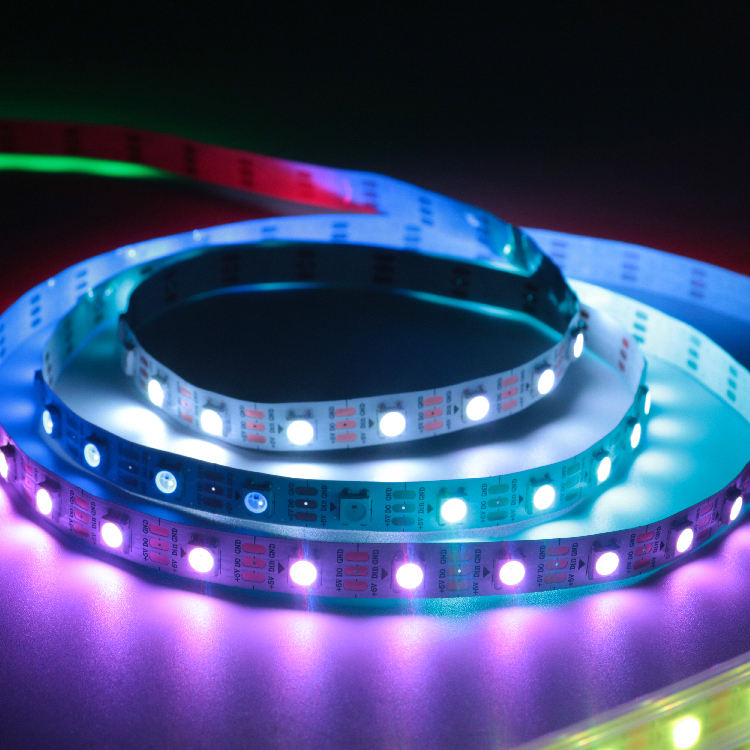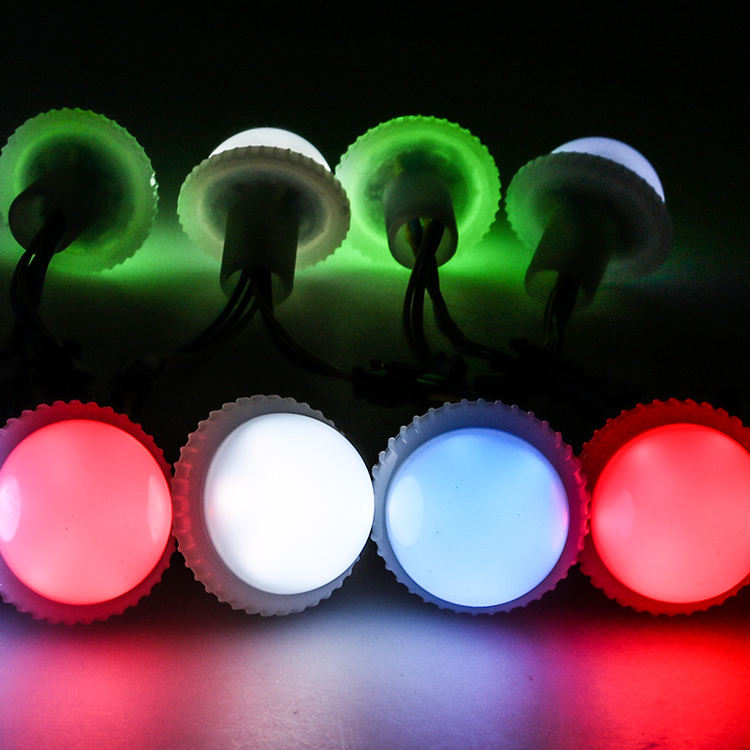
Commercial lighting projects require more than colorful effects. The right Addressable LED Strip must match the visual goal, control system, installation environment, power planning, and long-term maintenance requirements.
The best selection is not the strip with the most LEDs or effects, but the one that fits the complete project system.
What Should Commercial Buyers Define Before Selecting an Addressable LED Strip?
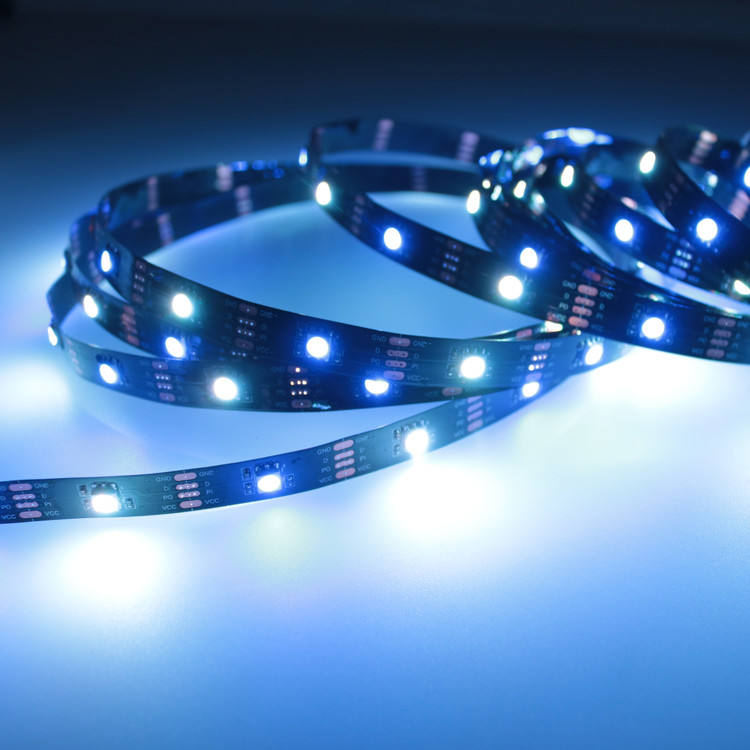
What Lighting Effect Does the Addressable LED Strip Need to Create?
Select an Addressable LED Strip from the effect brief first. Architectural accents, retail displays, hospitality spaces, entertainment venues, signage, and interactive installations may each require different color transitions, pixel resolution, or response speed. SHIJILIGHTING supplies Addressable LED Strip, Digital LED Pixel Light, and LED controller products, so the strip can be considered together with the effect and control method.
Does the Project Need RGB, RGBW, or More Specialized Color Control?
RGB works well for lively colors. RGBW becomes helpful when the same setup also needs a separate white channel. In an addressable or pixel strip, each LED has its own IC. This setup lets you adjust color and brightness for each one separately. RGBW adds a dedicated white LED chip to the RGB design. The change helps users keep white light quality separate from color effect needs. SK6812 RGBW Addressable LED Strip options can support projects that need both white lighting and color effects.
How Do Viewing Distance and Installation Location Affect Selection?
Shelves, counters, and visible coves that people see up close often need closer spacing or a diffuser. Hidden lighting and high ceilings can work with lower density instead. Common density options include 30, 60, 72, 96, and 144 LEDs per meter. You should treat that range as a selection guide. It is not a rule that higher density is always better
Which Addressable LED Strip Specifications Matter Most for Commercial Projects?
How Do Voltage and Power Requirements Affect Addressable LED Strip Selection?
Voltage affects current, run length, voltage drop, power injection, and controller planning. SHIJILIGHTING groups digital LED lighting into 5V, 12V, and 24V systems: 5V is used for short indoor decorative strips, 12V for medium-length landscape pixel lights, and 24V low-voltage-drop versions as a mainstream outdoor engineering option. The APA102C / SK9822 5V Addressable LED Strip can fit short digital strip work, while 12V or 24V may suit longer layouts. Choose the voltage that matches run length, wattage, injection access, and maintenance.
How Does LED Density Affect Brightness and Visual Quality?
Product examples include SJ-10060-SK6812 at DC5V, 60 LEDs/m, and 6-18 W/m; SJ-100768RGB-COB-24V at DC24V, 14 W/m, 768 LEDs/m, and a 31.26 mm cuttable section; and SJ-10060-8208 at DC12V and 60 LEDs/m. Use the model datasheet for Addressable LED Strip power supply sizing.
How Do IC Type and Control Protocol Affect Compatibility?
Not every controller works with every Addressable LED Strip. Match the IC type, voltage, color order, pixel count, data speed, and protocol. SPI-style strips suit pixel effects, while DMX, Art-Net, or decoders may be used for architectural or stage networks. Different IC solutions and LED controller products can be matched to the project, but compatibility must be confirmed before production.
How Should Addressable LED Strip Systems Be Planned for Commercial Installation?
How Should Power Supplies and Wiring Be Designed for Long Runs?
Power-injection planning should follow actual wattage per meter, operating voltage, current carried by each branch, the manufacturer’s maximum continuous length, and the voltage allowed at the far end. Wire gauge should be selected from branch current and full round-trip distance. Selected addressable strips may use flexible PCB, 5 m reels, and separate power and ground wires at the ends. The GS8208 12V Addressable LED Strip illustrates why voltage limits must remain model-specific, including its warning not to exceed 13V.
How Should Controllers and Addressable LED Strip Zones Be Organized?
Commercial systems often need multiple zones instead of one long line. Retail windows, reception walls, bars, and facade sections may need independent control, synchronized playback, or expansion. Define controller output capacity, repeater or decoder locations, service access, addressing, refresh expectations, and synchronization before ordering.
What Installation Environment Requirements Should Be Considered?
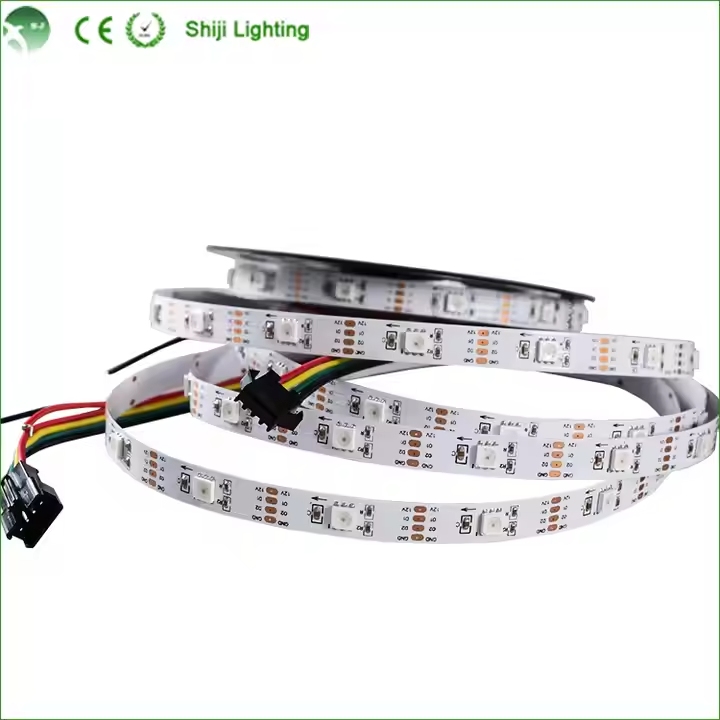
Environment determines protection, mounting, heat dissipation, and service access. IP68 is not automatically the best option; protection can change flexibility, connector design, and installation handling. IP20/IP65/IP67/IP68 choices and different PCB widths should be selected according to the actual exposure, cleaning method, bend radius, and maintenance plan. Buyers can compare custom LED solutions when PCB width, connectors, or labeling must fit a project standard.
How Can Buyers Verify an Addressable LED Strip Before Large Project Deployment?
What Should Be Tested With an Addressable LED Strip Sample?
Test brightness, color accuracy, RGBW white light performance, animation, controller compatibility, cable length, far-end voltage, connectors, mounting, and full load performance. LED quality control process can be standardized to include incoming inspection, PCB ageing, 24-hour full-load ageing, waterproofing, light colour uniformity sorting, and sampling for shipment. The sample, however, must still be tested under the final controller and power supply.
Which Product Documents Should Commercial Buyers Request?
Request the specification sheet, wiring information, power requirements, control compatibility, environmental rating, cut-mark information, and installation limits. The cut mark is the only safe cutting location for an addressable strip, so layout drawings should respect cut length from the start. Use the model datasheet for current sizing.
What Custom Options Should Be Confirmed Before Production?
SHIJILIGHTING supports OEM customization, including PCB size, layout, logo, and label customization. Buyers can also confirm PCB width, LED density, voltage, waterproof version, connector, packaging, and product labeling. The product range includes SK6812 RGBW Addressable LED Strip, APA102C / SK9822 5V Addressable LED Strip, GS8208 12V Addressable LED Strip, and WS2818 RGB 12V/24V series, but each should be matched to the visual goal, voltage plan, controller, and environment. Our two-year warranty can be considered alongside sample testing, documentation review, and installation planning.
FAQ
Q: How do I choose the right Addressable LED Strip for a commercial lighting project?
A: Start with the effect, viewing distance, environment, voltage, controller, wiring route, and service access. Match density, IC, waterproof version, and custom options to that system.
Q: What is the difference between RGB and RGBW Addressable LED Strip?
A: RGB is mainly for color effects. RGBW adds a dedicated white LED chip for installations needing both dynamic color and a separate white-light channel.
Q: What voltage should I choose for an Addressable LED Strip installation?
A: Choose voltage by run length, wattage, injection access, controller output, and voltage drop. 5V, 12V, and 24V can all be valid.
Q: How do I match an Addressable LED Strip with the right controller?
A: Confirm the IC type, voltage, color order, pixel count, protocol, output capacity, refresh requirements, and required SPI, DMX, Art-Net, or decoder integration.
Q: What should be tested before installing an Addressable LED Strip for a large project?
A: Test brightness, color consistency, animation, controller compatibility, wiring length, far-end voltage, waterproof connections, installation fit, and full-load operation before bulk deployment.