What Is Voltage Drop and How to Spot It?
Definition and Causes
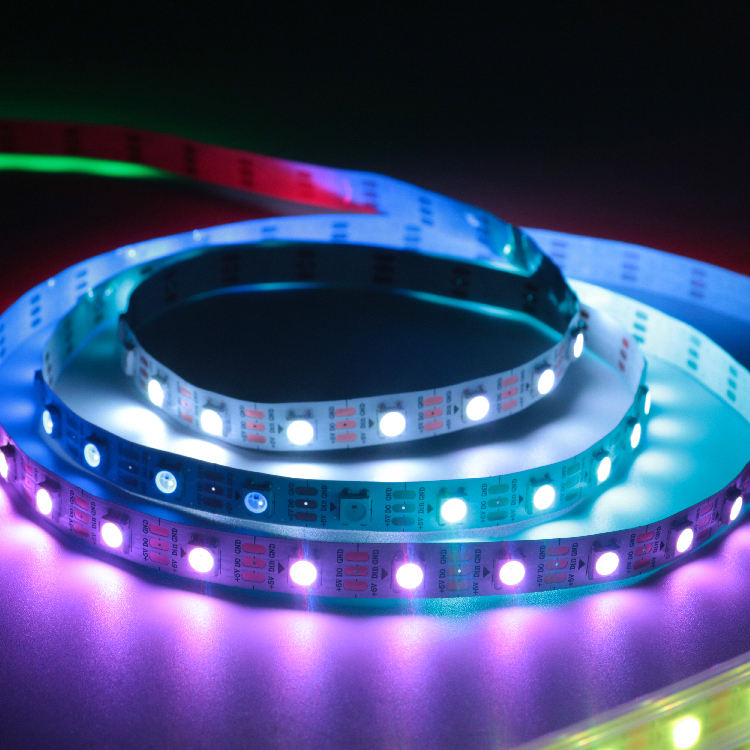
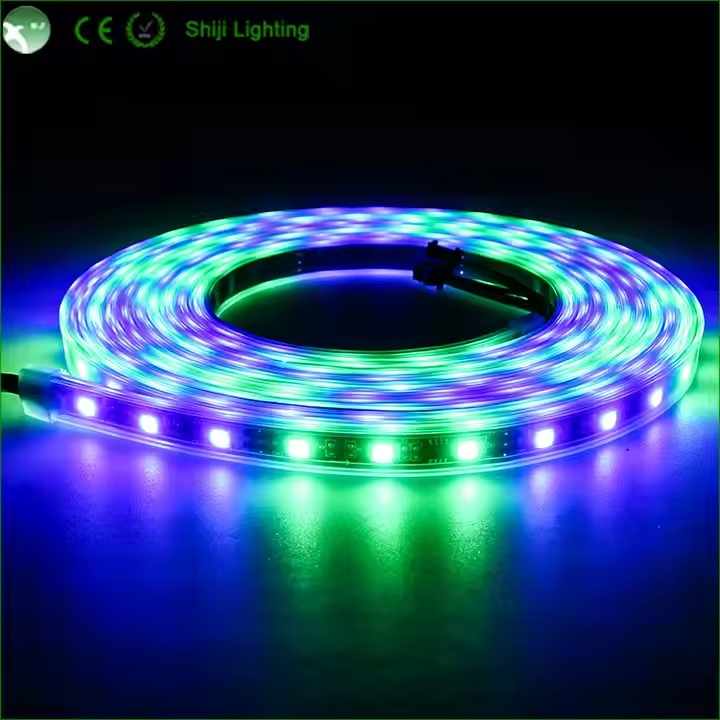
When working with professional LED lighting, LED strip voltage drop (or LED strip voltage drop) refers to the physical phenomenon where voltage gradually decreases along the flexible circuit board due to inherent resistance within the system. As the strip extends, wire resistance, strip length, and fundamental circuit design limitations cause the energy received at the end of the strip to be significantly less than at the starting connection point. This unavoidable energy decay is a core challenge faced by all low-voltage direct current (DC) circuits.
Common Symptoms
In practical applications, the most intuitive symptom of voltage loss is uneven brightness (or uneven brightness) along the strip. The further from the power source, the weaker the light output of the LEDs. This decay is particularly destructive for RGB or tunable white products. Since different colored LED chips (such as red, green, and blue) require different forward voltages, insufficient voltage directly leads to severe color shifts (or color shifts) or abnormal discoloration, causing light that should be pure white to degrade into dim, yellowish, or reddish light at the end.
Why Voltage Drop Happens in LED Strips
Electrical Factors
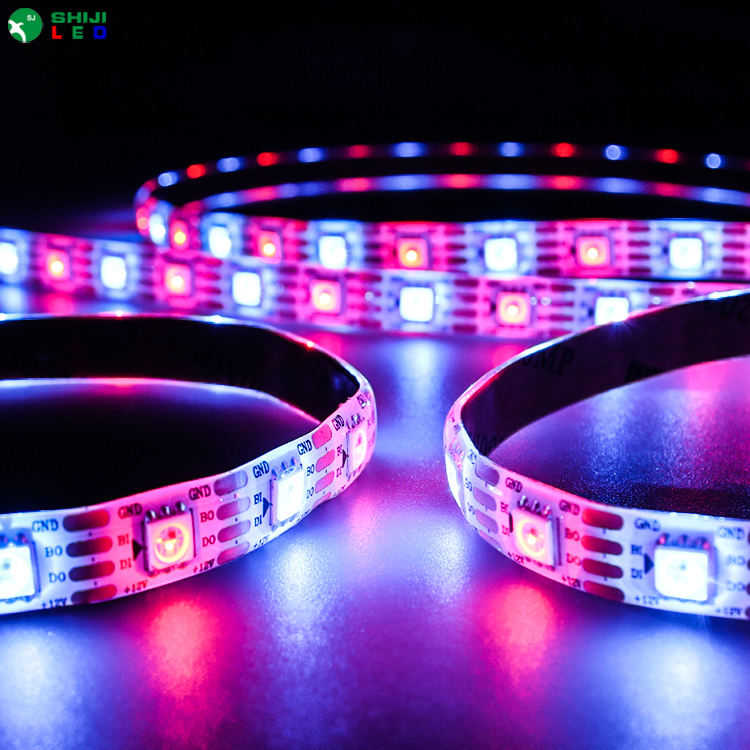
Key electrical factors exacerbating this phenomenon include mismatched wire gauge (or wire gauge) and overloaded running distances. If the main power supply cables are too thin (high AWG value), they consume significant energy themselves. Furthermore, when the installation length exceeds the product’s rated maximum continuous run length, or the power supply output nears its limit, the current load exceeds normal tolerance, creating significant voltage sag.
Design and Installation Factors
Physical layout and build quality also play a role. Poor solder joints, loose connectors, and thin PCB copper thickness raise resistance. In complex setups, planners often skip careful layout. This leaves the end LEDs short on power.
How to Predict and Evaluate Voltage Drop
Simple Calculations
At the planning stage, engineers can use the basic voltage drop formula for a quick check. The formula is V_drop = I × R × L. Real PCB networks are more complex, yet this simple tool still helps pick the right main cable size and power plan ahead of time.
Practical Guidelines
In daily practice, most teams keep voltage drop under 5%. Beyond that point, the eye can spot brightness changes. In a 12V system, a voltage below 11.4V at the end hurts both brightness and color quality. Knowing this limit helps maintain good project results.
How to Fix or Minimize Voltage Drop
Power and Wiring Strategies
The most direct and effective strategy for countering voltage sag is implementing multi-point power injection (or multi-point power injection). By adding parallel power lines at the middle nodes or the end of the strip—a technique known as dual feed (or dual feed)—you can directly supplement lost energy for distant chips. Combined with thicker main trunk cables, you can minimize natural losses during transmission.
Choosing the Right Voltage and Layout
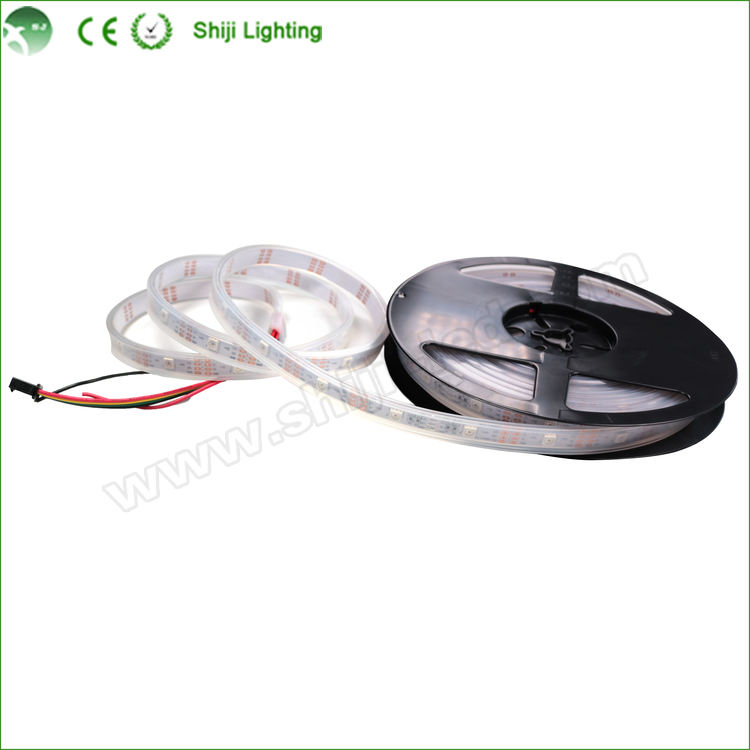
Compare 12V vs 24V strips early in the design. A 24V system needs only half the current of a 12V system for the same power. This means less heat and smaller voltage drop over long runs. For very long lines, use parallel wiring and split long runs into shorter sections. At SHIJILIGHTING, we have seen that high-voltage options improve stability. Our SMD5050 RGBW LED Pixel Light (Model: SJ-IC406-RGBW-24V) runs on 24V and works well for long distances. It reduces voltage drop concerns and keeps colors accurate.
Real-World Installation Tips
Ensuring Uniform Brightness
For clean commercial lighting without dark spots, split long strips into sections. Place main power points in the center of the layout. Send power out to both sides from there. This cuts the load of one-way voltage drop in half. If you need dynamic color and easy sections, try our GS8208 LED Strip Series (Model: SJ-10060-8208-12V). It supports breakpoint resumption and has strong built-in ICs. With dual-end power injection, it keeps brightness even. All our products come with a 2-year warranty.
When to Get Professional Help
High-wattage RGB setups, large building facades, and long outdoor runs need more than basic wiring. At this stage, bring in a qualified electrical team. They can calculate loads and design the right layout. This avoids overload damage and keeps the job safe.
FAQ
Q: What is the LED strip voltage drop, and why does it cause the end of the light to dim?
A: LED strip voltage drop occurs when low-voltage DC power loses energy along the circuit board and wires due to resistance. This loss leaves the LEDs farthest from the power source without enough voltage. As a result, the end of the light dimming and overall output drops.
Q: How can I effectively solve the color shift issue on RGB LED strips?
A: Add multi-point power injection to fix color problems. Run extra supply lines to the middle or end of long strips. This replaces lost voltage at the far end. Every LED then runs at the correct voltage, so color shifts disappear, and restoring uniform brightness follows.
Q: For large, long-distance lighting projects, should I choose 12V or 24V LED strips?
A: For runs longer than standard limits, pick a 24V system such as our SMD5050 RGBW LED Pixel Light, Model: SJ-IC406-RGBW-24V. When you compare 12V vs 24V strips, the 24V option uses less current. This lowers line loss and allows longer single runs with fewer injection points.
Q: Can increasing wire thickness prevent voltage drop in long-distance wiring?
A: Yes. Thicker cables with a lower AWG wire gauge cut wire resistance on the path. For long runs from the supply to the strip start, these cables hold voltage steady and form a basic step against voltage drop.
Q: When should long runs be broken into multiple sections for parallel wiring?
A: Split the run once total length passes the maker’s single-connection limit, often 5 or 10 meters. Use parallel wiring so each section draws power straight from the supply. This stops end-of-line voltage drop and raises long-term system reliability.