In the field of commercial lighting and custom engineering, choosing the right dynamic lighting technology is crucial for project success. This article dives deep into the core differences between pixel LED and addressable LED strip technologies, from installation convenience to energy-saving performance, providing you with a comprehensive guide to make the best decision.
What is a Pixel LED, and How Does It Differ from an Addressable LED Strip?
What Defines a Pixel LED?
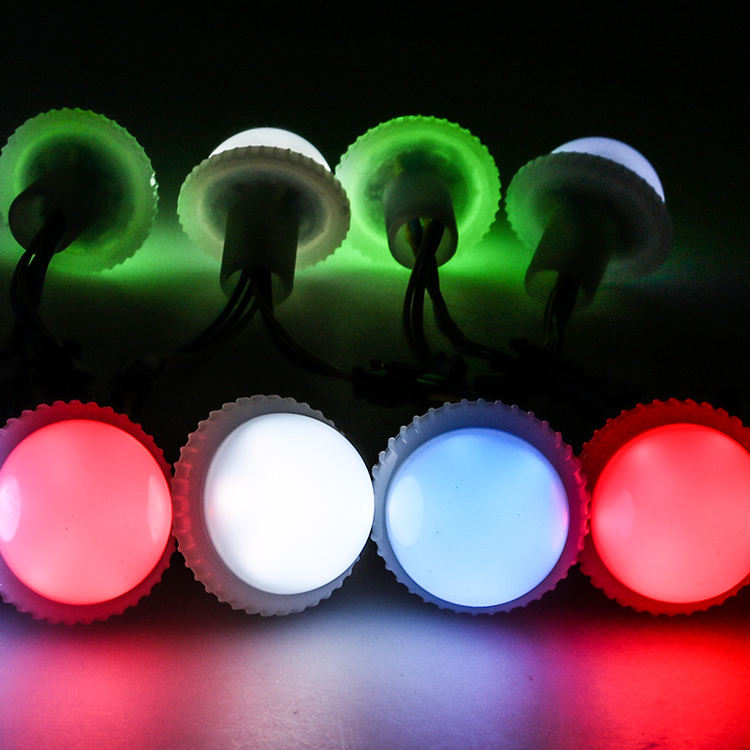
A pixel LED light typically refers to an independently packaged point light source module. Each node contains RGB LED chips and a control IC, wired together through flexible cables. This separated node structure gives them immense physical flexibility when adapting to complex outdoor architectural topologies.
How Addressable LED Strips Work Compared to Pixel LEDs
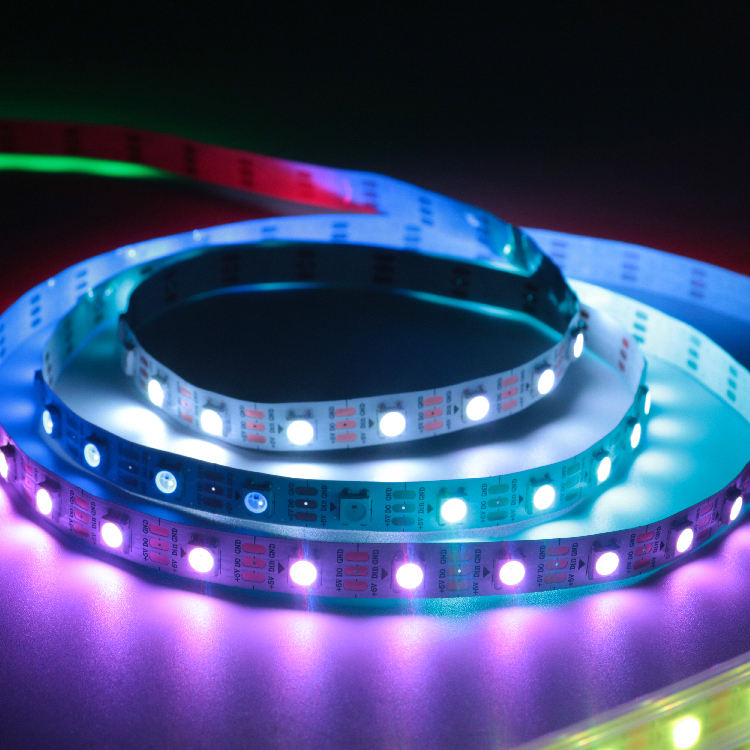
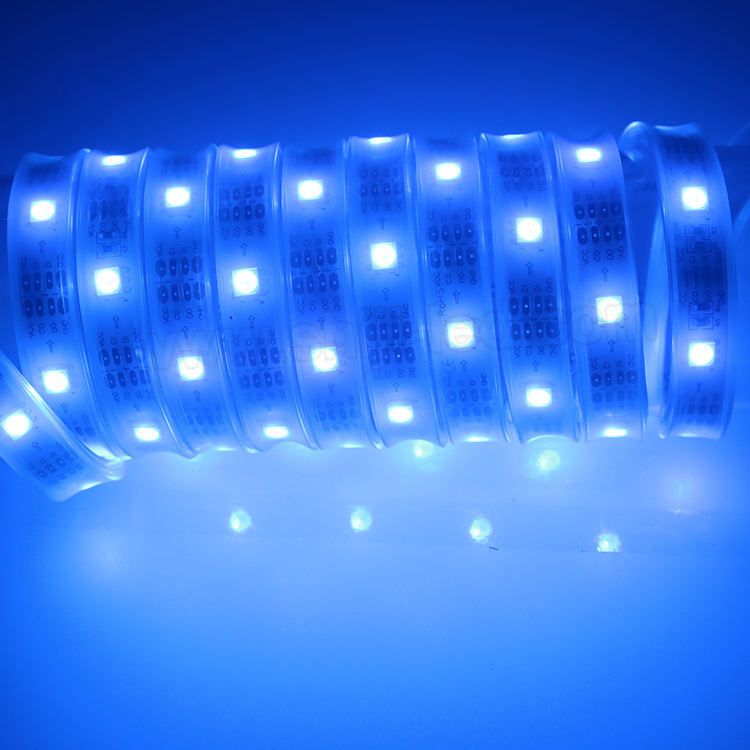
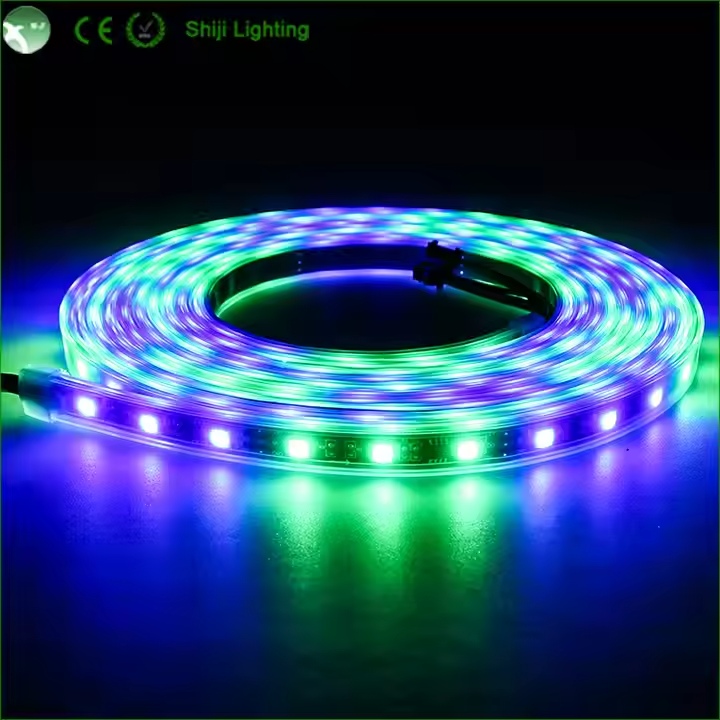
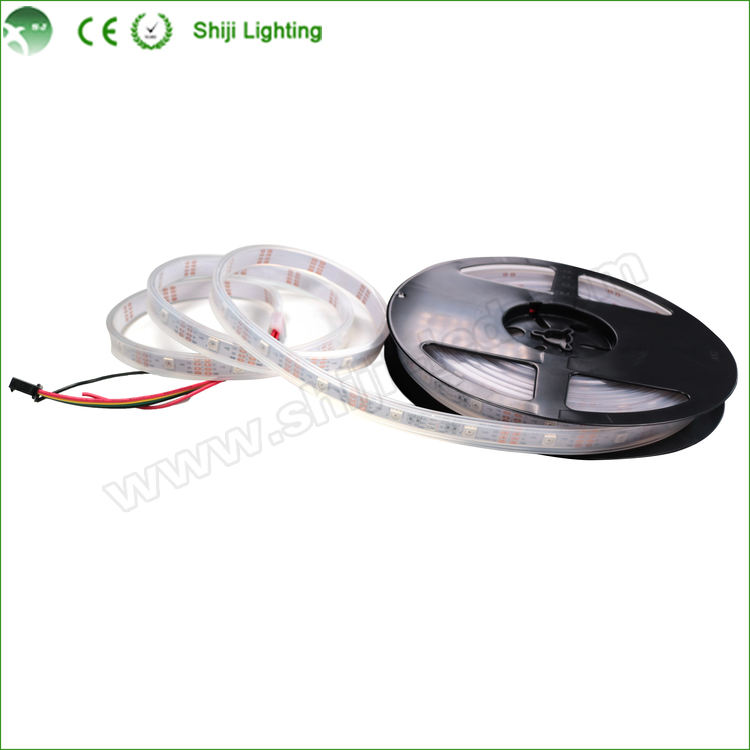
Unlike point light sources, an addressable LED strip features high-density LED components and IC chips directly mounted on a flexible FPC circuit board. It achieves pixel-level control through serial data, making it highly efficient for displaying continuous, smooth dynamic lighting effects on flat surfaces.
Common Use Cases for Each LED Type
Engineers usually deploy pixel LED fixtures on irregular surfaces like amusement park rides or large exterior mesh screens. In contrast, a programmable LED strip is widely used in indoor coves, exhibition booth outlines, and studio sets that require seamless linear light spots.
Key Differences Between Pixel LED and Addressable LED Strip
How Control Methods and Protocols Vary
Although both support SPI or DMX512 protocols, their signal transmission priorities differ due to application environments. Outdoor point sources rely more on dual-signal ICs (such as those with backup data channels for breakpoint resume) to ensure transmission stability over long distances, whereas indoor strips prioritize high frame rates for data refresh.
Differences in Brightness, Resolution, and Color Effects
Regarding pixel resolution, the addressable LED strip takes the lead with its extremely high diode density (e.g., 144 LEDs per meter), capable of presenting exceptionally smooth color gradients. Conversely, a pixel LED has a larger volume and higher power per dot, bursting with highly penetrating visual impacts when viewed from a distance.
Power and Wiring Considerations for Each Type
Voltage drop is a major pain point in project planning. Standard strips mostly run on 5V or 12V, making them prone to voltage drops over long runs. Industrial-grade pixel light strings often utilize 24V high-voltage inputs. This not only makes main line wiring more convenient with fewer power injection points but also ensures the energy-saving efficiency of the entire system far exceeds that of low-voltage strips.
Choosing the Right LED for Your Project
Which Applications Benefit Most from Addressable LED Strips?
If your project requires compact, concealed lighting, such as edge tracing for custom cabinets or precision background lighting in studios, flexible programmable LED strip options with adhesive backing and cuttable designs are undoubtedly the best solution.
When Pixel LEDs Are the Better Option
When facing severe outdoor weather challenges or needing matrix lighting on hollow metal frames, independent point light sources show an overwhelming advantage. Their dedicated nut-locking or snap-hole installation methods can withstand long-term physical vibration and rain erosion.
How to Match LED Type to Your Design Goals
The core of the decision lies in balancing visual continuity with physical adaptability. Clarify whether the project needs linear wall-washing effects or dot-matrix bursting power, while simultaneously evaluating late-stage maintenance costs and energy-saving metrics, to select the LED lighting solution with the lowest comprehensive lifecycle cost.
Installation and Setup Considerations
Wiring, Signal Transmission, and Connectivity Tips
Correct signal cascading is the foundation for perfect dynamic lighting effects. Ensure that the controller data line (DAT) strictly matches the fixture’s signal input terminal. For large-area linkages, use anti-interference shielded cables and signal amplifiers to eliminate visual latency.
Common Installation Challenges and How to Avoid Them
The most typical installation challenge is red discoloration at the end of the run caused by voltage drops. By planning parallel DC busbars and implementing scientific power injection at intervals, you can effectively overcome voltage drops while balancing the power load to achieve optimal power saving.
Tools and Controllers Needed for Each Type
Driving an addressable LED strip usually requires aluminum profiles for heat dissipation. For large quantities of independent pixel nodes, a precise metal hole saw is essential. Both require Art-Net network nodes or SD card synchronous master control systems to render complex video programs.
Maintenance, Troubleshooting, and Longevity
How to Keep Addressable LED Strips and Pixel LEDs in Optimal Condition
Avoiding overload operations in enclosed, high-temperature environments is key to extending their lifespan. Although professional outdoor equipment has high protection ratings, routine inspections for port sealing and preventing chemical solvent corrosion remain crucial.
Common Problems and Solutions
Loss of control in localized RGB LED chips is usually caused by connector oxidation or preceding IC damage. After locating the fault using the step-test function of a smart controller, you can quickly restore system operation by simply cutting out and replacing the damaged single module or very short wire segment.
Safety Considerations During Operation
Before construction, the main power supply must be cut off, and high-efficiency switching power supplies passing international safety certifications must be used. It is strictly prohibited to light up entire rolls of strips for a long time without unrolling them to dissipate heat, eliminating fire hazards caused by heat accumulation.
Why Choose SHIJILIGHTING for Pixel and Addressable LED Strips
Trusted Quality and Manufacturing Standards
As a manufacturer with 14 years of experience in producing digital LEDs, we understand the strict stability requirements of professional buyers. At SHIJILIGHTING, we consistently use high-purity gold wire packaged RGB LED chips and industrial-grade PCB substrates, ensuring the superior durability of every batch through rigorous aging tests. We confidently provide a solid 2-year warranty for all our standard products.
Product Variety and Customization Options
We provide engineering solutions for all scenarios, from indoor to outdoor. For example, our SJ-10060-SK6812 model is a 10mm PCB width flexible strip operating at 5V standard voltage. It features 60 high-density SK6812 LEDs per meter and supports multiple waterproof customizations from IP20 bare board to IP68 fully encapsulated, making it the perfect choice for high-resolution indoor dynamic lighting effects. For large-scale outdoor projects, we developed the SJ-IC356-12V/24V, a 35mm diameter outdoor pixel light powered by high-brightness SMD5050 LEDs and UCS2903 driver ICs. This model supports 12V/24V high-voltage input to significantly improve the energy-saving performance of long-distance cascading. Its nut-locking mechanical structure, specifically designed for 19mm or 35mm hole diameters, makes the installation of outdoor 3D meshes exceptionally fast and vibration-resistant.
Customer Support and After-Sales Guidance
From initial drawing, deepening, and power routing planning to final online debugging, our dedicated technical team maintains close communication with you. We are committed to solving core pain points like voltage drop calculation and signal topology, ensuring your lighting project is perfectly executed.
FAQ
Q: How should I choose the best addressable lighting strip for outdoor building illumination projects?
A: When selecting an outdoor addressable LED strip, the primary focus is on anti-aging materials and waterproof levels. We recommend prioritizing IP67 or IP68 protection processes using high-purity silicone tube encapsulation. Additionally, choosing a 24V version can significantly reduce voltage drop over long distances, minimizing auxiliary parallel wiring, which optimizes overall installation efficiency and long-term energy-saving performance. All our outdoor-grade products are backed by a strict 2-year warranty.
Q: What is the core difference between standard multi-color lights and intelligent programmable pixel nodes?
A: Traditional RGB LEDs can only change the entire strip or hardware array to the exact same color simultaneously, resulting in a single color expression. However, each independent pixel LED integrates an intelligent control chip inside. This means you can accurately program the color and brightness output for every single RGB LED chip, achieving magnificent dynamic lighting effects such as dynamic chasing, colorful waves, meteor fades, or even physical playback of complex video images.
Q: Why does my programmable lighting system experience dimming or color shifting at the tail end, and how can I fix it?
A: This is usually caused by the unavoidable voltage drop when DC power is transmitted over long physical distances through cables. Reddish color shifting occurs because the red channel requires the lowest driving voltage; thus, when the voltage is severely insufficient at the end of the link, only the red light can barely illuminate. During the early installation planning, you can pre-lay a DC main power bus with a sufficient wire gauge and perform a power injection—reconnecting the main power to the LED lighting solution at reasonable intervals (e.g., every 5 meters or 50 pixels). This completely cures the issue while achieving a better overall power saving balance.
Q: Can I freely cut flexible programmable lighting strips according to specific on-site construction dimensions?
A: Absolutely. The flexible architecture of a programmable LED strip usually has clear physical cut marks (typically featuring exposed copper pads) printed between every single LED component on the printed circuit board.