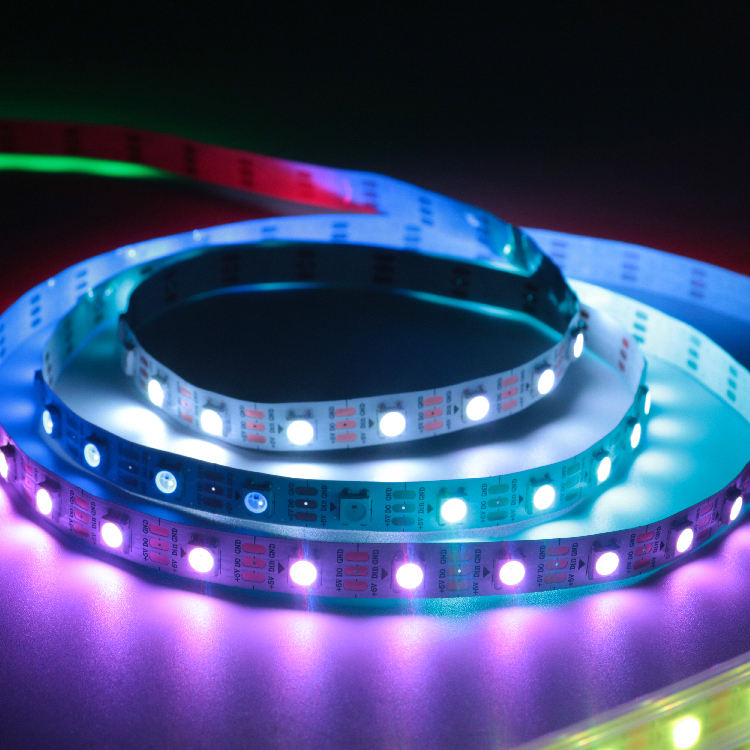
Voltage selection affects current, cable loss, power distribution, and the stability of a large outdoor display. The right Pixel Light voltage is therefore not a preference chosen in isolation. It must fit the connected load, cable distance, installation scale, and supporting electrical system.
What Determines the Right Pixel Light Voltage for a Large Outdoor Display?
How Do Pixel Count and Watts per Pixel Affect Current Demand?
Start with maximum connected load: total pixel count multiplied by the manufacturer’s maximum watts per pixel. Calculate RGB and RGBW products at maximum channel load, not from a dim animation. Current equals total watts divided by operating voltage. For the same power, higher voltage draws less current. This establishes demand only; branch arrangement comes later.
How Do Run Length and Voltage Drop Affect Pixel Light Performance?
Every conductor has resistance. As cable distance and current increase, more voltage is lost before the farthest Pixel Light. Results may include reduced brightness, color shift, or full-white instability. A short sample can work while the full section fails because it does not reproduce final cable resistance and maximum load.
How Does Installation Scale Change the Best Voltage Choice?
A compact group of hundreds of pixels may keep power close to each section. A medium facade zone adds longer routes and distributed loads. A large facade or media installation with thousands of pixels multiplies current, feeder distance, and service points. Base the decision on the largest practical zone under its worst operating condition.
How Do 5V, 12V, 24V, and 48V Pixel Light Options Compare?
When Is a 5V Pixel Light Practical for an Outdoor Display?
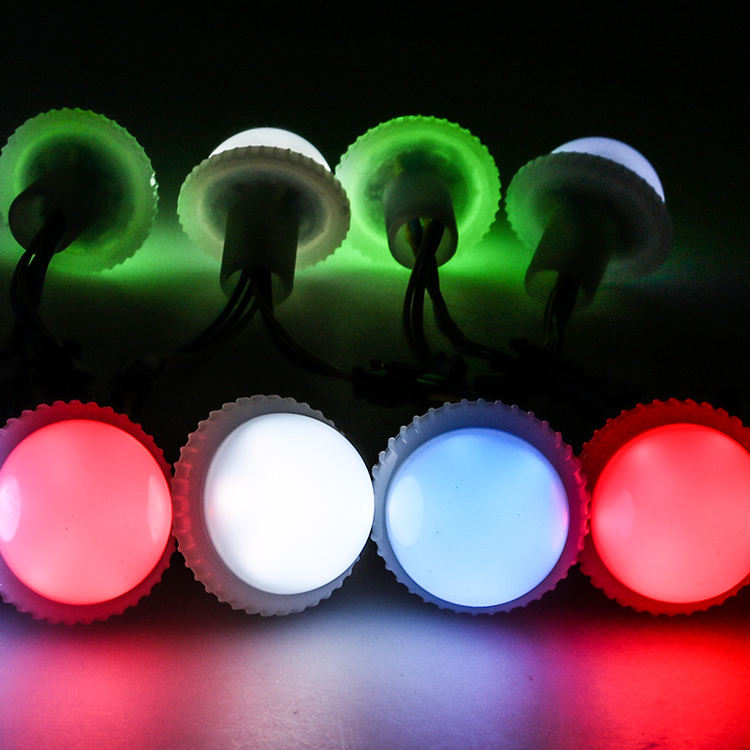
A 5V Pixel Light is practical for short local sections, compact groups, nearby power distribution, and projects where frequent feeds are manageable. SHIJILIGHTING offers the SJ-3030-WS2811 30 mm RGB Pixel Light in DC5V or DC12V with IP67 protection, showing why voltage must be confirmed by model.
When Does a 12V Pixel Light Fit Medium-Length Display Zones?
Twelve volts can balance moderate runs, distributed facade sections, and existing 12V equipment while reducing current versus an equivalent 5V load. Existing-system compatibility does not remove the need to calculate maximum current, cable loss, and connector capacity.
Why Is a 24V Pixel Light Often Considered for Larger Installations?
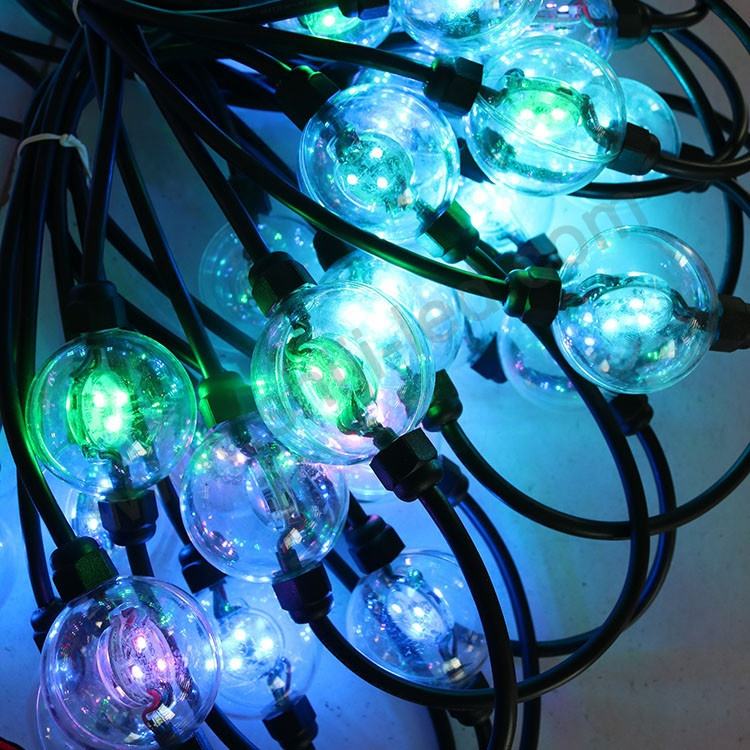
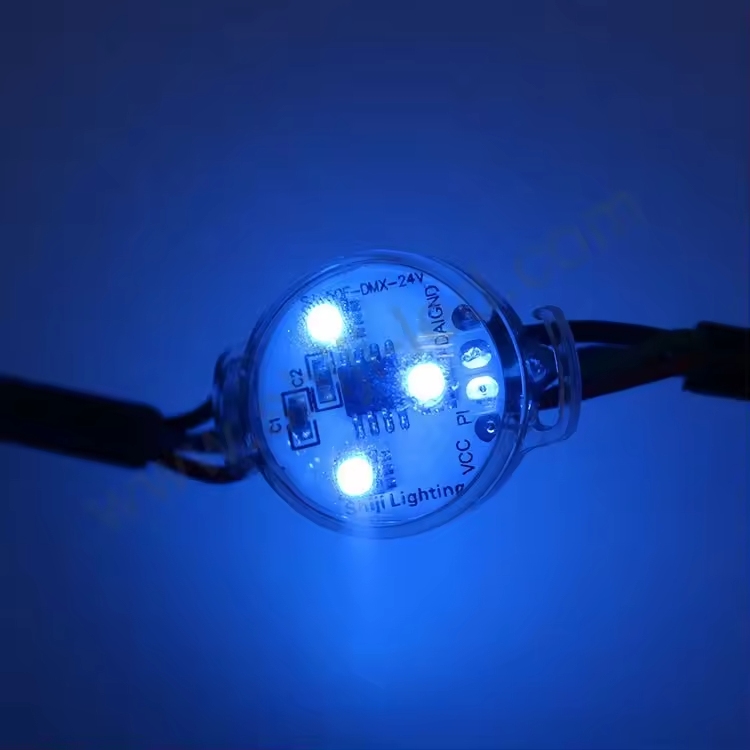
Twenty-four volts lowers current for the same wattage and can simplify larger outdoor zones. SHIJILIGHTING positions 24V low-voltage-drop products for outdoor engineering use. One example is an outdoor programmable 24V RGB/RGBW Pixel Light. The system still needs compatible supplies, connectors, protection, and validated branch limits.
When Should a 48V Pixel Light Be Considered?
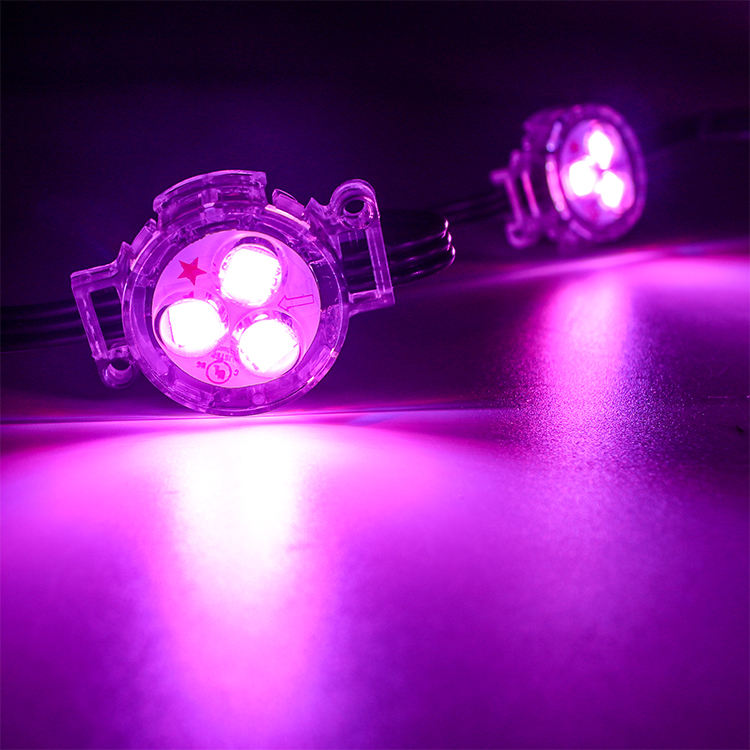
Consider 48V for long feeders, large structures, limited PSU locations, or high pixel counts. The SJ-IC30-2904 is specified with DC12V, DC24V, and DC48V options at 0.96 W per pixel. It is not interchangeable with lower-voltage products: the Pixel Light and entire supporting system must natively support 48V.
How Should Power Distribution Be Designed for the Selected Pixel Light Voltage?
How Many Pixel Light Units Should One Power Branch Carry?
Use: Pixel quantity x maximum watts per pixel = branch load. Convert load to current, then compare it with PSU capacity, connector rating, protection, and allowable voltage drop. Apply the specified design margin. Do not copy branch quantities between projects with different wattage, cable length, voltage, or operating patterns.
Where Should Pixel Light Power Injection Points Be Located?
Pixel Light power injection may use beginning, end, or intermediate feeds, distributed power, or multiple shorter branches. Locations depend on maximum load, voltage, current, cable resistance, manufacturer limits, and minimum far-end voltage. There is no universal fixed-meter rule. Confirm the layout by calculation and full-load testing.
How Do Wire Gauge, Connectors, and Circuit Protection Affect Power Distribution?
Wire gauge must suit branch current and round-trip distance. Waterproof connectors, junctions, and protective devices need the correct current and environmental ratings. A 24V outdoor Pixel Light module with waterproof connections illustrates the complete electrical path. An undersized connector can limit an otherwise adequate cable and PSU.
How Does Pixel Light Voltage Affect System Compatibility?
Must the Power Supply Match the Pixel Light Operating Voltage?
Yes. A 5V Pixel Light needs a regulated 5V supply, a 12V Pixel Light needs 12V, and a 24V Pixel Light needs 24V. The same rule applies to a verified 48V product. A PSU with enough watts but the wrong output voltage is not compatible. Overvoltage can damage pixels, while undervoltage can cause dimming, incorrect color, resets, or unstable operation.
Can the Same Controller Work with Different Pixel Light Voltages?
Possibly, but protocol compatibility is not power compatibility. Confirm the IC, controller output, data signal, external power architecture, grounding, and port limits. A controller may operate separately powered zones at different voltages, but its ports must not receive an unsupported supply. See the guide to WS2811, WS2812, and SK6812 pixel types for protocol context.
Can Different Pixel Light Voltages Be Used in Different Display Zones?
Different voltages can share one display when zones are electrically separated and documented. Each needs the correct PSU, compatible Pixel Light and controller path, required common or data grounding, and clear identification. Prevent interchangeable connectors from applying the wrong supply.
How Should a Pixel Light Voltage Plan Be Tested Before Final Approval?
What Should Be Tested on the Longest and Most Heavily Loaded Pixel Light Branch?
Test the longest route, highest pixel count, maximum load, and farthest injection point. Run full white or the manufacturer’s maximum-load pattern long enough to reveal instability and heat. SHIJILIGHTING’s QC includes PCB aging, 24-hour full-load aging, waterproof testing, color sorting, and shipment sampling; field approval must separately validate the installation.
Where Should Voltage and Temperature Be Measured During Full-Load Testing?
Measure voltage at the PSU output, branch input, middle point, and farthest Pixel Light. Check temperature at supplies, cables, connectors, protection, and junctions after stable full-load operation. Normal PSU output does not prove adequate far-end voltage or connector temperature.
How Can Power Problems Be Distinguished from Pixel Light Data Problems?
Power-related symptoms often develop along distance: gradual dimming, end-of-run color shift, failure mainly at full white, repeated resets under high load, or hot wires and connectors. Data-related symptoms more often include random pixels, downstream pixels stopping at a consistent location, mapping errors, or intermittent communication that does not track brightness demand. Measure supply voltage under load before replacing controllers or rewriting pixel maps.
What Specifications Should Be Locked Before Production?
Approve the Pixel Light voltage, maximum wattage, pixels per branch, PSU specification, cable gauge, connector pinout, circuit protection, injection locations, zone layout, IC or protocol, and controller compatibility. SHIJILIGHTING can customize voltage, IC chip, waterproof grade, size, LED quantity, wire, and packaging, so our production specification should identify every option by zone. Freeze the wiring drawing and labeling plan with the bill of materials.
FAQ
Q: What Pixel Light voltage is best for a large outdoor display?
A: There is no single best voltage. Compare maximum load, current, cable distance, zone scale, available PSU locations, and model compatibility. Larger installations often favor 24V or a verified 48V system, but the final choice must be calculated and tested.
Q: Is a 24V Pixel Light better than a 12V Pixel Light for long outdoor runs?
A: A 24V system draws less current than a 12V system at the same wattage, which can reduce distribution losses. It is better only when the Pixel Light, PSU, controller architecture, connectors, and branch design support 24V.
Q: When should a 48V Pixel Light be considered for a large display installation?
A: Consider 48V for long feeder routes, large structures, limited PSU locations, or high pixel counts. Use it only when the exact Pixel Light and every relevant supporting component are specified for 48V.
Q: How far can a Pixel Light run before additional power injection is needed?
A: No universal distance applies. Calculate from maximum watts per pixel, pixel count, voltage, cable resistance, connector limits, manufacturer limits, and the minimum acceptable far-end voltage, then verify the longest branch at full load.
Q: Can different Pixel Light voltages be used in the same outdoor display system?
A: Yes, in electrically separated zones with the correct PSU for each voltage, compatible controllers and data grounding, clear labeling, and connectors that prevent accidental cross-connection.