Two LED Strip samples may create similar brightness on a five-minute bench test. Yet they perform quite differently after months of heat, bending, moisture, and daily operation. The difference is frequently concealed in construction rather than headline specifications. For a commercial buyer, weak solder joints, inconsistent components, poor sealing, or inadequate strain relief can turn a low unit price into repeated access work, replacement stock, and schedule disruption. Build quality therefore needs to be evaluated as a complete reliability system. These include electrical paths, mechanical interfaces, LED batches, waterproof materials, and the production controls. These controls keep one reel consistent with the next.
Why Does LED Strip Build Quality Matter After the Project Is Installed?
How Small Construction Weaknesses Become Expensive Field Failures
A marginal joint or seal may pass a short test because the strip is cool, stationary, and dry. In service, thermal expansion, vibration, flexing, dust, and cleaning expose the weakness. The result may be flickering sections, intermittent pixels, corrosion, adhesive detachment, uneven brightness, or a dead segment. The material cost can be small compared with lifts, ceiling access, labor, traffic control, and matching replacement reels.
Which LED Strip Failures Point to Product Build Quality Rather Than System Design?
First separate repeatable product defects from system errors. A failure that follows one reel, connector type, solder location, or production batch suggests a build issue. Low brightness at the far end of every long run more often points to voltage drop or power planning. Random color commands may involve controller compatibility or data wiring. Poor mounting can cause detachment even when the backing is sound. A general LED Strip selection guide helps define the system; build-quality investigation asks whether the delivered product consistently meets that system.
Which LED Strip Construction Details Most Affect Electrical Reliability?
How Do PCB Copper, Trace Design, and FPC Construction Affect Reliability?
The flexible printed circuit carries current and spreads heat. Insufficient copper, narrow or poorly executed traces, and inconsistent FPC construction increase resistance. Higher resistance creates more heat; poor heat spreading keeps that heat near LEDs and components, accelerating output instability and material aging. Buyers should compare PCB width, thickness information, copper specification, pad finish, trace uniformity, and reel-to-reel construction rather than judging only brightness. SHIJILIGHTING products include flexible PCB strips, and selected addressable versions use separate power and ground wires at the ends. The GS8208 12V Addressable LED Strip is one model-specific example; its limits should not be generalized to every strip.
Why Do Solder Joints and Component Placement Matter Over Time?
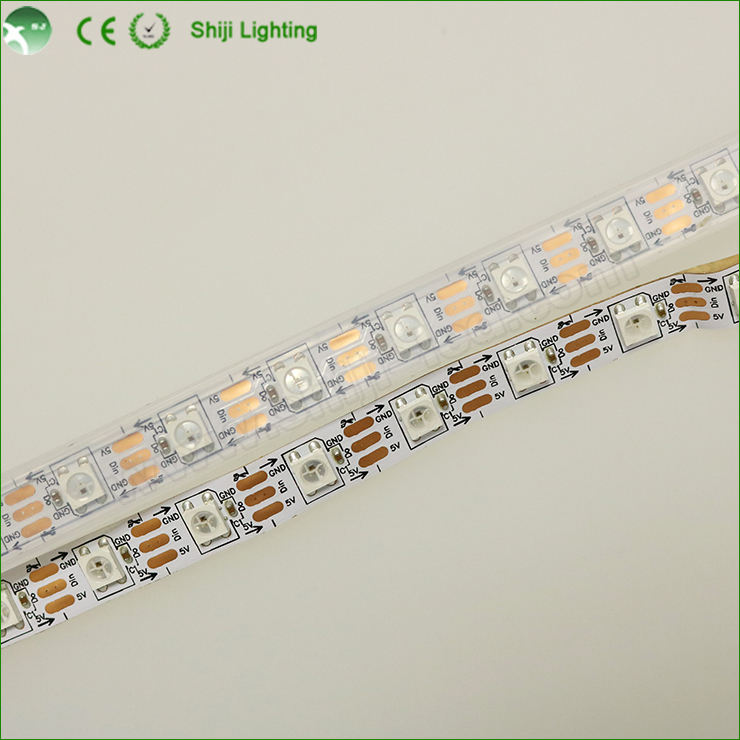
Solder volume, paste coverage, wetting, pad quality, and component alignment determine whether connections remain stable through heating and cooling. Cold joints, partial wetting, skewed parts, or stressed pads may work initially but become intermittent after thermal cycling or repeated bending. Inspect joints under magnification for uniform fillets, contamination, bridges, lifted pads, and components that sit off-center. Bending should occur between components and away from soldered cable interfaces.
How Do Wires, Connectors, and Strain Relief Become Hidden Failure Points?
Wire-to-PCB soldering and connector contacts are transition points where electrical and mechanical stresses meet. High contact resistance creates local heating. Pulling force can crack a pad or conductor. In waterproof assemblies, cable entries can also become moisture paths. Check conductor size, solder coverage, connector fit, polarity marking, strain relief, and whether the cable exit can move without loading the PCB.
How Do LED Components and Batch Consistency Affect Long-Term LED Strip Performance?
Why Does LED Package Quality Affect Heat, Brightness, and Service Life?
The LED package must manage current, heat, phosphor or color conversion, and mechanical attachment. Inconsistent packages can create early brightness loss, color shift, or different thermal behavior within the same run. A purchase specification should define approved component characteristics and require notification before substitutions. Brand alone is not enough; the delivered package, drive conditions, assembly process, and thermal path must remain controlled together.
Why Does LED Binning Matter More on Large Projects?
Small differences become visible when many reels share one wall, cove, or facade. Binning and light-color consistency controls reduce reel-to-reel variation in brightness and color. They also matter when replacement sections or repeat orders must blend with the original installation. Buyers should approve viewing conditions and acceptable variation, label production batches, reserve matching service stock, and define how repeat-order consistency will be handled.
How Can IC and Supporting Component Consistency Prevent Random Failures?
In an addressable LED Strip, an IC is associated with each LED so color and brightness can be controlled independently. Supporting resistors, capacitors, and related components must also be consistent. Variation in IC sourcing, placement, or supporting parts can appear as unstable pixels or isolated failures even when the protocol is correct. For projects considering a WS2818 RGB 12V/24V series LED Strip, confirm the approved IC solution, component list, sample behavior, and production-batch controls before release.
What Makes a Waterproof LED Strip Reliable Beyond Its IP Rating?
Why Does Encapsulation Quality Matter as Much as the IP Rating?
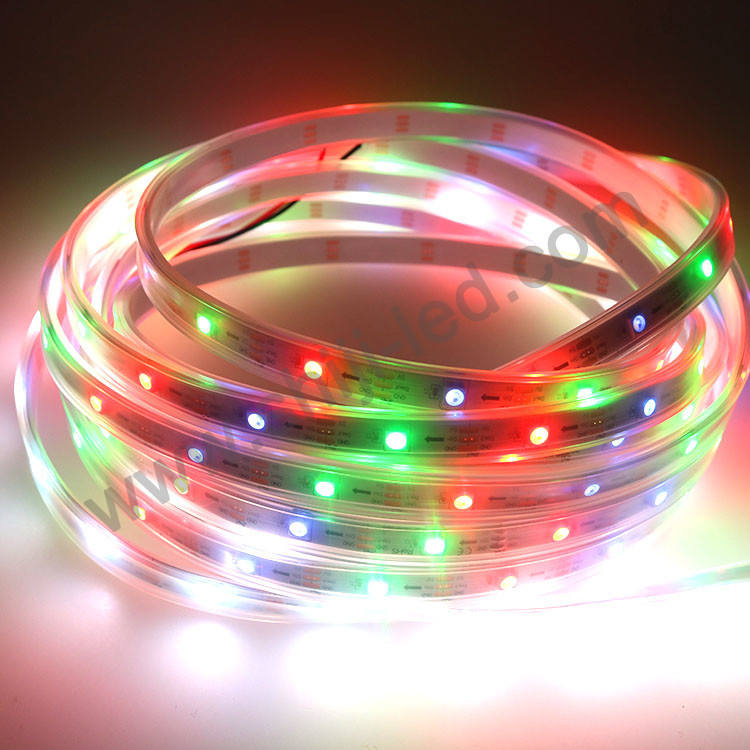
An IP number does not describe coating uniformity, voids, bubbles, incomplete encapsulation, adhesion, or flex cracking. Waterproof versions may use adhesive backing, silicone, a housing, epoxy, or another encapsulation approach. The material must cover the intended surfaces continuously and remain bonded while the strip flexes and changes temperature. Inspect transitions, edges, cut areas, and any place where the protective layer thins.
Why Are Connectors, End Seals, and Cable Entries Common Weak Points?
Water usually enters through a boundary before it penetrates the middle of a sound strip. End caps, cut ends, connectors, cable glands, and wire exits deserve separate inspection. Confirm compatible sealants, complete fill, clean bonding surfaces, curing, strain relief, and installation instructions. A laboratory rating cannot compensate for a field-cut end that was sealed incorrectly.
How Do UV, Heat, and Repeated Bending Age Waterproof LED Strip Materials?
Outdoor reliability depends on material aging as well as initial sealing. UV exposure can discolor or embrittle polymers. Heat and thermal expansion can weaken adhesion between dissimilar materials. Repeated bending can harden or crack a protective layer, especially near components and cable entries. Samples should be tested in the intended bend direction and installation profile, not folded sharply to demonstrate flexibility.
How Should Buyers Verify LED Strip Build Quality Before a Bulk Order?
What Should Buyers Inspect on an LED Strip Sample Before Powering It?
Examine the FPC surface, trace consistency, solder joints, component alignment, cut pads, wire attachment, connectors, adhesive backing, and waterproof finish. Compare multiple samples or reels, not one presentation piece. Record close-up photographs and measurements so the approved sample becomes a practical acceptance reference rather than a vague color-and-brightness memory.
Which Stress Tests Reveal Problems That a Short Bench Test Misses?
Run the sample at full load long enough to stabilize temperature, observe hot spots, flex it within the specified bend radius, check adhesive performance on the intended surface, and test seals where applicable. SHIJILIGHTING describes a standardized flow that includes incoming raw-material inspection, semi-finished PCB aging, finished-product 24-hour full-load aging, waterproof testing, light-color consistency sorting, and shipment random inspection. These controls improve verification but do not guarantee a specific installation result.
What Quality Evidence Should Buyers Request Before Mass Production?
Request an approved or golden sample, batch-consistency criteria, inspection records, material and specification confirmation, certification applicable to the destination market, repeat-order controls, and clear warranty terms. SHIJILIGHTING supports OEM discussions covering PCB size, layout, logo, label, packaging, waterproof version, and connectors. Our two-year warranty should be reviewed with the agreed specification, sample approval, installation conditions, and claim procedure before the order is released.
FAQ
Q: How can I tell if an LED Strip is high quality before installation?
A: Inspect the PCB, solder joints, components, wires, connectors, adhesive, and waterproof finish, then perform a sustained full-load test and compare more than one reel or batch.
Q: Does LED Strip PCB quality affect reliability and voltage drop?
A: Yes. Copper, trace design, pad quality, and FPC consistency affect resistance, heat spreading, voltage behavior, and the mechanical durability of connections.
Q: Why do LED Strip solder joints fail after several months of use?
A: Marginal wetting, insufficient solder, contamination, pad stress, thermal cycling, or repeated bending can turn an initially working joint into an intermittent connection.
Q: Is a higher IP rating enough to make an outdoor LED Strip more reliable?
A: No. Encapsulation uniformity, end seals, cable entries, UV resistance, heat aging, bending, and field installation quality remain critical.
Q: What LED Strip quality checks should buyers request before a bulk order?
A: Request sample approval, material confirmation, batch criteria, aging and full-load records, waterproof checks where relevant, color-consistency controls, shipment inspection, applicable certification, and warranty terms.