Introduction
A programmable strip that looks impressive in a short sample test may still be wrong for a multi-zone retail, hospitality, facade, or entertainment installation. Commercial selection depends on pixel effects, overall scale, maintenance access, control integration, and repeat-order consistency. Define what viewers should see, where it will be installed, who will operate it, and how failed sections will be replaced. A project that cannot be recommissioned quickly after handover needs selection rules that survive installation realities, not only the sample-room effect.
What Should Buyers Define Before Selecting a Programmable LED Strip?
Is the Project Built for Decorative Color or Animated Media Effects?
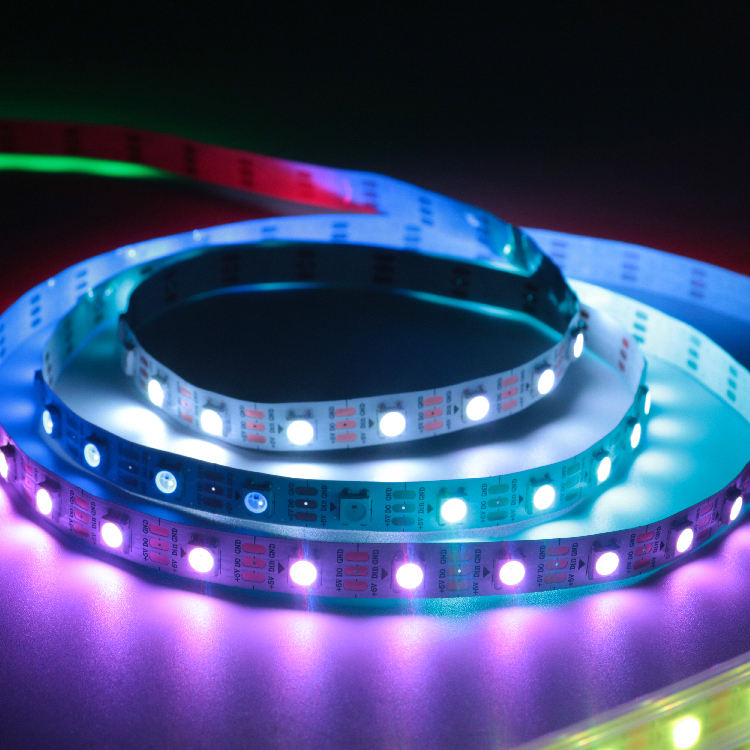
Separate a dynamic accent from an animated media effect before comparing products such as the Decorative Commercial Digital RGB Programmable Flexible LED Strip. A cove or hotel detail may need restrained color movement; a facade pattern, brand display, or entertainment feature may need finer animation resolution for gradients, text, or directional movement. Define scenes first.
How Do Viewing Distance and Visual Uniformity Affect Selection?
Close viewing, a shallow diffuser, and smooth gradients can justify higher programmable LED strip pixel density. Long viewing distance, a deep profile, or visible pixel effects may not. Compare density with the diffuser/profile, line of sight, animation resolution, brightness uniformity, and reel consistency.
Why Do Layout, Access, and Replacement Conditions Matter?
Record total project length, section lengths, distributed versus concentrated areas, curves, narrow spaces, profile dimensions, and access after installation. Match the cut interval to architectural dimensions; the cut mark is the safe cutting location for an addressable strip. Plan joints and spares.

How Should Project Scale and Control Architecture Shape Selection?
When Is One Local Decorative Run Enough?
One local decorative run may suit a counter, display niche, room feature, or short architectural detail. Prioritize physical fit, termination, presets, and replacement without disturbing other areas. For tight profiles, compare dimensions with options such as the Wholesale Commercial Digital Flexible RGB 5mm Programmable LED Strip.
When Does a Commercial Project Need Multiple Synchronized Areas?
Several retail departments, hotel spaces, restaurant features, or facade elevations create a multi-zone requirement. Divide the system by zone, operating responsibility, and service boundary. Record each zone’s length, pixel count, connectors, and replacement method.
What Changes in a Building-Wide or Show-Control Network?
A large addressable LED installation needs a zone map, scene owner, recovery method, and offline or online operating requirement. Confirm animation, pixel mapping, RGB/RGBW handling, installation length, restart behavior, and controller response. Check outputs, pixel capacity, strip format, and software together.
Who Changes Scenes and Maintains the System After Handover?
Ask who will change scenes: the designer, venue technician, facilities team, integrator, or content operator. Agree on presets, seasonal effects, and a restore process so a replacement preserves mapping.
How Do Pixel Density, RGB/RGBW, and Output Affect Commercial Suitability?
When Does Higher Programmable LED Strip Pixel Density Add Real Value?
Higher density adds value when viewers are close, the profile is shallow, or the animation contains fine gradients and mapped details. Approved references include 30, 60, 72, 96, and 144 LEDs per meter, but these are not a ranking. A long-distance facade may use visible pixels, while a close application may benefit from finer transitions through a diffuser.
How Do Total Pixel Count and Control Complexity Change the Trade-Off?
Higher density, higher output, and full-white operation can increase pixel count, output load, mapping work, coordination, and testing effort. Evaluate pixel count, uniformity, animation resolution, and control complexity together. Zones may use different densities.
Model examples illustrate why sizing remains specific: SJ-10060-SK6812 is listed at DC5V, 60 LEDs/m, and 6–18 W/m, while SJ-100768RGB-COB-24V is listed at DC24V, 14 W/m, and 768 LEDs/m. Check the current model specification.
When Should Buyers Choose RGB Versus RGBW Programmable LED Strip?
RGB suits saturated color effects and decorative movement. RGBW is more relevant when the fixture must also provide usable white for ambience or presentation. It adds a dedicated white LED chip, so channel handling, scenes, output, and replacement criteria must be agreed in advance. Neither format is universally better.
What Reliability and Serviceability Factors Should Commercial Buyers Check?
What Happens When One Pixel or Section Fails in a Difficult Location?
One failed pixel may be tolerable in a distant decorative line but visible in a close brand display. A failed section in a sealed facade, high ceiling, or finished wall can create substantial access work. Ask how faults will be isolated and whether replacement preserves the zone map.
SHIJILIGHTING provides Addressable LED Strip options in RGB/RGBW formats and different IC solutions, alongside Digital LED Pixel Light and LED controller products. Our range supports discussion of effect and service conditions.
How Do Cut Intervals, Physical Dimensions, and Connectors Affect Replacement?
Check cut intervals against each section, PCB width against the profile, and connector dimensions against service space. Inspect soldering, polarity markings, and strain relief. Selected products have separate power and ground wires at the ends; verify this for the exact model.

Why Should Waterproof Construction Be Evaluated With Future Service Access?
IP rating alone does not determine serviceability. Indoor dry locations, semi-protected commercial areas, and outdoor exposure may need different constructions. Check end seals, connectors, and cable entries as common water-entry risks. Inspect coating uniformity, voids, adhesion, and cracking risk.
SHIJILIGHTING supports IP20, IP65, IP67, and IP68 options and can discuss waterproof versions and connectors within an OEM or custom specification. Select construction with the environment and replacement method.
How Should Buyers Verify a Programmable LED Strip Before Bulk Procurement?
What Should Be Tested Beyond Whether the Strip Lights Up?
Use an approved sample to test animation, pixel mapping, full-white behavior, restart, controller response, real installation length, uniformity, connectors, and waterproof construction where applicable. Inspect solder joints and cut pads, flex it, and check retention. Compare reels when consistency matters.
Which Documents and Production Details Should Be Approved?
Approve a golden sample and specification sheet identifying model, voltage, density, color format, PCB width, cut interval, wires, connectors, protection construction, and use. Request wiring/control information, dimensions, compliance documents, labeling, packaging, and batch criteria.
SHIJILIGHTING describes incoming raw-material inspection, PCB aging, finished-product 24-hour full-load aging, waterproof testing, light-color consistency sorting, and shipment random inspection. These support process verification but do not guarantee a field result; sample approval remains necessary.
What Project Information Should Buyers Give the Supplier?
Provide the application, visual effect, quantity, total and segment lengths, layout distribution, RGB/RGBW requirement, environment, control architecture, schedule, documents, and customization needs. Add profile dimensions, curves, access restrictions, replacement difficulty, connector locations, and scene ownership.
SHIJILIGHTING supports OEM and custom discussions covering PCB size, layout, logo, label, packaging, waterproof version, connectors, and repeat-order criteria. We can align the approved sample with production. Confirm the two-year warranty, acceptance criteria, and repeat-order consistency.
Use this LED Strip selection guide for contractors and commercial project buyers to connect programmable effects with broader installation and procurement checks.
FAQ
Q: How do I choose a Programmable LED Strip for a commercial lighting project?
A: Define the effect, viewing distance, profile, lengths, zones, operating owner, environment, and replacement plan. Match density, RGB/RGBW, controller, connectors, and protection construction, then approve a sample test.
Q: Is higher pixel density always better for a Programmable LED Strip?
A: No. Higher density can improve close-view animation and smooth gradients, but it can increase pixel count, output load, mapping work, and control complexity. Compare the finished effect through the diffuser.
Q: How many pixels can a Programmable LED Strip controller support?
A: There is no universal number. Confirm documented capacity, outputs, channel handling, zones, installation length, software workflow, and restart behavior for the exact project. Do not infer capacity from density alone.
Q: Should I choose RGB or RGBW Programmable LED Strip?
A: Choose RGB for saturated color effects. Consider RGBW when the project also needs usable white for ambience or functional illumination. Confirm channel handling, scenes, output load, uniformity, and replacement criteria.
Q: What should I test before placing a bulk Programmable LED Strip order?
A: Test animation, pixel mapping, full-white output, restart, controller response, section lengths, uniformity, connectors, retention, and waterproof construction where applicable. Approve specification, wiring, dimensions, labeling, packaging, compliance documents, batch criteria, warranty, and repeat-order requirements.