Project specifications often mix “SPI strip,” “DMX channels,” and an “Art-Net controller” in the same line. That wording is convenient, but the three terms do not describe the same control layer. A strip receives a specific electrical pixel signal; DMX organizes control values into channels; Art-Net transports DMX data across Ethernet. Choosing hardware before tracing that path is how a project ends up with correct-looking settings and no usable light. The practical starting point is therefore the complete route from software to controller, strip input, and individual pixels.
How Do DMX, SPI, and Art-Net Fit into a Programmable LED Strip System?
What Signal Does a Programmable LED Strip Actually Receive?
A programmable LED strip does not automatically receive “a protocol.” Its input may be DMX, a clocked SPI-style signal, or an IC-specific pixel stream.
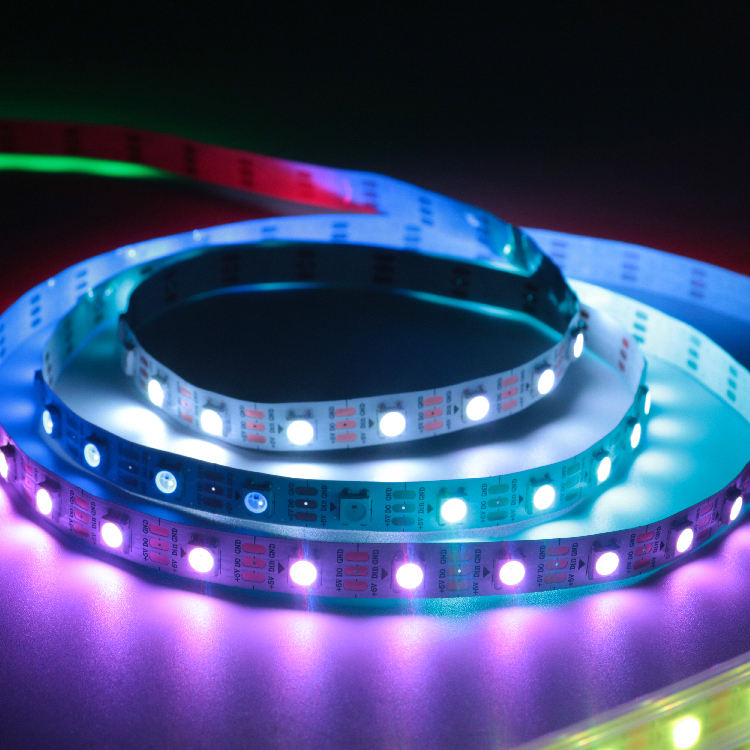
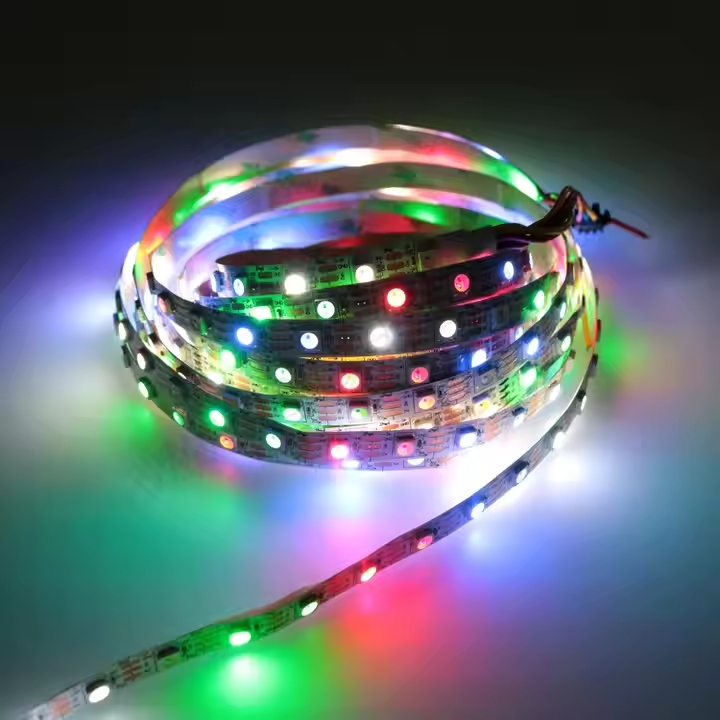
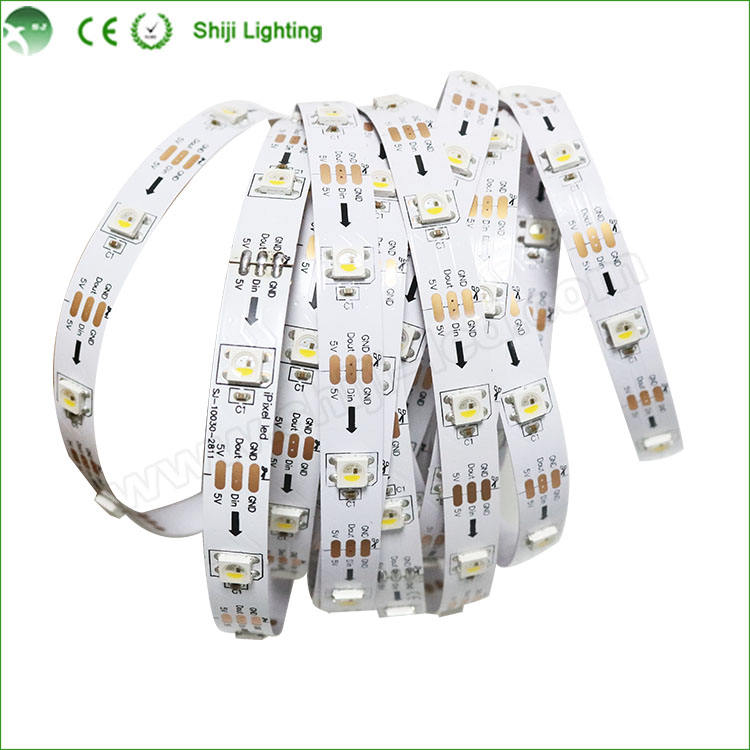
Approved SHIJILIGHTING material defines an addressable (pixel) strip as a strip with an IC associated with each LED, allowing color and brightness to be controlled independently. RGBW adds a dedicated white LED chip to RGB. Those facts explain pixel control, but the IC data sheet still decides the data line, clock requirement, reset behavior, and color order.
The same approved material lists common densities of 30, 60, 72, 96, and 144 LEDs per meter. It defines the cut mark as the only safe cutting location for an addressable strip, which is a physical rule rather than a universe-mapping rule. Density helps estimate pixel addresses in a run, while the cut mark tells where a section may be shortened; neither identifies whether the controller must output DMX, one-wire data, or clocked SPI.
Why Is Art-Net Different from a Strip-Level Protocol?
Art-Net is an Ethernet protocol based on the TCP/IP suite. It transports DMX data over a network; it is not normally the electrical input that a bare pixel strip reads. A node or pixel controller maps universes and channels, then outputs DMX or an IC-specific pixel stream.
This answers “Is Art-Net a direct LED strip protocol?”: generally, no. A controller, gateway, or decoder must convert it into the signal expected by the strip, even when both functions share one enclosure.
What Does the Complete Programmable LED Strip Signal Chain Look Like?
Use this chain when documenting a system:
`Lighting software or console -> Ethernet or DMX cable -> controller or decoder -> strip data input -> pixels`
Art-Net or DMX reaches the controller, which applies offsets, counts, order, and IC mode before the strip sees data.
How Do DMX, SPI, and Art-Net Handle Pixels and Addresses?
How Does DMX Addressing Work for a Programmable LED Strip?
DMX addresses values in channel slots. One DMX universe carries up to 512 slots. An RGB pixel normally uses three slots; RGBW normally uses four, adding white.
For example, 170 RGB pixels fit within 510 slots, while 128 RGBW pixels consume 512 slots. Check the start universe, start channel, pixel count, channel footprint, and any reserved dimmer or status channels.
How Does SPI Pixel Data Travel Along a Programmable LED Strip?
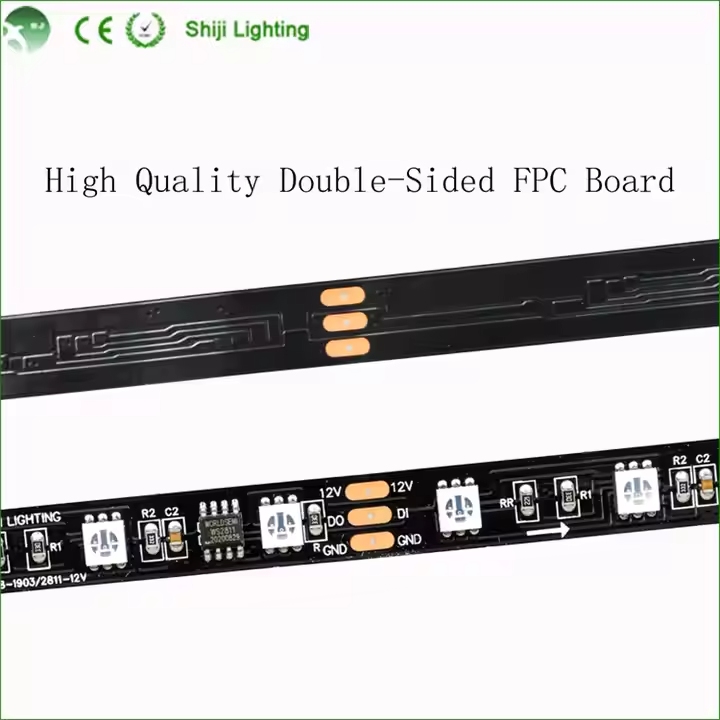
SPI-style pixel data is serial. Each IC reads its part of an ordered stream and passes data onward or regenerates it. Families may use one data line, a clock line, or a backup path.
“SPI” is a family description, not permission to substitute any controller. Match IC timing, latch behavior, logic level, wire order, and color sequence. RGB may still require GRB or BGR bytes. See advanced programmable LED strip features for context.
How Are Art-Net Universes Mapped to Programmable LED Strip Outputs?
Start with channel count and map it to output ports. Divide RGB pixels by 170, or RGBW pixels by 128, and round up to estimate `how many DMX universes for LED strips`. Define the starting universe, channel, port, pixel count, and order.
In an Art-Net universe mapping, the packet identifies the Port-Address and the controller selects the physical output. An Art-Net to SPI LED controller performs the conversion. Document the pixel where a universe break occurs.
Which Protocol Is Best for a Programmable LED Strip Project?
When Is SPI Best for Pixel Effects and Local Installations?
SPI suits dense animation, signage, retail displays, and nearby controllers. It requires protocol-specific wiring, correct levels, and grounding.
When Is DMX Better for Distributed or Long-Distance Lighting?
DMX suits stage, architectural, and entertainment systems needing standard addressing, branch isolation, and serviceable maintenance. An SPI strip still needs a DMX-to-SPI decoder.
When Should Art-Net Be Used for Large Programmable LED Strip Networks?
Use Art-Net when software coordinates multiple universes, zones, outputs, or controllers across Ethernet. IP settings, universe ownership, ports, pixel lengths, and failover behavior must still agree.
| Control layer | Addressing method | Typical controller output | Network scalability | Signal distance | Setup complexity | Best-fit applications |
| SPI / pixel IC | Pixel index and IC frame | Data, clock, or backup data | Local output | Short, installation-dependent | IC-specific | Dense effects and signs |
| DMX | Start address and channel slots | DMX to strip or decoder | Fixture/universe | Distributed cable runs | Moderate | Stage and architecture |
| Art-Net | IP node plus Port-Address/universe | Ethernet to DMX or SPI | Multi-universe | Ethernet dependent | Highest | Mapped networks |
What Hardware Is Needed to Control a Programmable LED Strip?
How Do You Match the Strip IC with the Correct Controller Output?
Match more than RGB and voltage: confirm the IC family, one-wire or data-plus-clock interface, backup line, logic level, reset timing, channel count, color order, and output mode. The addressable neon programmable RGB DMX pixel LED strip provides current product context, but settings still require the ordered specification and controller manual.
When Is a DMX-to-SPI or Art-Net-to-SPI Converter Required?
“Can DMX control an SPI LED strip?” Yes, through a decoder that outputs the strip’s frame. For “Do I need an Art-Net pixel controller?”, use a node with the required pixel output. Do not connect a direct DMX strip and an SPI-only strip by pin similarity.
How Should Power and Signal Distribution Be Planned Separately?
Power and signal can fail in different ways. Approved SHIJILIGHTING guidance says power-injection planning must use watts per meter, operating voltage, branch current, the manufacturer’s maximum continuous length, and voltage at the far end. Wire gauge follows branch current and full round-trip distance; there is no universal injection distance or gauge.
Supply capacity, injection points, fuses, and gauge belong to power planning. Universes, channel starts, ports, and data topology belong to signal planning. Test both.
How Do You Prevent Programmable LED Strip Control Problems?
Why Does a Programmable LED Strip Flicker or Show Random Colors?
Check in layers: wrong protocol mode or IC profile, RGB versus GRB/BGR order, data level, common ground, signal length, connectors, and power. Test one short strip, one output, and a known-good pattern before adding branches. The flickering addressable LED strip troubleshooting guide helps isolate symptoms, but does not replace the selected specifications.
How Can DMX and Art-Net Address Conflicts Be Avoided?
Create one patch sheet listing controller IP, Port-Address, universe, start channel, output port, pixel count, and RGB/RGBW mode. Check duplicate addresses, overlapping universes, off-by-one starts, channel footprints, subnet masks, node IPs, and competing controllers on one Port-Address.
What Should Be Tested Before Final Installation?
Run a small bench test, then verify pixel order, RGB or BGR sequence, start universe/channel, full-white load, restart, and offline behavior. At SHIJILIGHTING, our approved quality-control material describes incoming inspection, PCB aging, 24 hour full-load aging, waterproof testing, color sorting, and shipment sampling. It is not a guarantee for a specific installation; record the actual run.
FAQ
Q: Which protocol is best for a Programmable LED Strip, DMX or SPI?
A: Choose SPI for close effects with a matched IC and controller. Choose DMX for distributed addressing. A gateway can bridge them.
Q: Can Art-Net control a Programmable LED Strip directly?
A: Usually no. Art-Net carries DMX over Ethernet; a node must convert it to the strip’s DMX or IC-specific input.
Q: How many DMX channels does a Programmable LED Strip need?
A: Multiply pixels by the footprint: three channels for RGB or four for RGBW, then add fixture channels.
Q: Does a Programmable LED Strip need a different controller for each SPI protocol?
A: It needs an output mode matching the IC’s timing, wiring, logic level, latch behavior, and color order. Verify each mode.
Q: Can a DMX controller operate an SPI Programmable LED Strip?
A: Yes, through a compatible DMX-to-SPI decoder. A standard DMX output should not connect directly to an SPI-only strip.