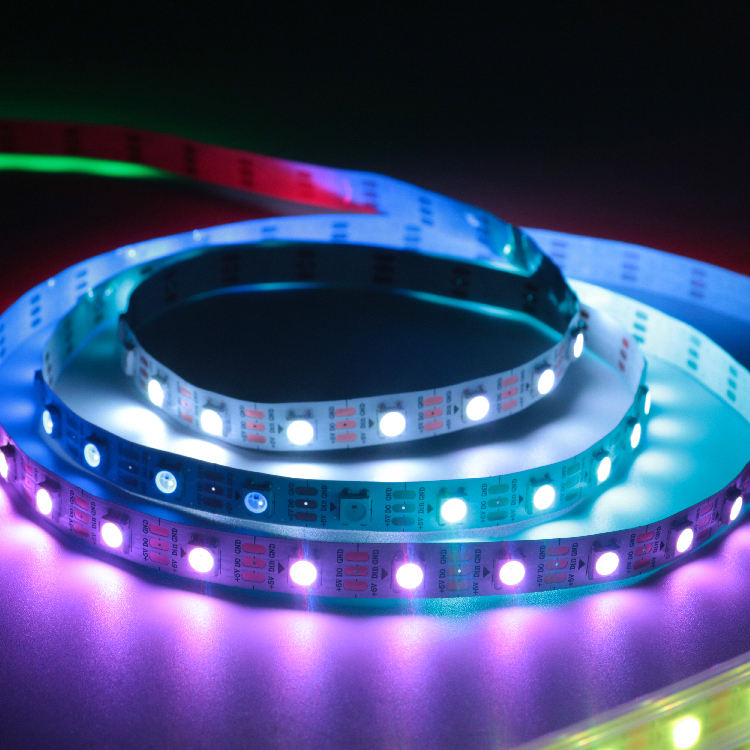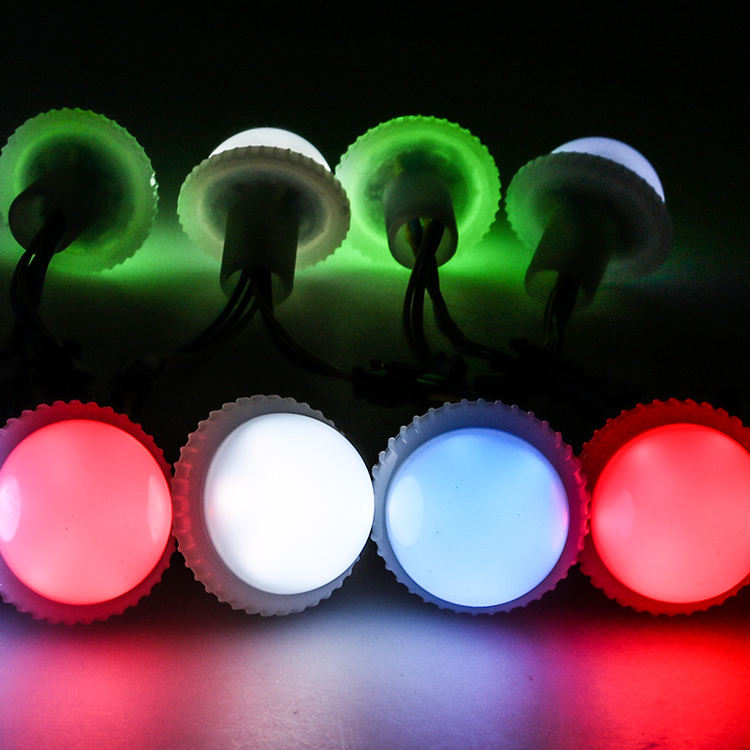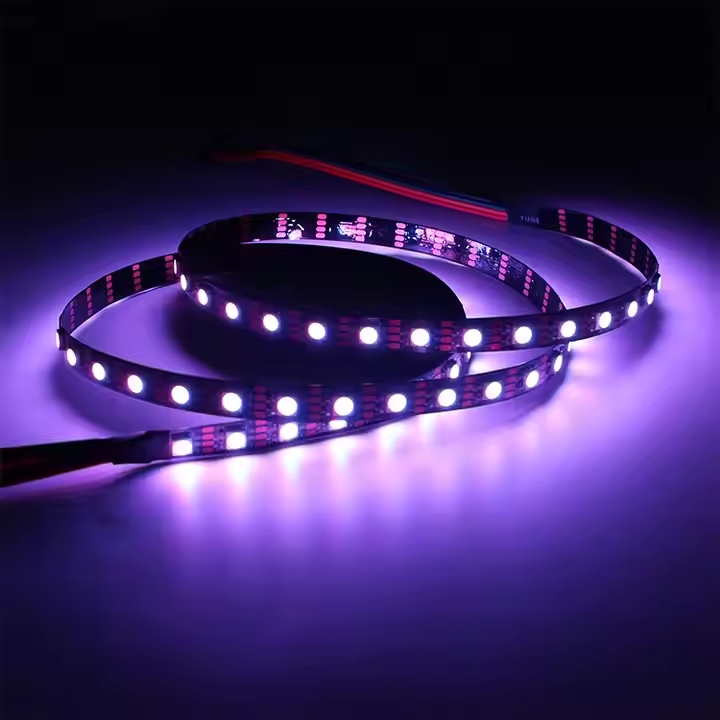
The field of digital lighting has changed a lot. As we enter 2026, needs for accuracy, true colors, and low energy use in smart spaces grow stronger. For builders and creators, the decision usually comes down to two main options: the trusted WS2812B and the advanced SK6812. They use a close communication method. Yet, their effects on your work’s result and power costs can differ greatly.
The Evolution of Digital Lighting: Why Choose Between SK6812 and WS2812B?
The journey of addressable LEDs began with a quest for individual pixel control. The WS2812B became a household name because it integrated the control IC directly into the 5050 LED package, simplifying circuit design and reducing points of failure. It remains a reliable, cost-effective standard for basic decorative lighting.
However, as lighting evolved from simple “blinking” to “architectural atmosphere,” the limitations of pure RGB became apparent. This paved the way for the SK6812. It isn’t just a clone; it is an evolutionary step that addresses the specific needs of modern installations, such as higher PWM frequencies and the inclusion of a dedicated white channel. Understanding the WS2812 b vs. SK6812 dynamic is essential for anyone looking to future-proof their lighting installations.
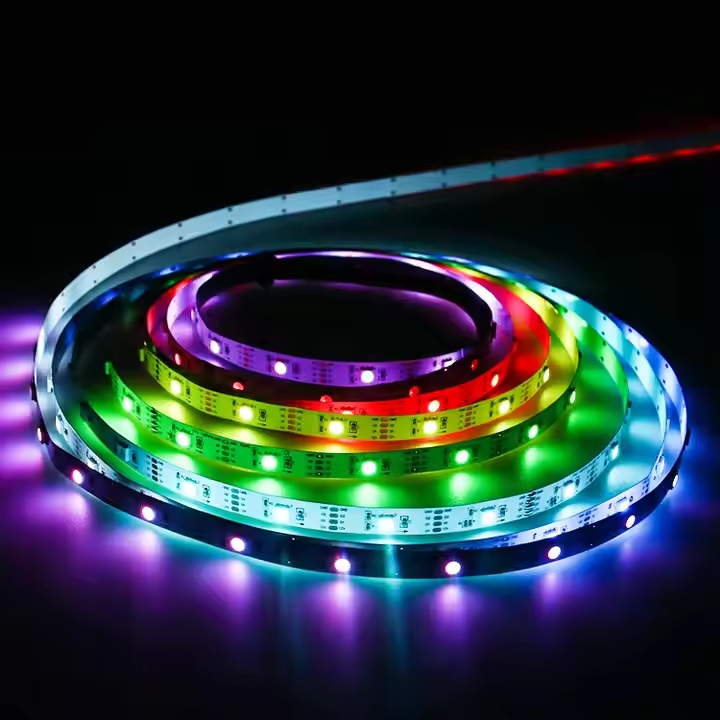
What Are the Key Technical Differences Affecting Your Project Performance?
Past basic likenesses, the chip’s inner workings and timing shape their actions in close checks.
Refresh Rates and PWM: Why SK6812 Wins for Video and Photography
A major tech jump in the SK6812 vs WS2812B talk centers on Pulse Width Modulation (PWM) rate. Standard WS2812B chips run at about 400Hz. In 2026, with common high-resolution cameras and phones, this slow speed often causes flickers or lines to be seen in recordings. The SK6812 offers a PWM rate of 1.2 kHz. This stronger speed keeps light steady under quick camera speeds. It fits well for studio walls and business screens.
Signal Integrity and Data Transmission Protocols
Both chips rely on a one-wire reset protocol. So, they work well with similar code. Yet, tests by our team at SHIJILIGHTING indicate the SK6812 shows better timing limits. This brings steadier data flow over far stretches. It assumes the right power addition. While neither has an extra data line, like the GS8208, the SK6812’s inner clock proves more exact. It lowers the chances of faulty spots in fast-motion displays.
RGB vs. RGBW: Is the Dedicated White Channel a Game Changer?
The clearest gap between these techs shows in color blend skills.
Achieving True White Light: The Limitations of WS2812B
The WS2812B acts as a straight RGB (Red, Green, Blue) unit. For “white,” it runs all three parts at full strength. This mixed white tends to carry a blue or purple shade. It holds a low Color Rendering Index (CRI). So, skin shades and surfaces seem off. On the other hand, the SK6812 stands out for RGBW types. It adds a set white sub-part. Choices include Warm White, Neutral White, or Cool White. This yields a sharp, solid white light that RGB strips cannot reach.
Color Mixing Versatility and Color Rendering Index (CRI)
In building lights, CRI counts most. A set of white paths opens wider soft color ranges and light shades. This range proves key for top hotel work. There, lights shift from bright event styles to soft, cozy glow. At SHIJILIGHTING, we note a big move to RGBW. It lets creators gain “Natural White” (4000K) or “Warm White” (3000K). These avoid the false sense of blended RGB.
Compatibility and Control: Can You Seamlessly Swap These Strips?
In system updates, setup ease and power handling top the list.
Firmware and Library Support (WLED, FastLED, and Arduino)
If your current setup uses the WLED or FastLED library, moving from WS2812B to SK6812 goes smoothly. Many controls view them almost the same. The main code shift is color sequence (GRB vs. RGBW). Since the SK6812 method matches closely, you can keep the same gear base. This cuts the setup team’s adjustment time.
Power Consumption and Voltage Drop Management
A critical factor often overlooked is the SK6812 power consumption. While the IC itself is efficient, adding a fourth LED (the white channel) means that when all channels are at 100%, the SK6812 can draw more current than a standard WS2812B. However, for producing white light, the SK6812 is actually more energy-saving. To produce 400 lumens of white, an RGB strip needs all three LEDs at high power, whereas an RGBW strip only needs the white LED. This efficiency reduces heat and extends the lifespan of the strip.
Application Guide: Which Addressable LED Strip Should You Buy in 2026?
The right strip hinges on your funds and setting.
Best Use Cases for WS2812B in Budget-Friendly Decor
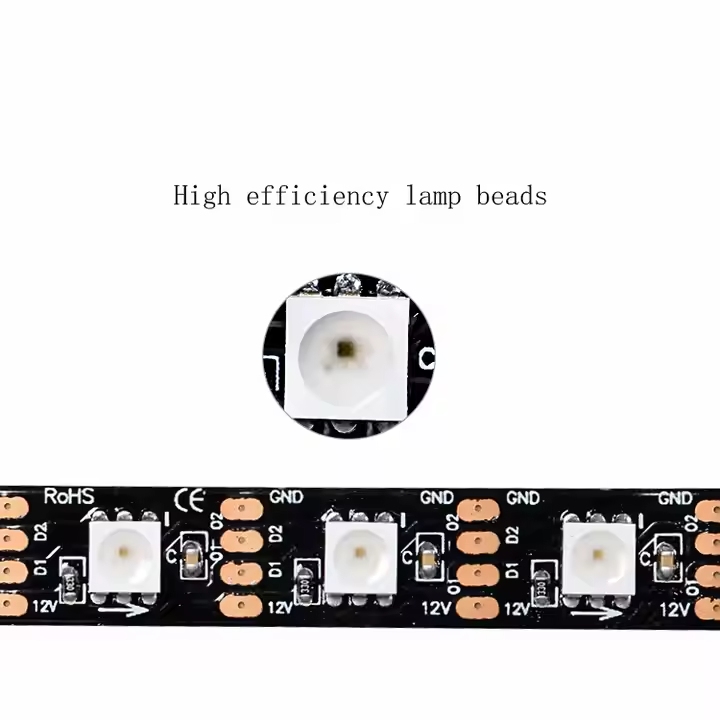
The SMD 5050 RGB WS2812B Digital LED Strip remains our main pick for jobs where price leads and white light quality lacks focus. Consider PC inner lights, small home craft tasks, or short event signs. It serves as the field’s steady option. It is known and very cheap for wide use.
Why SK6812 is the Professional Choice for Architectural and Smart Home Lighting
For 2026 home smart links, the DC5V SK6812 3535 RGBW LED Strip Series leads. Its small 3535 size allows denser points and thinner board widths, down to 5mm. This suits fitting into slim metal tracks or item slots. If you seek fine “hidden” lights that give useful, high-CRI white by day and strong colors at night, SK6812 fits best.
Reliability Standards: Why Sourcing from SHIJILIGHTING Makes a Difference
Quality checks form the hidden link between good setups and ongoing fixes.
Advanced PCB Engineering and Thermal Management
At SHIJILIGHTING, we use our 14 years of making skills to fix common “dead pixel” problems. We apply thicker copper boards (2oz or 3oz). They aid heat spread and cut voltage loss over long lines. This build aims to mean our strips stay cooler. It helps keep the SK6812’s white phosphor color steady over time.
Consistency in Binning and Long-Term Durability
We know pro jobs need an even color match. Our tight binning steps ensure that 100 meters of our DC5V SK6812 3535 RGBW LED Strip Series align in heat and brightness. We back our work-grade parts and gold-wire joins. Thus, we offer a 2-year warranty on all Pro Digital strips. This brings calm to you and your clients for lasting work.
FAQ
Q: Is SK6812 better than WS2812B for battery-powered projects?
A: In general, yes, if you use white light often. Peak SK6812 power consumption runs higher with all four channels active. But the set white path saves much more energy than blending Red, Green, and Blue for white. This can greatly lengthen battery run time in mobile items or body tech.
Q: Can I use a WS2812B controller to drive a SK6812 LED strip?
A: Most new controls, including those from SHIJILIGHTING, work with both. Yet, confirm the control handles “RGBW” mode. If it sticks to RGB, it might skip the white path. Or colors shift due to data order in a SK6812 vs WS2812B system, which differs slightly (3 bytes vs 4 bytes).
Q: What is the difference in SK6812 power consumption compared to WS2812B?
A: At top brightness with all colors on, a basic WS2812B point takes about 60mA. An RGBW SK6812 point reaches up to 80mA. But in actual “white light” cases, SK6812 proves more saving. SHIJILIGHTING advises figuring out power needs by real use to skip extra waste.
Q: Does sk6812 vs ws2812b make a difference for photography lighting?
A: Yes. SK6812 beats out for camera-involved tasks. Its 1.2kHz PWM rate stops flickers and dark lines seen in WS2812B filming. For pro studio work, our DC5V SK6812 3535 RGBW LED Strip Series gives the no-flicker action needed for fine content making.
Q: Why should I choose SK6812 over WS2812B for smart home ceiling lighting?
A: Ceiling “cove” lights often serve as main sources. WS2812B makes a “false” white that tires eyes and lacks color truth. Picking SK6812 from SHIJILIGHTING adds a set white path with high CRI. Your home seems real and easy. It also keeps options for fun, movable color shows.